
Short Article
Navalny's Death and Terror in Russia
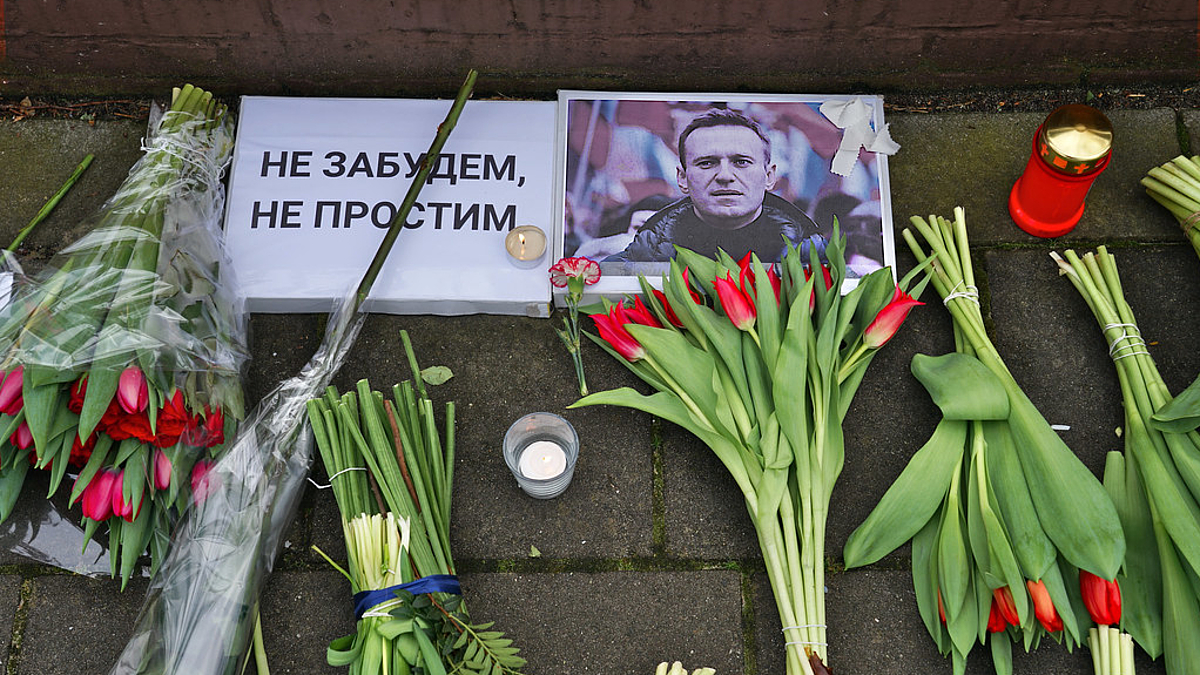
For Russian opposition activists, 2024 was supposed to begin with two major events: a rally to mark Navalny's return to Russia three years ago and the anniversary of Russia’s full-scale invasion of Ukraine. Preparations for the elections were in full swing, with the idea of a "Noon Against Putin'' protest vote, already presented for the first time in the autumn of 2023. Many activists and experts speculated about what the regime would come up with for the upcoming elections. Many sensed that Alexey Navalny was in great danger, but nobody wanted to believe it - just like in February 2022. On 16 February, eight days before the anniversary of the start of the full-scale invasion of Ukraine and a month before the "elections", the world learned of the death of Alexey Navalny in the worst penal colony of the Russian prison system - the "Polar Wolf". The shock was quickly replaced by the conviction that Navalny had been murdered. Then came the question - what now?
There are different depths in the ocean of Russian reality. Most of those who deal with it only scratch the surface. The Russian civil society is drowning in it, and the opposition is looking for the bottom, or rather the abyss. A lot of hope has been pinned on Navalny, both by Western politicians and large sections of the Russian opposition. His dream of a free Russia rallied much of the resistance. As president, Navalny would have been someone who understood the language and customs of democracy. His death has made it clear just how far away we are from a democratic Russian state. The regime will only tighten the screws of violence and things will get worse for the opposition within the country as well as for the thousands of political prisoners.
Torture against Terror
It is important to understand that the Russian regime makes no distinction between religious extremism and aspirations for freedom, seeing both as threats to its power. In this context, the term “terror” is used in Russia to describe both the recent terrorist attack in Moscow and any serious democratic opposition to the regime. This conflation may be difficult to comprehend, but it is crucial to understand the context of this discussion. In today's Russia, people like former coordinators of Navalny’s headquarters or individuals who speak out against the war in Ukraine are all labelled as terrorists.
In this sense, the arrest of the four men who, according to the latest information from Interfax, killed 137 people and injured 182 others in the Crocus City Hall in Moscow, was exemplary. The alleged suspects were apprehended surprisingly quickly and brutally tortured during the arrest. The scenes were filmed and spread online for the whole world to see. At the first court hearing, the men appeared with obvious signs of severe torture; one was unconscious. Only last year it was Prigozhin and his Wagner militia who were killing people with sledgehammers on camera. They have now been replaced by the Siloviki (armed state security).
Free Russians e.V.
Of course, this brutality is nothing new, but it has now become a matter of public record. Chapter 2, Article 21, point 2 of the Constitution of the Russian Federation states that no one may be subjected to torture. Although the feeling of devastating anger and the desire for vengeance after such a horrific terrorist attack are only human, it is every states responsibility to control them within the framework of the law. It should do everything in its power to protect the thin layer of achievements of human civilization and fight crime and terrorism, not spread it. It is feared that the regime will use this terrible terrorist attack as a reason to re-introduce the death penalty, which has not been carried out in Russia since 1996. When actual terrorism and civil opposition to the regime are equated, all imprisoned activists and opposition politicians in Russia face a grave danger. In the eyes of the Kremlin, political extremism and treason could be enough for state-sanctioned murder. Then Navalny's tragic death would be just the beginning.
The Chernyshevsky Question – What to do?
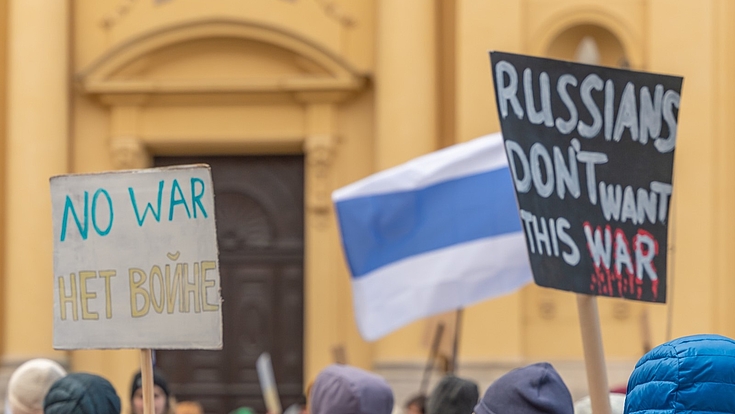
The outlook is bleak, and solutions can only be found through united efforts. Abroad, many Russian citizens are actively opposing the authoritarian regime and rally against it’s aggressive domestic and foreign politics. Their resources, however, are limited, while the Russian regime invests all its capacities in the war, both against Ukraine and against democracy. A comprehensive understanding of the current situation in Russia and its global ramifications is essential for finding a solution to a collective struggle. Strengthening collaboration with Russian activists is key, especially because the war, and the underlying Russian regime, cannot be solely addressed by Ukrainian forces. Beyond financial aid, direct support for the Russian people is necessary. This includes well-trained specialists – civil society experts, mediators, conflict researchers, and psychologists – who can foster horizontal connections between various democratic forces within and outside Russia. Countering Russian propaganda is equally crucial, achieved by transparent communication regarding the war's motivations and global consequences. One must understand that what happens in Russia does not simply stay in Russia.

Natalia Korotkova, Board member of Free Russians e.V.
Free Russians e.V.; https://www.freerussians.org/
About the author
Natalia Korotkova is co-founder and co-chair of the Munich-based NGO Free Russians e.V. She actively campaigns against the Russian regime and its policies towards neighboring countries and the world.