
Expert Discussions in Brussels
Aligning Industrial Policy, Defence, and SMEs
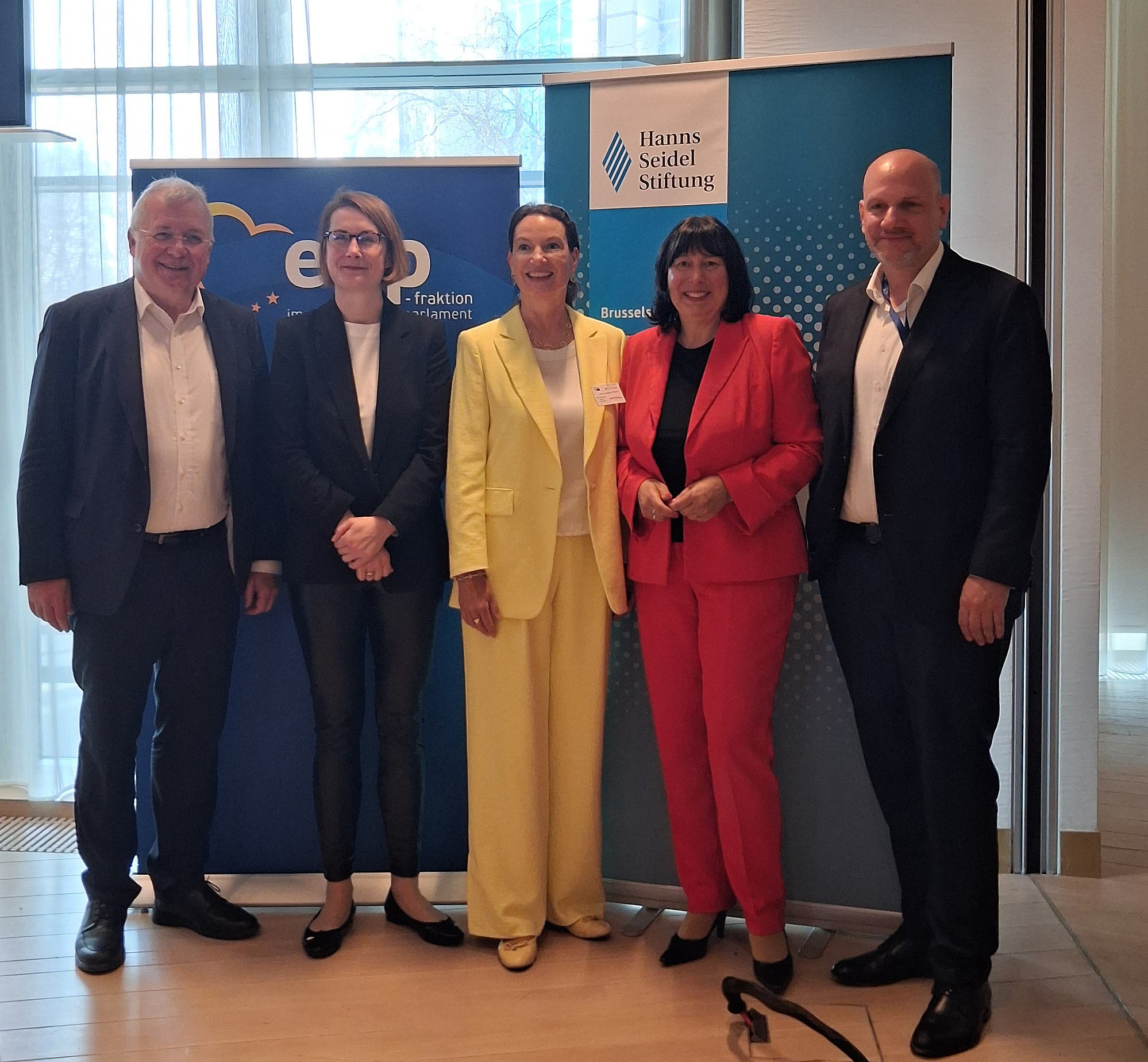
Speakers of the breakfast with PKM Europe at the European Parliament on 7 April 2026: Markus Ferber, Estelle Göger, Diane Robers, Marion Walsmann, Niclas Herbst
HSS Europa-Büro Brüssel
Economic dependence as a security risk
For a long time, global division of labour was regarded as a guarantee of efficiency and growth. This assumption is increasingly coming under pressure: supply chains are proving fragile, and technological dependencies are becoming instruments of political leverage. For CSU economic and financial expert Markus Ferber, this leads to the need for an honest assessment of Europe’s industrial capabilities: which skills are still available, where critical dependencies exist, and how lost competences can be rebuilt without undermining international competitiveness.
MEP Marion Walsmann points to a turning point in security policy. After years of relative neglect, defence has once again become a central prerequisite for state sovereignty, and economic strength and military security can no longer be considered separately.
From the perspective of the European Commission, this creates a tension between open markets and the targeted safeguarding of strategic “bottleneck areas” in global value chains. The aim is not autarky, but strategic capacity to act in key technologies such as semiconductors, artificial intelligence, cloud infrastructure or security-relevant digital systems. Although Europe has strong research capabilities and highly qualified skilled labour, structural weaknesses, in particular market fragmentation, incomplete capital markets integration and limited scaling capacity, are hampering industrial implementation.
Europe therefore suffers less from a lack of resources than from insufficient coordination and political will among Member States. This is particularly evident in the defence industry. National solo approaches, differing standards and inefficient procurement processes prevent economies of scale and delay projects.
For Nicolás Pascual de la Parte, EPP coordinator in the European Parliament’s Committee on Security and Defence, a genuine European internal market for defence is therefore crucial. Without common structures, Europe will achieve neither industrial strength nor military capability. At the same time, NATO remains the central security framework – European initiatives are intended to complement, not replace, it.
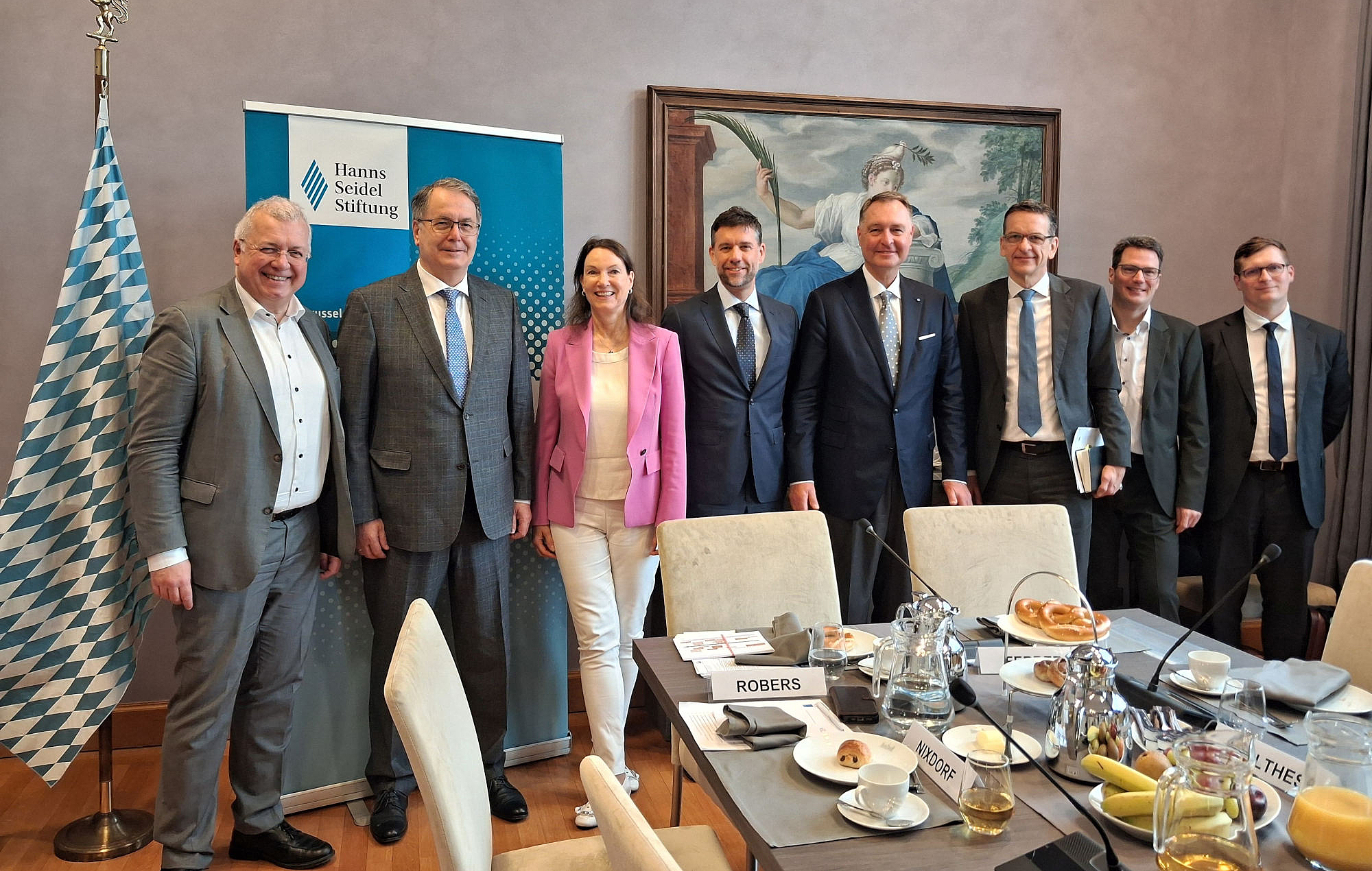
Speakers at the expert breakfast on 25 March 2026: Markus Ferber, Nicolás Pascual de la Parte, Diane Robers, Frank Walthes, Kilian Gross, Sandro Knezović u.a.
HSS Europa-Büro Brüssel
SMEs as a strategic key player
While industrial policy debates are often driven by the interests of large corporations, both discussions placed particular emphasis on the role of small and medium-sized enterprises. SMEs not only form the backbone of the European economy, but also constitute a central pillar of security-relevant value chains. They drive innovation, safeguard Europe’s industrial base, and are considered particularly adaptable in the face of technological change.
At the same time, a structural tension becomes apparent: despite their strategic importance, SMEs are disproportionately held back by bureaucracy, fragmented internal markets and limited access to financing. In addition, they are facing increasing innovation pressure. Technological development cycles are shortening, while geopolitical conflicts are increasing the need for rapid industrial adaptation.
Against this backdrop, military research is also gaining importance as an indirect driver of innovation for civilian applications. Key technologies such as artificial intelligence, quantum technology and space technologies are increasingly emerging at the intersection of security requirements and market logic. The decisive question will be whether Europe can more consistently translate its strong research base into scalable products and competitive business models. As highlighted by Professor Diane Robers, complex regulatory systems in the military domain, as well as differing regulatory approaches for civilian and military applications in the dual-use field, make market access particularly difficult for smaller companies; and even well-designed funding programmes lose effectiveness when their implementation remains overly complex and administratively burdensome.
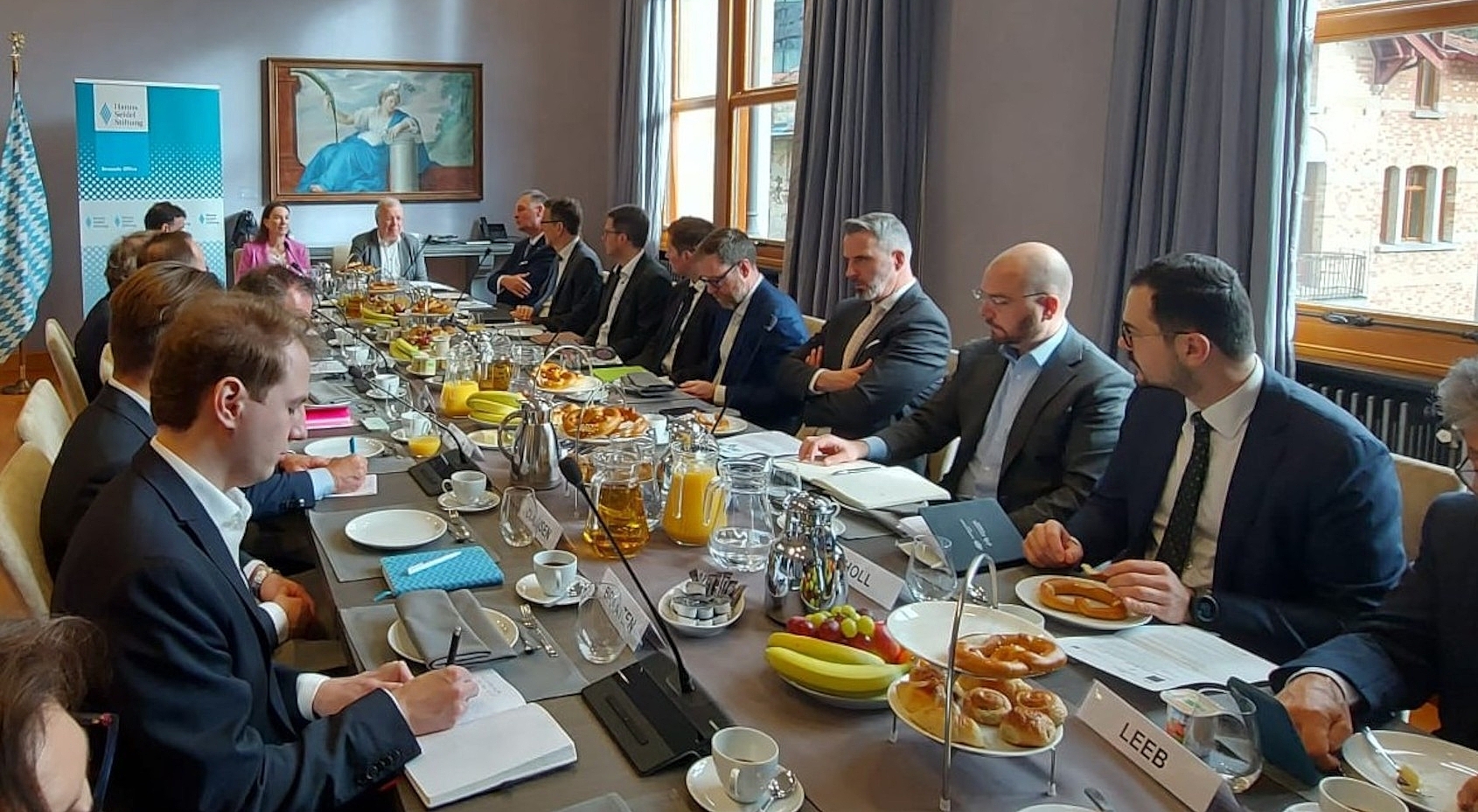
Expert roundtable at the Bavarian Representation on 25 March 2026
HSS Europa-Büro Brüssel
Between ambition and reality
From the perspective of Sandro Knezovic, Europe’s key weaknesses lie in a combination of fragmentation, unclear political signals, and ongoing external dependencies. These factors have a direct negative impact on investment, innovation processes and industrial scalability. At the same time, there is also a positive assessment: Europe has high-performing research institutions, a broad industrial base and a strong SME sector. The institutional instruments – from funding programmes to new industrial policy initiatives – are also fundamentally in place.
Against this backdrop, closer integration of industrial policy, defence strategy and innovation promotion is gaining importance. Military research is increasingly understood as a driver of civilian innovation, while the expansion of dual-use technologies is seen as a strategic necessity. The decisive challenge is to align economic incentives, security requirements and industrial policy objectives more coherently, and to strengthen exchange and mutual understanding between these different pillars in a targeted way.
Another key lever lies in European integration itself. Reducing fragmentation through the completion of the Single Market, standardisation, harmonised procurement processes and cross-border industrial clusters is seen as a prerequisite for greater efficiency and innovation dynamics.
Conclusion: A Defining Moment for Europe’s Capacity to Act
The key question is no longer whether Europe must act, but how quickly and coherently it can succeed in overcoming fragmentation, by establishing an energy and defence union and by developing a common raw materials strategy and by involving SMEs more closely. Only in this way can Europe consolidate its role as an economic and geopolitical actor. If this integration fails, however, there is a risk of a gradual loss of influence, not only economically but also in security terms.
Contact

Programm Managerin

Prof. Dr. Diane Robers

Leiter