
Short Article
Systematic Destruction of Ukraine’s Energy Infrastructure as a Weapon of War

Ukrainian military woman with the Ukrainian flag in her hands on the background of an exploded house
Adobe Stock/alimyakubov
Russia is increasingly weaponising winter in Ukraine. Systematic strikes against energy infrastructure aim to disable civilian life, exhaust society, and force political concessions through cold and darkness. As power grids become battlefields and nuclear safety risks grow, Ukraine’s experience highlights a wider truth: wars are fought not only on the battlefield but also against the civilian infrastructure that sustains entire societies — with direct implications for Europe’s own security.
Strategic Objective: Undermining Civilian Sustainability
As Ukraine endures the fourth winter of Russia’s full-scale invasion, electricity and heating have become fundamental conditions for civilian survival rather than public services. Russian strikes against Ukraine’s energy system follow a clear strategic logic: not to achieve tactical military gains, but to undermine the state’s ability to sustain civilian life and thereby increase political pressure on Kyiv.
These attacks cannot be understood as incidental wartime damage. By targeting high-voltage transmission lines, substations, transformers, and thermal generation facilities, Russian forces deliberately exploit the systemic interdependence of modern urban infrastructure. Disruptions to electricity supply rapidly cascade into failures affecting water distribution, district heating, transport systems, communications networks, and medical services. Under winter conditions, such strikes are capable of paralysing entire metropolitan areas and exposing millions of civilians to severe humanitarian risk.
From Precision Strikes to Saturation Warfare
Since late 2024, Russia has significantly increased both the scale and complexity of its air assaults against Ukraine. Large-scale attacks now frequently involve 300–400 Shahed-type attack drones, combined with 30–50 cruise and ballistic missiles launched within a single operational wave.
At the same time, Russia’s air campaign has evolved from selective precision strikes towards saturation warfare. Coordinated attack packages integrate drones and missiles launched from multiple directions and altitudes, deliberately overwhelming Ukrainian air defence systems. Drone swarms are primarily used to exhaust interception capacities and expose defensive gaps, after which high-precision missiles target critical infrastructure nodes such as substations, transmission hubs, and energy generation facilities.
The operational objective has thus shifted from destroying individual targets to degrading the functionality of entire systems. Even high interception rates cannot fully prevent damage when hundreds of aerial weapons are deployed simultaneously, transforming air defence into a continuous battle of resources and endurance rather than episodic crisis response.
Legal Assessment under International Humanitarian Law
From a legal standpoint, careful differentiation remains essential. While the designation of genocide requires proof of specific intent under international law, systematic attacks against civilian infrastructure indispensable for survival fall clearly within the scope of international humanitarian law. The International Criminal Court has issued arrest warrants against senior Russian military officials for directing attacks against civilian objects and committing crimes against humanity. Numerous international actors have likewise characterised repeated strikes against Ukraine’s energy sector as potential war crimes aimed at terrorising the civilian population.
Since the large-scale blackout campaigns of 2022, Russia’s operational approach has evolved significantly. Rather than focusing solely on individual facilities, recent attacks increasingly aim at disabling the functionality of the energy system as a whole. Coordinated drone and missile strikes target critical grid nodes — substations, transformers, and transmission bottlenecks — preventing electricity from reaching consumers even where generation capacity remains operational. Following major attacks in early February 2026, instability within the transmission network forced reductions in output at Ukrainian nuclear power plants, underlining the systemic vulnerability created by such operations.
The implications extend beyond Ukraine. The International Atomic Energy Agency has repeatedly emphasised the direct link between grid stability and nuclear safety, deploying expert missions to substations essential for maintaining external power supply to nuclear facilities. Attacks on energy infrastructure therefore constitute not only a national security challenge for Ukraine but also a matter of broader European safety and risk management.
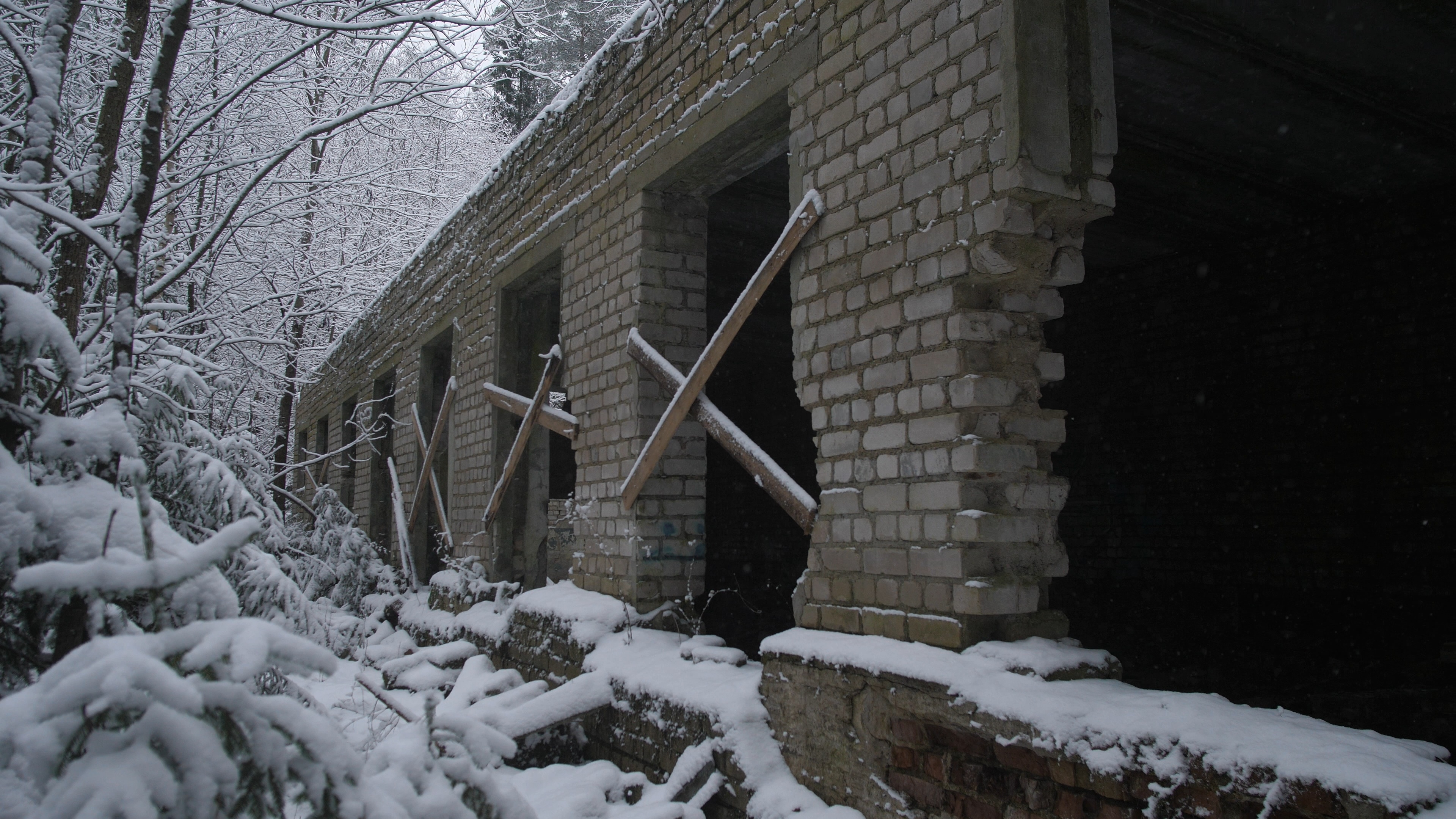
War Ukraine long brick corridor with snow outside
Adobe Stock/bisonov
Humanitarian Consequences
Target selection and timing further indicate deliberate long-term planning. Drawing on detailed knowledge of Soviet-era infrastructure and wartime reconnaissance, Russian forces have conducted sequential strikes across regions, frequently coinciding with periods of extreme cold. The cumulative effect is strategic exhaustion: repair cycles lengthen, technical reserves diminish, and regional electricity flows become increasingly constrained.
The humanitarian consequences demonstrate the effectiveness of this strategy. In highly centralised urban environments, electricity loss immediately disrupts life-support systems rather than comfort alone. Water supply, sewage treatment, hospitals, heating networks, and public transport depend on uninterrupted power. During severe cold periods, prolonged outages leave vulnerable populations dependent on emergency shelters and volunteer assistance, while economic activity slows and urban functionality deteriorates.
At the structural level, Ukraine faces a persistent imbalance between electricity generation and peak consumption, compounded by transmission losses caused by damaged networks. Even available energy cannot always be delivered where required, effectively transforming the grid itself into a primary target of warfare.
Implications for Reconstruction and European Security
These developments highlight a broader strategic lesson for reconstruction and European security policy alike. Ukraine’s traditionally centralized energy architecture — characterised by large generation facilities and major transmission hubs — creates critical single points of failure under wartime conditions. Rebuilding infrastructure exclusively along pre-war models risks reproducing vulnerabilities already systematically exploited by Russian military planning.
Energy resilience is therefore emerging as a core dimension of national and continental security. Decentralised generation, local autonomy for critical services, and diversified urban infrastructure are increasingly viewed not only as reconstruction priorities but as instruments of deterrence against infrastructure warfare. The strategic objective is shifting from emergency survival toward denying the aggressor the ability to weaponise winter conditions.
For Europe, Ukraine’s experience illustrates a wider transformation of modern conflict. Warfare increasingly targets interconnected civilian systems whose disruption produces cross-border consequences affecting humanitarian stability, energy markets, and nuclear safety. Ukraine thus represents the most immediate example of how infrastructure itself has become a frontline of war — and why resilience has become inseparable from collective European security.

About the Authors
Yuriy Honcharenko, head of the InfoLight Research and Analysis Group; expert on information security and analysis of information influences, international relations and human rights protection.
Yuriy Mindyuk, head of the Ukrainian Security Club, officer of the Armed Forces of Ukraine; expert on security, national identity and regional policy.
Kontakt
