
Interview with Jason Tower
“Scam States” in Southeast Asia

Masked Scammer on phone in call center
AdobeStock
In the lead-up to the Munich Security Conference 2026, the Hanns Seidel Foundation together with the Global Initiative for Transnational Organised Crime convened a discussion titled “Scam States in Southeast Asia.” The event highlighted a rapidly expanding and deeply concerning phenomenon: large-scale scam centres operating across parts of Southeast Asia, with particularly significant developments in Myanmar and neighbouring countries. These operations are no longer isolated criminal enterprises. They have evolved into complex ecosystems that combine online fraud, human trafficking, forced labour, and sophisticated financial networks. Increasingly, they intersect with conflict dynamics, governance gaps, and transnational organised crime, raising important questions not only for the region, but also for global security, including in Europe.
To help unpack these dynamics, Achim Munz, Hanns Seidel Foundation’s Country Director for Thailand and Myanmar, has interviewed Jason Tower, whose work has been at the forefront of analysing scam-centre economies and their wider implications in South-East Asia.
Jason Tower at the MSC-Side Event 2026 giving insights on Scam States.
Achim Munz: Following on from the discussion at our event, how would you define “scam centres” in Southeast Asia today or what exactly do we mean, and what distinguishes them from more traditional forms of online fraud?
Over the past decade, China-linked transnational organized crime groups have built a web of elite influence and protection in Cambodia, Laos and Myanmar which they have leveraged to construct a vast network of facilities to host criminal activities at an industrial scale. Initially these compounds were constructed to house offshore online gambling operations targeting China, which under Chinese law is illegal. By 2016, hundreds of thousands of Chinese nationals had relocated to Southeast Asia and joined these online gambling syndicates. As China pivoted to crackdown further on offshore online gambling, the syndicates redirected operations to begin perpetrating sophisticated online scams. While these initially targeted China, they started to globalize during COVID-19 when China moved to call its nationals back from Southeast Asia, and when China initiated crackdowns and later banned crypto-currency, which is used extensively in both online scams and in online gambling operations.
Also during COVID-19, the China-linked crime groups rolled out “job scams” – trafficking large numbers of foreign nationals into Southeast Asia by offering what appeared to be legitimate jobs, but later forcing applicants to become scammers. This practice of forced criminality, and the use of modern slavery and torture to perpetrate online scams is unique to the China-linked transnational criminal groups, and a distinctive feature of the scam compounds.
The types of scams perpetrated from within these compounds are some of the most sophisticated in the world. Using extreme forms of psychological manipulation targeting a global population, China-linked scam syndicates are able to steal hundreds of thousands, and in some cases even millions of dollars from a single victim. Modalities commonly used include romance scams, law enforcement impersonation scams, sextortion, and fraudulent investment scams.
Also distinct to Southeast Asia is the extent to which elites at the highest levels have become directly involved in protecting and enabling the online scams. In the cases of Cambodia and Myanmar in particular, this has included senior military officials and relatives of the top leaders in the country. In Cambodia, elites went as far as to appoint Chinese criminal kingpins as advisors to the country’s Prime Minister with Minister level status. This has enabled the emergence of a scam economy in the region, with the revenue from online scams and related activity coming to rival GDP in countries like Cambodia and Myanmar. It is estimated that China-linked crime groups operating in Southeast Asia steal 170 million US Dollars per day.
Achim Munz: What are the key enabling conditions—political, economic, and security-related—that allow these scam centres to emerge and operate at scale?
As mentioned already, the ability of criminals to become state embedded in Cambodia, Myanmar and Laos is one of the most critical enabling factors, as is the willingness of elites to partner with criminal actors to establish industrial scale scam compounds. By 2025, the power and influence of the China-linked crime groups in the country came to rival that of the governments in the region. This was especially so in Cambodia as China-linked criminal groups invested billions of dollars in the development of infrastructure and as they set up front companies that emerged as the primary economic actors in the country.
Other key factors include: the ability of criminal actors in the epi-center countries to consolidate access into the formal financial system by establishing banks. In the case of Cambodia, China-linked criminal groups set up and operated two banks alongside one of the world’s most sophisticated Telegram-based financial guarantee platforms. These financial tools enabled criminal actors to launder funds quickly, and to hide illicit proceeds from law enforcement around the world. The ability of criminals to launder proceeds into other countries across the globe, including into key financial centres like Singapore, Dubai and Hong Kong; the ability of criminals to traffic and hold tens of thousands of people in conditions of cybercrime; and the ability of criminals to exploit poor governance of border areas, particularly along Thailand’s problematic borders with Myanmar, Laos and Cambodia.
Another major enabling factor in the case of Laos was the decision of Laos authorities over 15 years ago to concede a special economic zone to a network of criminal actors who would eventually establish one of the world’s largest criminal zones, the Golden Triangle Special Economic Zone. Under the influence of powerful ethnic armed groups in Myanmar, the establishment of this zone threated the sovereignty of Laos as by the late 2010s it became difficult for Lao authorities even to access the zone.
Achim Munz: Why has Myanmar, particularly since the 2021 coup, become such a central node in this ecosystem, especially in border and conflict-affected areas?
The Myanmar military coup undermined all of the factors within government and society that provide resilience to criminal activity. Since the coup, Myanmar has emerged globally as the most problematic country in the world in terms of levels of criminality and impunity as is evidenced by the Global Crime Index. Following the coup, the Myanmar military deployed the country’s police to oppress the population into accepting military rule; meanwhile it became heavily reliant on corrupt militias that directly operated scam centers on the borders with China and Thailand, making any form of locally led crackdown impossible. While Ethnic Armed Organizations have taken steps to crackdown on this activity since 2024, 6 major militia groups still play a role in hosting criminal activity. All of these groups either maintain ceasefires with the Myanmar military or are directly integrated into the military in the case of its border guard force on the border with Thailand. This BGF hosts more than 25 scam compounds in its control territories.
While internationally, pressure on the Myanmar military to do something about the scam centers continues to increase, by its own admission and by the admission of the Chair of the military’s proxy political party, the Union Solidarity and Development Party, the military regime lacks the capacity to deal with the issue. Extreme corruption within the ranks of the military enables scam compounds to undermine efforts by neighboring countries to facilitate cross-border crackdowns. Information about raids is always sold and circulated days in advance, and at best the Myanmar military is able to muster performative actions such as blowing up scam buildings or destroying devices used to perpetrate scams.
Meanwhile, the international community has been reluctant to support non-state actors when they have tried to facilitate crackdowns and extend governance over scam compound hotspots. This has created serious disincentives for groups with higher levels of political will when it comes to cracking down.
Achim Munz: Who benefits most from these operations, and who are the primary victims—both within the centres and globally?
The nationals of over 100 countries have been harmed by these operations. Tens of thousands of victims from across the globe have experienced losses that range from 5 to 7 figures. To present, the largest losses by a single victim amounted to 47 million US dollars – this individual was a banker in the United States. The scam syndicates are not picky about the vulnerabilities they exploit – they aim to find all sorts of vulnerabilities – whether it be someone’s financial dreams, loneliness and desire for companionship, or to put a victim in a compromising position that might be exploited to steal tens of thousands of dollars or more. The U.S., Canada, Australia and the U.K. presently feature as some of the countries that are hardest hit by these scams. Meanwhile, all ASEAN countries, China, Taiwan, Japan and Korea have all been hit very hard.
In terms of human trafficking, over 15,000 people from more than 30 African countries have been trafficked, as have an estimated 30,000 South Asias. The nationals of 80 countries have been lured into scam compounds, with the majority of individuals inside continuing to be from China. In ASEAN, Malaysia, Vietnam, Thailand, the Philippines and Indonesia have all been hit very hard by trafficking into scam compounds, with many countries having experienced multiple deaths of their nationals. Korea and Japan recently have seen a surge in trafficking victims, with Korea identifying a murdered victim in the summer of 2025. In short, anyone looking for a job online is at risk of being trafficked as the criminal groups attempt to bring a larger number of people with different languages and skill sets under their control.
Alongside the trafficking, a parallel ransom business has been set up, with syndicates charging unwilling victims tens of thousands of dollars for their freedom. In many cases, Chinese nationals have paid upwards of 50,000 dollars for their freedom.
Achim Munz: What are the most significant consequences for Southeast Asia, and how do these networks affect actors beyond the region—particularly in Europe?
The scams have been especially destructive for epicenter countries. In the case of Cambodia, the entire economy was consolidated as a scam economy, and dismantling this will be as significant as a post-war reconstruction project. Hundreds of thousands of people will need to be repatriated, resettled and demobilized and given new opportunities to rebuild livelihoods. Systemic corruption and governance flaws will need to be addressed, and ultimately a new pathway for the country’s economic future will have to be identified.
As these networks continue to expand and tap into new resources, the threat of them becoming embedded elsewhere continues to rise, as does the threat of new demographics of victims emerging. Many European countries are only beginning to see the consequences over the past 1-1.5 years as the scam syndicates have started to target speakers of German, French, Spanish and Portuguese, including using new powerful AI interpretation and translation applications.
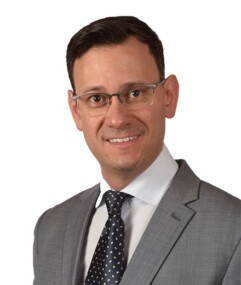
About the Author
Jason G Tower is a senior expert at the Global Initiative Against Transnational Organized Crime (GI-TOC), where he works on organized crime, security and illicit economies in Southeast Asia, with a particular focus on Myanmar and China. Since 2019, Jason has been at the forefront of cutting edge research on the rise of criminal enclaves hosting industrial scale scam operations across the region and has published a series of reports highlighting the involvement of armed actors and China origin transnational crime groups in these activities.