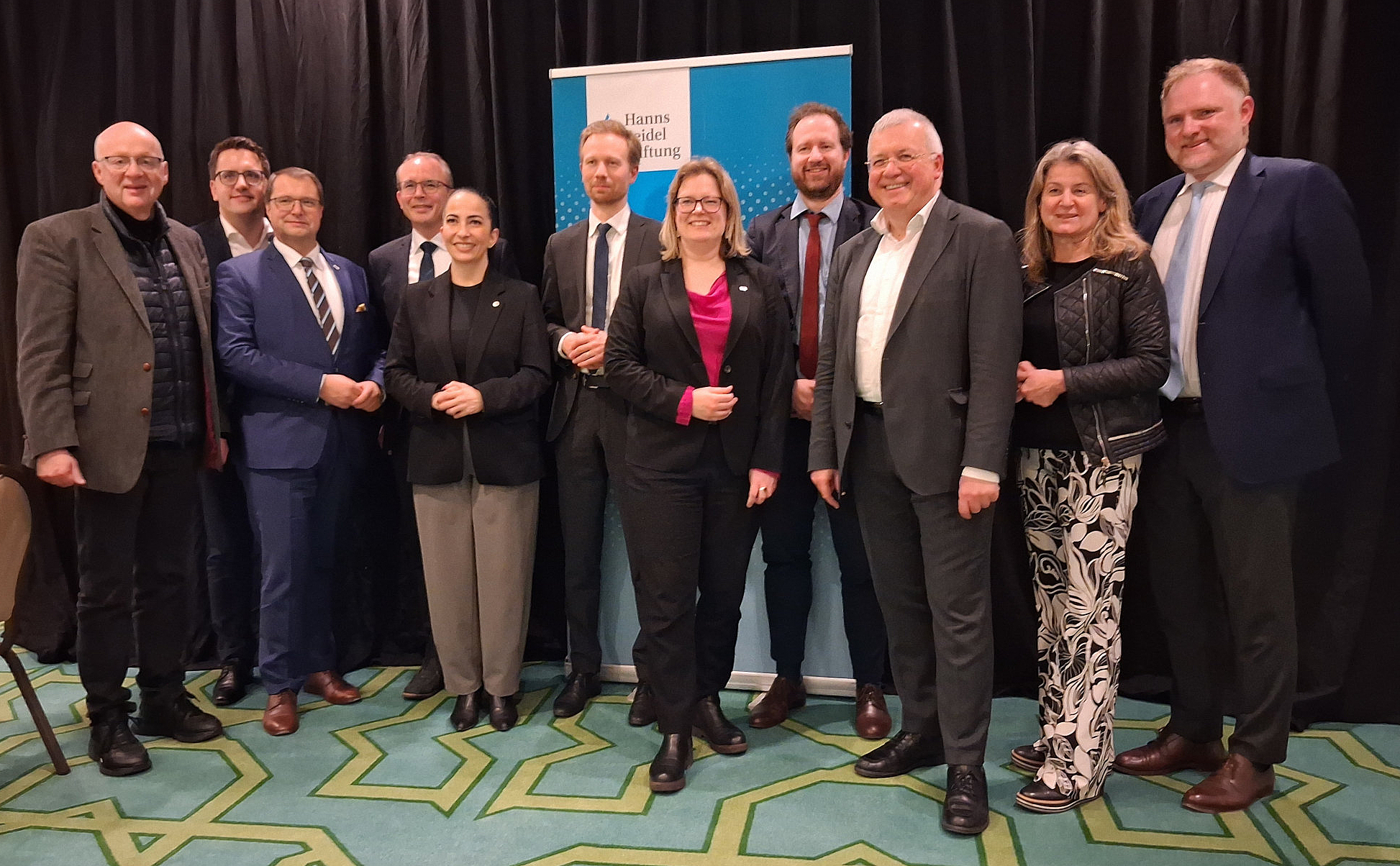
Against the backdrop of the European Union’s tense economic situation and growing challenges for competitiveness, industry, and trade, the Brussels Office brought together Members of the Bundestag and the European Parliament with representatives of German business associations. The meeting addressed the growing imperative for action at both European and national levels, with particular focus on regulation, economic growth projections, and geopolitical developments.
The discussion with Freya Lemcke (DIHK EU Representation), Dominic Boucsein (Eurochambres), and Joscha Ritz (BDI Brussels) was moderated by Markus Ferber MEP. The focus was on the current economic situation in the EU, the state of German industry, and the role of European institutions in ensuring competitiveness and regulatory coherence. The discussion was conducted under Chatham House rules to ensure an open and confidential exchange among participants.
Challenges for the German Mittelstand
Germany remains a key growth engine for the EU, yet it is under significant structural pressure. Small and medium-sized enterprises (SMEs) are particularly affected by high bureaucracy and energy costs, skills shortages, and geopolitical uncertainties. While the EU as a whole is expected to see moderate growth of around 1.4%, Germany is likely to fall short. In the short term, rising wages and public spending support the economy, but in the long term, they exacerbate structural weaknesses.
The competitiveness of German and European industry is increasingly under strain. Productivity growth is slowing, while labour and energy costs continue to rise. The German Mittelstand, which holds a unique position within the EU, is disproportionately impacted by regulatory burdens. It is estimated that 100–200 SMEs close each month. Additional pressures stem from the partial breakdown of the multilateral trade system and repayment obligations from COVID-19 support programmes, all in a context of weak growth and rising interest rates.
A major challenge is the weight of bureaucracy and regulation. EU initiatives such as the CSRD, the Green Deal, the Supply Chain Act, the Deforestation Regulation, and the Carbon Border Adjustment Mechanism are widely perceived as difficult to implement. The so-called “bureaucracy omnibus” packages are largely viewed as mitigation rather than relief. While some requirements are reduced or postponed, new European, national, regional, and local regulations continue to be introduced. Vague legal terms, uncertain deadlines, and frequent changes create legal uncertainty and place considerable implementation pressure on medium-sized businesses.
German Bundestag delegation with representatives of German and European business associations in Brussels
Angela Ostlender; HSS Europa-Büro
Political Responsibility and Germany’s Role
Political responsibility at the European level remains fragmented. Between the European Commission, the European Parliament, and the Member States, there is often a “shared lack of accountability.” The Commission is seen as strongly regulation-focused, the Parliament can be hindered by partisan divisions, and Member States do not always act in a coherent manner. Coordination gaps within Germany—between the federal government, the Länder, and individual ministries—further delay decision-making and undermine the trust of European partners. Other EU countries expect clear initiatives from Germany before taking action themselves, meaning that a lack of coherence diminishes Germany’s influence.
International Dimension
The international dimension is equally crucial. European companies are operating in an increasingly competitive global environment, intensified by geopolitical uncertainties. Trade measures, unclear tariffs, and delays in trade agreements are putting pressure on exports and market share. Strategically important trade agreements, such as those with Mercosur and India, are necessary to secure market positions and leverage European trade power. However, risks arise from unfair competition, divergent production costs, and exchange rate fluctuations, particularly given the strong appreciation of the Euro.
Outlook and Recommendations
There was broad agreement that economic progress can only be achieved through a clear strategic realignment. Competitiveness and productivity growth must once again take centre stage. Regulation should be introduced only where it demonstrably supports growth and innovation. What is needed are sustained efforts to reduce bureaucracy, clear and practical guidelines, realistic deadlines, and stronger political coordination—especially within Germany. In the long term, German and European industry will only thrive if responsibilities are clearly defined, regulations are designed to be internationally competitive, and trust is restored through reliable political signals.