
Government Formation in the Netherlands
Jetten I: A New Minority Government in the Netherlands
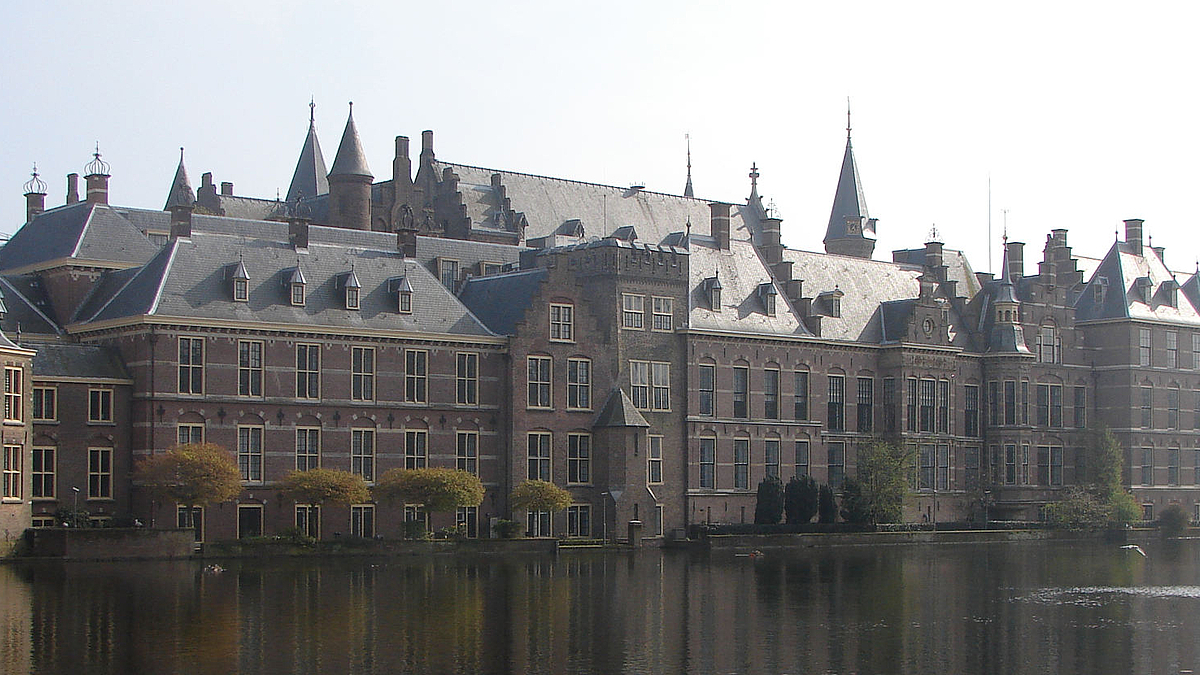
The government headquarters in The Hague with the "Torentje", the office of the Prime Minister.
Freek Plasmeijer; via Wikimedia Commons
Are the Netherlands Ready for a New Political Culture?
With election winner and Prime Minister Rob Jetten (D66), a new chapter in Dutch politics begins: for the first time in many years, a cabinet will govern without a parliamentary majority, falling ten seats short. Every legislative initiative will therefore depend on shifting support from other political groups, which in turn strengthens the opposition. At the same time, questions arise over whether, and how, sustained, constructive cooperation with the fragmented parliament can be achieved.
Early debates on the coalition agreement already revealed initial blocking positions by parties on the far left and right. The new government could come under serious pressure if opposition parties link their support to substantive concessions. Tough negotiations are expected, particularly on contentious issues such as climate policy, migration, and the budget. To fund additional investments in defence, education, and agriculture, the coalition plans to implement savings in healthcare and social insurance amounting to billions of euros. An increase in the wealth tax, despite recommendations, was not included, meaning Prime Minister Jetten can expect sharp criticism from opposition benches.
The coalition agreement stresses that the minority government is operating “on unfamiliar terrain,” with the central lesson being the “art of cooperation and consultation.” Politics will be driven less by coalition discipline and more by issue-based alliances and informal arrangements. The government positions itself less as a unified power bloc and more as a moderating force, deliberately expanding cooperation with civil society actors and across different levels of government to build sustainable socio-political majorities.
The choice of a minority cabinet was pragmatic, arising from limited options after talks with other factions either failed or were ruled out from the outset. The CDA described it as a realistic solution: party leader Henri Bontenbal emphasised that the priority was not ideals, but political governability.

Rob Jetten (D66) is the youngest Prime Minister in Dutch history
Jeroen Mooijman; via Wikimedia Commons
Coalition Agreement 2026–2030: “Getting to Work”
With the coalition agreement “Aan de slag – Bouwen aan een beter Nederland” (“Getting to Work – Building a Better Netherlands”), D66, VVD, and CDA have set out the framework for the coming four years. In the fragmented political landscape, the cabinet is focusing on implementability, fiscal stability, and parliamentary openness. Many decisions were deliberately shifted into the legislative process in order to secure the necessary majorities.
At the same time, the government has defined clear priorities: the budget deficit is to remain below 2% by 2030; education, research, and innovation are to be strengthened; and security and defense expanded. Affordable housing, investment in infrastructure, efficient asylum procedures and the integration of refugees, as well as energy and climate policy, are also key focus areas. Support for Ukraine remains firmly anchored.
Internally, the coalition is based on limited but sustainable areas of common ground, such as European integration, the rule of law, security, and economic modernization. At the same time, differences persist in social, migration, climate, and welfare policy. D66 pursues a progressive agenda; the VVD adopts a more market-oriented and restrictive approach; while the CDA emphasizes social responsibility and fiscal discipline.
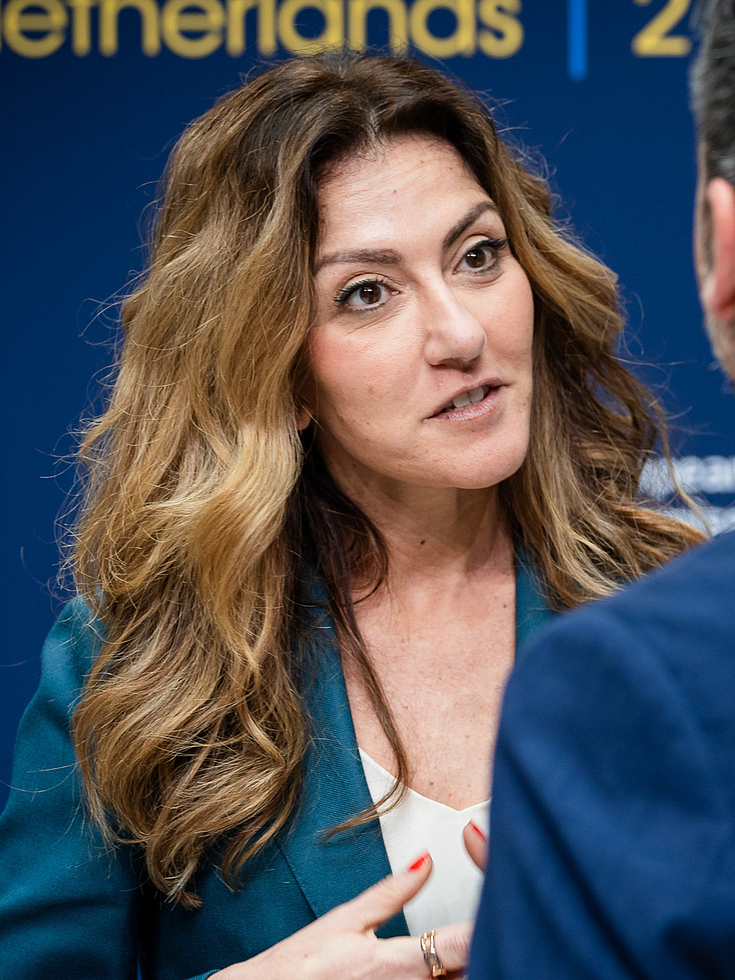
Minister of Defence and Deputy Prime Minister of the Netherlands, Dilan Yeşilgöz (VVD)
Ministerie van Buitenlandse Zaken
Cabinet Structure and Key Figures
The new Jetten I cabinet comprises 28 government posts: 18 ministers and ten state secretaries. D66 provides seven ministers, the VVD six, and the CDA five; each coalition partner also receives three state secretaries. In addition, there is one non-partisan state secretary (formerly affiliated with NSC).
In addition to the office of prime minister, D66 holds the ministries of Education, Culture and Science; Climate and Green Growth; and Housing. The VVD, among others, controls the ministries of Finance, Justice, Defense, and Infrastructure. The CDA receives key portfolios including the Interior and Foreign Ministries, Migration, and Economic/Climate Affairs.
At 38, Rob Jetten (D66) is the youngest Dutch head of government in history. Previously Minister for Climate and Energy (Rutte IV cabinet), Jetten is regarded as cooperative, consensus-oriented, and a pragmatic moderniser. Key positions include VVD party leader Dilan Yeşilgöz as Deputy Prime Minister and Minister of Defense; Bart van den Brink (CDA) for Asylum and Migration; Pieter Heerma (CDA) as Minister of the Interior; Eelco Heinen (VVD) at Finance; Heleen Herbert (CDA) for Economic Affairs and Climate; and Rianne Letschert (D66) for Education, Culture and Science. The CDA Member of the European Parliament Tom Berendsen will serve as Foreign Minister.
The cabinet combines political experience with external professional expertise. Rianne Letschert, who served as informateur during the government formation process, emphasized in her final report that the new ministers should act with flexibility, a willingness to negotiate, and selflessness.
Outside the cabinet, Henri Bontenbal (CDA) continues to shape government policy as parliamentary group leader. He deliberately declined a ministerial post in order to consolidate Christian Democratic support in parliament and stabilise the coalition.
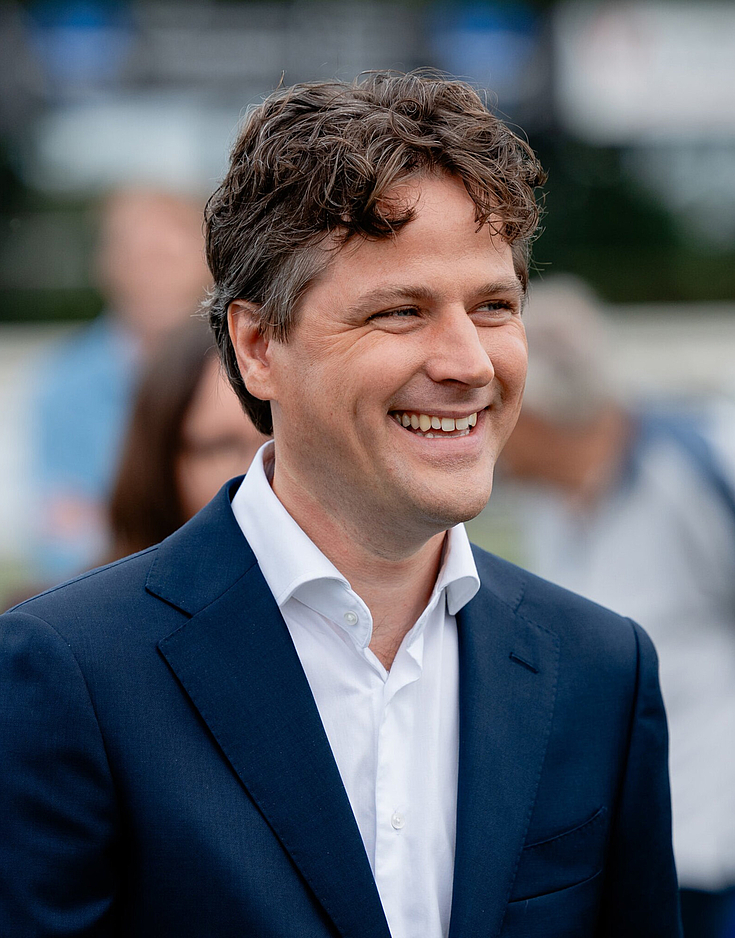
Henri Bontenbal, political and parliamentary group leader of the CDA, wants to support the coalition from within parliament.
Leonard Walpot; via Wikimedia Commons
Outlook
CDA leader Henri Bontenbal presents the chosen course as an opportunity to foster a new political culture, one in which substantive common ground is prioritised over rigid bloc divisions. If it succeeds, this approach could bring new dynamism to the highly fragmented parliament, which currently comprises 15 factions. Yet the path ahead remains uncertain: every legislative initiative will require freshly negotiated parliamentary support, entailing both compromises and concessions.
Whether this dynamic will produce lasting reforms or instead solidify mutual blockages remains to be seen.
The municipal elections on 18 March are widely viewed as the first test of public sentiment. Recent polls indicate gains for D66 and the CDA, while the VVD has seen a slight decline. The right-wing populist Party for Freedom (PVV), led by Geert Wilders and still the second-largest force, is losing support and appears increasingly weakened following internal splits. At the same time, the Forum for Democracy is repositioning itself, fielding openly far-right extremist candidates and, for the first time in the Netherlands, sparking debate over a political “firewall.”
Read more articles on current political developments in the Netherlands:
>>> Government formation in the Netherlands: Minority coalition hopes for a new political culture
>>> Early Elections in the Netherlands: Shift of Power Towards the Political Centre
Kontakt

Programm Managerin

Director