
Who is...?
Francesco Lapenta
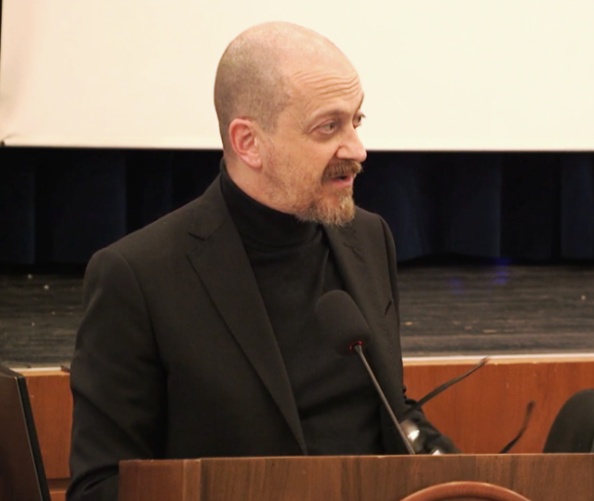
About Francesco Lapenta
Francesco Lapenta works at the intersection of technology, governance, diplomacy, and international cooperation. He is Director of the Institute of Future and Innovation Studies at John Cabot University in Rome, where he leads research, dialogue, and international engagement on the societal, geopolitical, and governance implications of emerging technologies.
For more than two decades, his work has focused on how technological change reshapes institutions, societies, democratic systems, and international relations. His engagement with artificial intelligence governance predates the current wave of public attention surrounding AI, a field he started to observe since 2011. In 2016, while serving as Visiting Professor at New York University, he participated in the first White House-convened discussions on the societal implications of Artificial Intelligence, several years before AI governance emerged as a mainstream policy concern. He later in 2018 joined the IEEE Global Initiative on Ethics of Autonomous and Intelligent Systems as Technical Editor for the P7006 Personal AI Agents standard, contributing to early efforts to develop governance frameworks for increasingly autonomous AI systems. During that time, he was invited as a beta tester of ChatGPT three years before its public release. In 2019, he became a Mozilla Fellow and founded the Institute of Future and Innovation Studies.
A recurring feature of Lapenta’s work has been the ability to bring together communities that do not often share the same room. Through research initiatives, policy dialogues, and international convenings, he has worked across political, institutional, disciplinary, and geopolitical boundaries, engaging governments, international organisations, diplomats, technology leaders, foundations, civil society actors, and academic institutions on challenges that increasingly transcend traditional jurisdictions and sectors.
His work has included participation in AI governance initiatives in Europe and the United States, discussions connected to the United Nations Pact for the Future process, and Vatican-led efforts examining the ethical and societal implications of Artificial Intelligence. Over the years, he has collaborated with policymakers, diplomats, technology leaders, and representatives of major technology companies on questions of democratic resilience, technological sovereignty, science diplomacy, and international cooperation in an era of rapid technological change.
In 2021, before generative AI entered mainstream public debate, he published Our Common AI Future: A Geopolitical Analysis and Road Map for AI Driven Sustainable Development, Science and Data Diplomacy, with support from the Mozilla Foundation and the Rockefeller Foundation. Among the earlier works to examine artificial intelligence through the combined lenses of geopolitics, diplomacy, sustainable development, and international cooperation, the book argued that AI should be understood not only as a technological breakthrough but also as a force capable of reshaping international relations, governance systems, and the future architecture of global cooperation.
His collaboration with the Hanns Seidel Foundation includes participation in DigiDem and related international exchanges focused on democracy, civic participation, digital governance, and democratic resilience. Throughout his work, he has sought to understand how different governance systems respond to technological change, how institutions adapt during periods of accelerated transformation, and how democratic societies can preserve legitimacy, agency, and international cooperation in an increasingly interconnected world.
You can get in touch with Francesco Lapenta via LinkedIn
Contact
