
Interview
80 Years of the United Nations
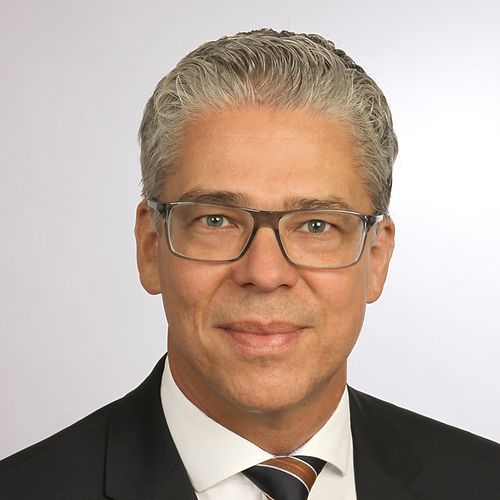
Der Ständige Vertreter, Botschafter Ricklef Beutin
Ständige Vertretung der Bundesrepublik Deutschland bei den Vereinten Nationen / Auswärtiges Amt; https://new-york-un.diplo.de/resource/image/2731920/1x1/500/500/720e9801a514daebe2b64364962200ef/BD618A6E020FC89A356E0F568ADE790A/ricklef-beutin.jpg
1. Ambassador, 80 years of the United Nations – what does this anniversary mean for the international community and specifically for Germany? What is the UN’s track record after 80 years?
The 80th anniversary of the United Nations is a significant milestone for the international community. It reminds us of the visionary cooperation the global community is capable of in times of greatest need, after the catastrophe of the Second World War. Germany has been committed to multilateralism for more than 50 years; for us, this anniversary is an opportunity to honour the achievements of the UN while also emphasizing the need for reforms.
Over the past decades, the UN has played a decisive role in maintaining peace, promoting human rights, and addressing global challenges such as poverty and climate change. It has significantly improved life for many people around the world. Nevertheless, the organization faces major challenges, including a budget crisis and a crisis of multilateralism.
2. The UN is facing growing geopolitical tensions. The Security Council is largely paralyzed, as the veto powers—the US, China, and Russia—have few common interests and block each other. How can the UN remain or regain its ability to act?
First, it should be noted that the Security Council continues to demonstrate its ability to act in its core area of peace and security. Recent resolutions on a mission in Haiti and on the “International Stabilisation Force” for Gaza have shown this. But it is true: an effective UN depends largely on the willingness and cooperation of its member states. They must also feel that they have a voice where it matters. Germany therefore supports the reform of the Security Council. It must become more representative, but also more efficient. There are various ways of achieving this, for example by breaking up the monopoly on leadership in specific Council dossiers. Delays in filling posts in committees or working groups also hamper the efficient work of the Council. Ultimately, however, it is crucial that member states assume their responsibilities and respect the principles of the UN Charter and international law.
3. Within the UN, a tangle of programmes, positions, goals, instruments, and oversight mechanisms has emerged. The structures are inefficient and costly. What reforms are necessary and realistic to make the UN more financially stable and operationally efficient?
The first steps have already been taken. The UN Secretary-General has presented a budget for 2026 that includes cuts of around USD 500 million. If all member states met their financial obligations or fulfilled them on time, the UN’s financial situation would be significantly more stable. However, it remains true that we will have to manage with fewer funds in the voluntary payment area, particularly in the sphere of humanitarian aid. This requires clearer prioritization, better pooling of funds, and more efficient use of resources.
None of this is entirely new. Since 2015, for example, the German government has supported the WFP Innovation Accelerator, whose innovations in areas such as AI or blockchain lead to substantial cost savings. The AI-supported planning tool SCOUT helps the World Food Programme optimize its global supply chain – from procurement to storage to delivery. In its first year alone, it saved USD 5 million; annual savings of around USD 25 million are expected in the future.
We also expect operational improvements from the process on UN mandates, which is being supported by the President of the UN General Assembly, Annalena Baerbock: tasks assigned to the UN will be improved if there is a clear overview of existing mandates. There is also room for improvement in mandate implementation: too often, competencies or reporting obligations overlap. Germany strongly advocates for more transparency and better coordination among the various programmes and instruments.
4. The Security Council is seen as a symbol of political deadlock. Why is reform so difficult – and what could a modern, representative composition of the Council look like?
In its current composition, the Council is no longer representative of a world in which more than 140 states have joined the United Nations since 1945. Africa in particular is not represented in line with its contemporary political weight. We support an expansion that includes more members from underrepresented regions such as Africa, Asia, and Latin America.
The vast majority of UN member states support a comprehensive reform, including an expansion of both permanent and non-permanent seats. However, strong resistance persists, especially concerning new permanent memberships. Moreover, reform requires the consent of the existing permanent members, who wish to retain their veto rights.
Genuine, text-based negotiations have not yet begun. We are advocating for this to finally change.
5. The 2030 Agenda – “Leave no one behind” – and the global Sustainable Development Goals (SDGs) are at risk of failing. What must happen for the UN to once again be perceived as a driver of development, climate, and peace policy?
Indeed, the implementation of the 2030 Agenda is stagnating. The United Nations must therefore strengthen its role as a supporter, accelerator, and platform for global solutions. Germany supports the United Nations in this – including through constructive cooperation with UN agencies in the fields of development, climate, and peace. In acute crises and conflict situations, UN organizations are often the last ones on the ground able to maintain access to food and healthcare. They bring civil society to the table when countries discuss their development paths. All of this is essential for achieving the SDGs.
At the same time, the following remains true: the UN is only as strong as its member states. To make better progress on the Sustainable Development Goals or climate targets, member states must first and foremost meet their obligations and adequately fund the programmes. This year, we presented our national sustainability report in New York, which outlines how we are implementing the 2030 Agenda at the national level.
6. Germany is applying for a non-permanent seat on the UN Security Council for 2027 and 2028. Why? And what are the strongest arguments in its favour?
We are living through a period of multiple crises, witnessing terrible human suffering worldwide, and facing a war in our neighbourhood. The challenges of our time are too great for any single member state to resolve alone. We are convinced that sustainable solutions to these challenges can be found only through diplomacy and in cooperation with all states. The United Nations – and specifically the UN Security Council – continues to make a substantial contribution to this.
Germany is seeking a non-permanent seat on the Security Council once again to better fulfil its responsibility for global security and stability. Our arguments are strong: for more than 50 years, Germany has been a pillar of the United Nations. We contribute personnel and financial resources to the UN and strongly advocate multilateral solutions.
By negotiating last year’s so-called UN Future Summit Pact, Germany has demonstrated its ability to take into account the interests of all UN member states and lead them to compromise. As chair of the Peacebuilding Commission this year, we are working to help countries in conflict situations grow into more stable, resilient societies. We contribute military, police, and civilian personnel to peace missions worldwide. As the second-largest contributor to the UN system and the second-largest humanitarian donor, Germany is a strong voice for peace, justice, and respect.

About the Author
Christian Forstner is the director of the Hanns Seidel Foundation Office in Washington, DC
Kontakt
