
Political Analysis
Critical Raw Materials: A new anchor in India-EU Strategic Partnership?

EU-India Summit New Delhi_January 27, 2026
European Union
Geopolitical uncertainties, fear of deindustrialisation, economic rationale, and the need to diversify sources are increasingly shaping the India–EU strategic partnership. This article argues that, as India and the EU concluded negotiations on the Free Trade Agreement, the “mother of all deals,” critical raw materials would be a key pillar in their strategic partnership which could help in achieving resilience to their foreign policies.
Background
Critical raw materials (CRMs), such as lithium, cobalt, nickel, and rare earth elements (REEs), are the building blocks of modern industry. They are strategically important to India and EU as they support their energy transition, EV industries, and defence and space sector modernisation. They are also used in manufacturing state-of-the-art healthcare equipment, including robotic surgical systems, as well as in IT and artificial intelligence infrastructure. The EU is a leader in these industries, while India is a new entrant but making significant progress. India is also one of the biggest markets for these high-end products.
Climate change and clean energy have emerged as key areas of cooperation between India and the EU. Both have signed nearly ten policy agreements since they elevated their ties to a strategic partnership in 2004. These include the India–EU Clean Energy and Climate Partnership, the India–EU High-Level Dialogue on Climate Action, and the India-EU Trade and Technology Council agreement. India also enjoys strategic partnership with five EU member countries: Germany, France, Italy, Greece, and Poland. In the past ten years, India and EU member states have signed more than ten climate-related bilateral agreements. These include the Solar Energy Partnership, the Leadership Group on Industry Transition, and the Green Transition Partnership.
Geopolitical uncertainties arising from ongoing wars, US foreign policy under the Trump administration, China’s weaponisation of trade, and supply chain constraints are bringing India and the EU closer. These factors create new synergies in bilateral, minilateral, and multilateral cooperation. Examples of such cooperation include recently signed bilateral agreements between India and Germany to collaborate on critical and emerging technologies, and cooperation under Global Gateway initiative. Confidence and political trust reached their highest level with the signing of 13 outcome documents, including the decades in the making India–EU free trade agreement (FTA), a security and defence partnership and a Comprehensive Strategic Agenda at the 16th India–EU Summit on 27 January 2026.

EU-India Summit 2026 Signing Ceremony
European Union
Critical Raw Materials: New anchor driving India-EU strategic partnership?
As critical minerals became strategically important for climate action, the energy transition, and modern industries, India and the EU began engaging in bilateral and multilateral initiatives like the Minerals Security Partnership to secure their supply chains. At present, EU’s Critical Raw Materials Act (CRMA) and India’s National Critical Mineral Mission (NCMM) are landmark agreements addressing regulation and funding mechanisms to secure supplies of critical minerals. The EU has identified 34 critical minerals, with 17 as strategic, while India identified 31, with 25 as strategic minerals, the latest being Coking Coal in their respective lists. There is an overlap of around 60 percent in identified critical minerals by both sides.
A focused cooperation between the two gained momentum with the launch of India–EU Trade and Technology Council (TTC) in February 2023 and is now ready to enter into a new phase with the signing of the FTA agreement. Leaders on both sides lauded the India–EU FTA. Prime Minister Narendra Modi said the partnership would “strengthen stability” at a time of global turmoil. Union Home Minister Amit Shah said it would “open new opportunities” for products such as engineering goods, medical instruments, appliances, plastics, and automobiles. European Commission President, Ursula von der Leyen, said it would “reduce strategic dependency” as global trade becomes increasingly fractious. She added that cooperation is the best answer to global challenges and this trade deal will further integrate supply chains and strengthen joint manufacturing power.
All the three working groups in TTC–strategic technologies, digital governance and digital connectivity, Clean and Green Technologies, and Trade, Investment and Resilient Value Chains–played an important supporting role in India-EU FTA negotiations. The FTA and the twelve accompanying agreements also highlight cooperation in semiconductors and defence. It moves beyond supply chains to operationalise joint research and development in advanced semiconductor “heterogeneous integration” and chip design to secure strategic autonomy in critical technologies. Both sides also signed the “India-EU Security and Defence Partnership” which is another sector increasingly becoming dependent upon critical minerals for modernisation. Alongside traditional areas of cooperation, such as climate change and clean energy, new areas of cooperation such as semiconductors and defence also rely heavily on critical mineral supply chains. Both sides face similar vulnerabilities: limited domestic reserves, high import dependence on a single source country such as China, which dominates supplies of most critical minerals, and underdeveloped processing and refining sectors.
Critical Raw Materials Cooperation: Building Resilience for India and EU
The critical mineral segment in the India-EU strategic partnership could aim for structured cooperation to secure, diversify, and govern supply chains. For India, access to technology, investment and value addition at home are the most important gains. For the EU, the gains include diversification of mineral sources, and strengthening economic resilience and securing modern industries. Achieving resilience in critical raw materials has become a key foreign policy objective and India–EU partnership could immediately focus on following two priority areas of cooperation in critical minerals to achieve this goal[1].
Establish Joint ventures for upstream industries in resource rich countries: India and the EU recognise that they will continue to rely on critical mineral imports, as self-sufficiency will take time. Most critical minerals under exploration are concentrated in Africa, Latin America, Central Asia and Oceania. Still, of the EU’s 60 selected strategic critical mineral projects, only three are located in Africa, and one each is in Central Asia and Latin America. On the other hand, India’s lithium exploration project in Argentina remains at an early stage. State-backed Chinese firms and aggressive US companies outcompete Indian and EU firms on quick finance, speed, and infrastructure offers to resource-rich countries. India–EU joint ventures, supported by coordinated government action, therefore have a stronger chance of securing key projects and developing upstream industries such as exploration and mining.
Integrate India–EU Critical Mineral Industries: India currently focuses on value addition in critical mineral industries, while the EU faces an immediate risk of de-industrialisation in modern industries using critical minerals as key input. The India–EU partnership could therefore prioritise the development of mid-stream industries in India, including refining and processing, to ensure an uninterrupted supply of raw materials for downstream industries (manufacturing and end-use industries) in the EU. India has a comparative advantage in skilled labour for the mid-stream segment and could scale up the production. The EU has technical know-how but faces constraints in scaling up. This approach would create clear strategic synergies between both sides.
[1] For a detailed strategy, including short- and long-term steps on cooperation in critical minerals, please refer to our recently published Policy Brief. Details are mentioned at the end.
Policy brief
The policy brief was recently published by the Institute of Peace and Conflict Studies (IPCS) and the Hanns Seidel Foundation (HSF) India under the umbrella of the India–Europe Resilience Forum (IERF). Established in 2025, the IERF is a 1.5-track policy and expert forum that fosters dialogue and collaboration between key stakeholders in India and Europe on common ‘non-traditional’ security challenges such as geoeconomics, supply chain resilience, climate adaptation, sustainability, technology, and inclusive development.
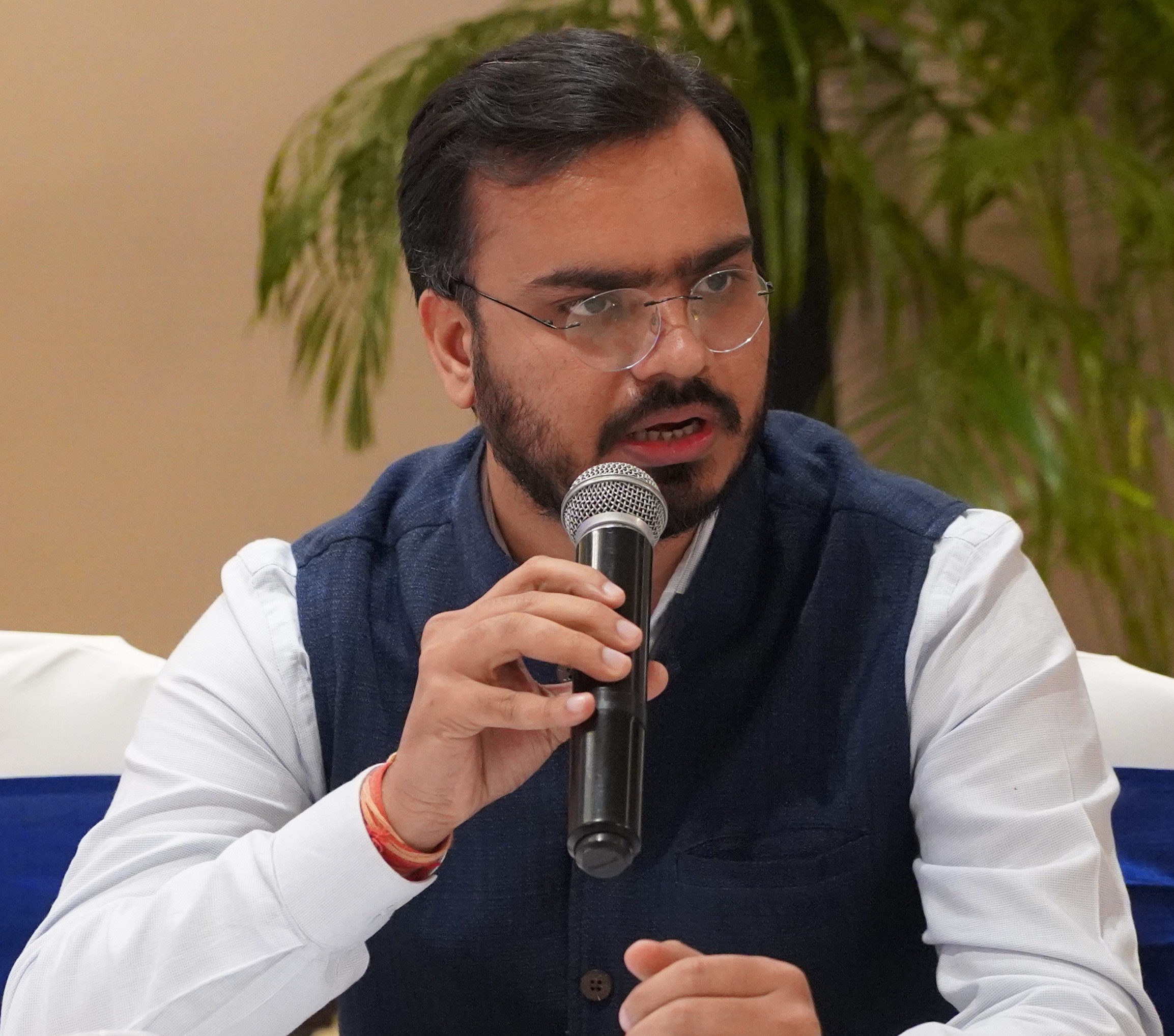
Tapan Bharadwaj, Senior Researcher, Institute of Peace and Conflict Studies (IPCS)
About the Author
Tapan Bharadwaj is a senior researcher at Institute of Peace and Conflict Studies in New Delhi. He has a Master's in International Relations and is currently pursuing a PhD in Chinese Studies at University of Delhi. His areas of interest are international relations, national security issues, China and world order, global governance, clean energy transition, climate change and sustainable development.
Kontakt
