
Short Article
Armenia at a Turning Point: The Battle for Geopolitical Direction
Bigbag and Sandbag; Adobe Stock Images
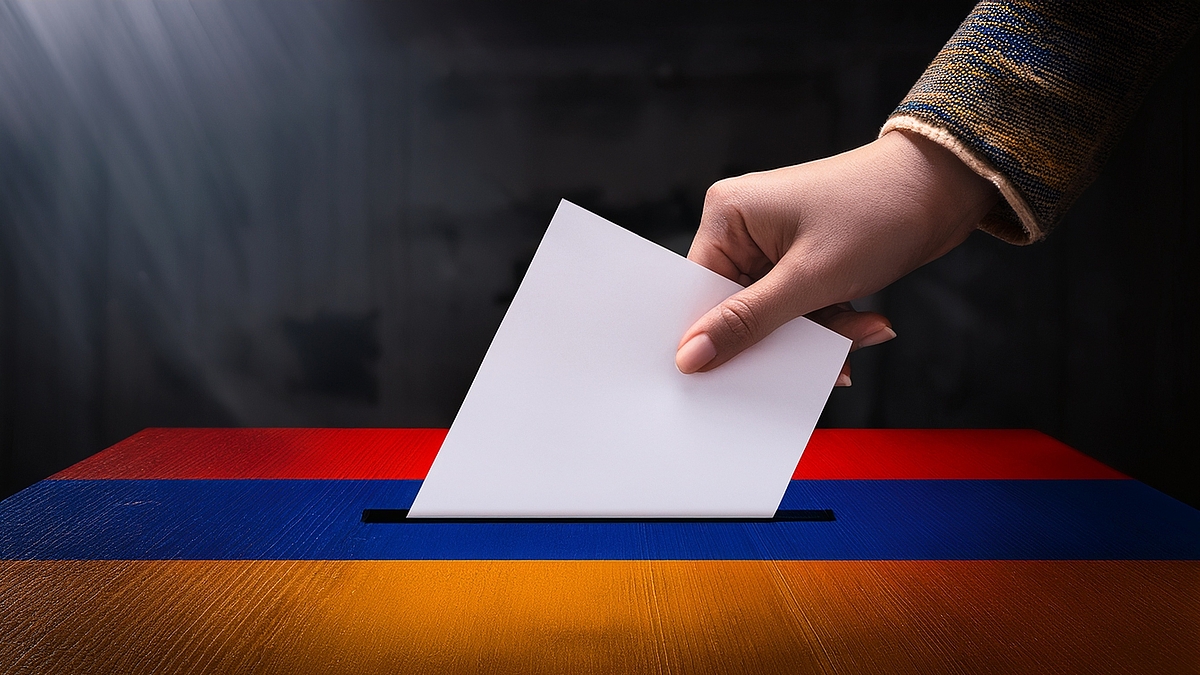
Armenia held its parliamentary elections on 7 June 2026, redefining its geopolitical position between Russia and Europe.
The elections were characterized by unprecedented geopolitical significance. They unfolded within the context of the Armenian government's emerging political vision and a profound reorientation of the country's foreign policy trajectory. The election results have now been finalized. Of the 105 seats in parliament, 64 were won by the ruling Civil Contract Party, while the oppositional bloc Strong Armenia, led by Samvel Karapetyan, secured a combined total of 41 seats. The final results of the election will be officially declared on 19 June. One of the more controversial developments following the election was Prime Minister Pashinyan's public appearance in the early hours of 8 June. At 2:39 a.m., he announced his victory despite the fact that only 20 percent of the votes had been counted at that stage. Many opposition parties criticized the announcement as unconstitutional and argued that it undermined the integrity of the electoral process [1].
European leaders reacted to the election results with visible relief at midday on 8 June. The President of the European Commission, Ursula von der Leyen, stated on her social media account that the Armenian government could rely on Europe's support [2].
Adobe Stock Images / Daniel
The election: Populism, Polarization, and Geopolitics
The election campaign itself was characterized by extreme polarization and political tensions. The main rhetoric was dominated by populist slogans, personal insults, and threats, while substantive political programs largely remained overshadowed by this destructive tone. Numerous campaign offices were subjected to sudden inspections, and opposition politicians and candidates were arrested on suspicion of corruption. A key opponent of Prime Minister Nikol Pashinyan was the Strong Armenia bloc. The alliance participated in the election alongside former President Robert Kocharyan’s Hayastan alliance and the Prosperous Armenia Party, headed by businessman Gagik Tsarukyan. The political and economic ties of all three leaders to Russia is particularly notable. Samvel Karapetyan had long resided in Russia, where he built and managed his business. Robert Kocharyan, during his presidency, was regarded as the first Armenian leader to significantly open the country’s economy to Russian investors following the collapse of the Soviet Union. Meanwhile, Gagik Tsarukyan maintained substantial business interests in both Russia and Belarus. These three opposition forces were widely regarded as the main challengers to the ruling Civil Contract party. Other opposition participants included the Wings of Unity led by former Human Rights Ombudsman Arman Tatoyan and the Armenian National Congress founded by former President Levon Ter-Petrosian.
The election was largely centred on Yerevan's geopolitical orientation and the future of its foreign policy course. The competition between two ideological frameworks—authoritarianism and liberalism—was the defining issue of the election. However, one important discourse remained in the international media largely overlooked. The domestic political discourse was primarily shaped by relations with Azerbaijan and Turkey, the loss of Nagorno-Karabakh, and the government’s peace initiative with Baku and Ankara. The opposition asserted that the re-election of the Pashinyan’s party would determine the future of Armenia’s state sovereignty. They criticized the government’s foreign policy approach, arguing that it lacked the capacity to conduct balanced and effective negotiations with Azerbaijan. In their view, Azerbaijan is not prepared for peace and shows little interest in the peace initiative.
Deteriorating Russian-Armenian Relations
A particularly notable feature was the unprecedented degree of Russian attempts to influence the election. Relations between Yerevan and Moscow had grown increasingly strained and ambiguous in recent months, largely as a result of Yerevan's expressed desire to strengthen ties with the European Union (EU). The situation intensified after Pashinyan’s visit to Moscow in April. In a rare and notably confrontational exchange at the Kremlin, the Russian president publicly cautioned Armenia and urged Yerevan to make a strategic choice between Brussels and Moscow. Vladimir Putin warned Armenian Prime Minister Nikol Pashinyan that Russia would not accept Armenia’s closer alignment with the EU. Pashinyan remained notably restrained, but nevertheless stated that the decision rested solely with the citizens of Armenia, who would determine which political forces would shape the country’s political landscape [3]. Following this meeting, Russian rhetoric reportedly became significantly more aggressive, with statements increasingly interpreted as indirect threats and coercive pressure. Shortly before the elections, Russia reportedly began activating its economic levers. The Russian National Health Authority announced that imports of Armenian mineral water, wine, brandy, vegetables, and fruit would be suspended due to identified deficiencies. At the end of May, Dmitry Medvedev, Deputy Chairman of the Russian Security Council, stated that Armenian citizens would come to recognize the full consequences of Pashinyan’s leadership failures if Russia were to reconsider its preferential gas pricing for Armenia and instead sell gas to Yerevan at European market rates. He further suggested that, as a result, citizens would ultimately remove the prime minister from office [4]. At the Eurasian Economic Union summit on 29 May in Astana, Vladimir Putin stated that if Armenia were to begin aligning its systems with European standards, Russia would be “objectively compelled” to reconsider Armenia’s participation in the Union’s integration framework [5]. He also referred to the Ukraine crisis, framing it as having been triggered by attempts at closer alignment with the European Union. This remark was widely interpreted as a warning, suggesting potential parallels or risks associated with Armenia’s own European rapprochement.
This tension demonstrates that Armenian–Russian relations have reached a historic low in their bilateral relationship. Balancing the management of this situation while preserving its European course will constitute Yerevan's greatest challenge in the months ahead. The Armenian government now faces a major challenge: to manage the planned emancipation from its Russian partner in a way that minimizes risks and avoids major disruptions. This is likely to prove extremely difficult, given that Prime Minister Pashinyan has very little political support in Moscow. Armenia’s economic stability remains highly dependent on Russia. Despite increasingly Russia-critical rhetoric, the Armenian government has not implemented concrete measures over the past two legislative periods to reduce this dependence. According to the United Nations Comtrade database, exports to Russia have in fact increased significantly since 2022 [6]. Armenia also relies on Russia for around 80 percent of its gas and oil supplies. The government aims to replace this dependence with Azerbaijani resources; however, this cannot be achieved in the short term, particularly in the case of natural gas, which remains dependent on pipeline infrastructure due to geographical distance. It is also entirely possible that Russia, which maintains strong energy relations with Baku and also transports its own resources through Azerbaijani infrastructure, could simply block this emerging partnership.
The Path Towards the EU
The intended European path will remain a major challenge in the coming years. First, Russia is expected to use all available instruments of influence to obstruct this shift. These will not be limited to political and economic measures. Moscow is also likely to attempt to instrumentalise the Armenian diaspora in Russia, as well as the Russian diaspora in Armenia, for this purpose.
Another obstacle remains on the path towards the EU. While Yerevan may increasingly define its future in terms of EU integration, political aspiration alone is not sufficient for membership. The process is lengthy and requires extensive regulatory alignment as well as compliance with strict economic and political criteria. Armenia is currently far from meeting those. However, the path towards the EUis not solely Armenia’s responsibility. Brussels must also assert its credibility more strongly. The election results have shown that Armenian society is deeply polarized. The EU needs to strengthen trust within the country and ensure that it does not leave Armenia behind. If this does not happen, and if Brussels fails to formulate and consistently pursue a clear strategy, Armenia could drift into a situation similar to Georgia’s, with a pro-European trajectory weakening over time, and the EU risking the loss of Armenia as a partner, as it has increasingly experienced with Georgia.
References
[1] https://www.aravot.am/2026/06/08/1562177/
[2] https://armenpress.am/en/article/1252329
[3] https://de.euronews.com/2026/04/03/russland-eu-putin-armenien
[4] https://tert.am/am/news/2026/05/23/medvedev-pashinyan/4271604

Barbara Frommann
About the Author
Dr. Shushanik Minasyan-Ostermann is Senior Fellow at the CASSIS in Bonn. Her research focuses on the new security order in Eurasia and the nexus between power discourses in the post-Soviet area.
Contact
