
Short Article
Argentina: President Javier Milei is entering the second half of his term in office
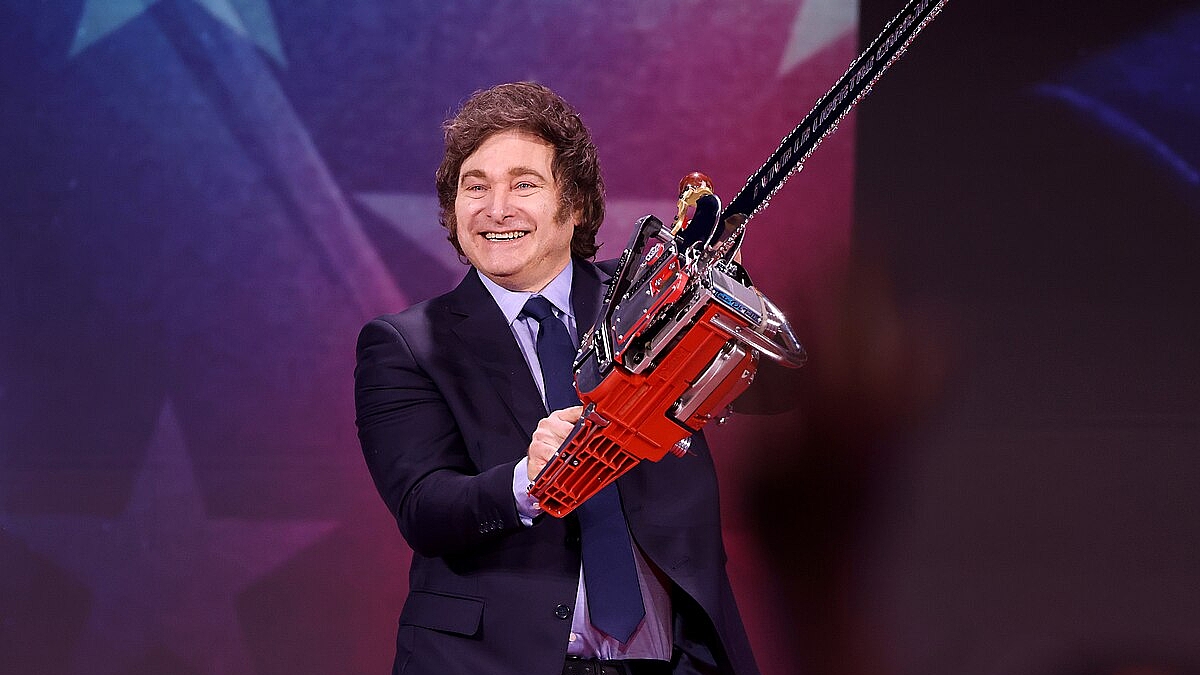
President of Argentina Javier Milei speaking at the 2025 Conservative Political Action Conference (CPAC) at the Gaylord National Resort & Convention Center in National Harbor, Maryland.
Gage Skidmore; https://www.flickr.com/photos/gageskidmore/54349800289/
Inflation was running at 211.4% when Milei took office. By the end of October this year, it had dropped to 31.3%. Inflation is expected to fall to 20% in 2026.
Argentina posts monthly surpluses for the first time in many years, achieved by drastic cuts in government spending (chainsaw in action), even applied to investments in public works.
Seasonally adjusted, gross domestic product (GDP) grew by 0.9% in the first quarter of 2025 compared with the fourth quarter of 2024 and fell by 0.1% in the second quarter of 2025 compared with the first quarter of 2025.
The Merval, Argentina’s main stock market index, tripled during Milei’s two years in office. Argentine companies suddenly became attractive to investors again. The economy began to finance itself again.
The Argentine government launched the RIGI (Régimen de Incentivos para Grandes Inversiones), an incentive scheme for large investments, to promote foreign investments of over 200 million USD. It provides 30 years of legal certainty, tax and customs benefits, as well as international arbitration. So far, investments totaling 31 million USD have been reported in the mining sector – Argentina is rich in lithium and copper. Additional investment projects are planned in the energy sector, which in Argentina spans renewable energies, gas and oil, and nuclear power expansion.
The commodities and energy sector, as well as agriculture, are highly mechanized. They do not create the additional jobs currently being lost.
The Argentine Ministry of Labor reported that around 313,000 jobs have been lost in the formal sector of the economy (both private and public) as of August 2025, since Milei assumed office. The number of companies dropped by almost 20,000. Manufacturing is being hit hard by a sluggish domestic demand and mounting pressure from low-cost imports, a consequence of the artificially strong exchange rate. Argentina’s tourism sector is likewise affected.
INDEC, the national statistics bureau, reported that goods exports increased by 8.1%, totaling around 71 billion USD in the first ten months of 2025. Goods’ imports increased by 28.9 percent to almost USD 65 billion, resulting in around 7 billion USD surplus. A strong rebound has been reported in agricultural, fuel, and energy exports.
The Argentine peso ranks among the continent’s strongest currencies. Economic theory suggests that in countries with high inflation, the exchange rate should rise (referring to the peso–US dollar rate). This does not happen in Argentina, as the government continuously intervenes in the foreign exchange market to prop up the peso. This policy keeps imports of goods and services cheap but makes exports costly, creating a disadvantage for local businesses.
The government claims that a freely floating exchange rate would raise import prices and boost inflation. Meanwhile, the overvalued currency enables millions of Argentines to travel overseas. They can afford holidays in Punta del Este, Uruguay, and even travel to Europe.
INDEC estimates the poverty rate at 31.6%, while the politically independent Universidad Católica Argentina (UCA) sets it at 36,3%. Nevertheless, the rate is now at its lowest level since 2018. The positive downward trend is attributed to inflation stabilization and a partial recovery in wages, transfers, and social protection systems.

The rise and fall of $LIBRA highlighted the risks of presidential involvement in volatile crypto markets under Milei’s libertarian economic vision
Koshiro K - stock.adobe.com
Argentina’s midterm legislative elections
The National Congress of Argentina is composed of the Senate and the Chamber of Deputies. One-third of the Senate and half the Chamber of Deputies were up for election on October 26. Voter turnout was only 68% despite compulsory voting. Milei’s Party La Libertad Avanza obtained 42.03% of the votes (Senate) and 40.66% (Chamber of Deputies), Peronism 28.42% (Senate) and 31.70% (Chamber of Deputies).
It hadn’t looked that way before. In a representative survey conducted shortly before the midterm elections by AtlasIntel/Bloomberg, 55.7% of respondents were against Milei, while only 39.9% supported him. 51.8% rated the government’s performance as poor to very poor, compared with just 29.5% who rated it as good to very good.
One scandal has followed another for months. Press freedom deteriorated significantly. The economy slid into recession. Unemployment rose. The central bank drifted toward bankruptcy.
On February 14, 2025, Argentine President Javier Milei promoted the cryptocurrency $LIBRA on X, which, he believed, would boost economic growth. Shortly afterward, he deleted the post, and the cryptocurrency’s price collapsed. The multimillion-dollar fraud, allegedly involving Milei, has been reported in both the U.S. and Argentina. Around 74.700 people lost over 286 million USD.
Milei had to drop his top candidate, José Luis Espert, shortly before the midterm elections amid allegations of involvement in drug trafficking. Milei‘s sister Karina is alleged to have embezzled public funds.
Argentina fell 21 places in the 2025 World Press Freedom Index, and is now ranking 87th. According to Reporters Without Borders the steep fall is due to President Milei’s constant “insults, defamation, and threats” against the press since he took office. He regularly insults journalists, avoids press conferences, and communicates almost exclusively through social media. In addition, his government is deliberately dismantling the public media system and creating a climate of intimidation. Reporters Without Borders warns of an increasingly authoritarian course that systematically undermines independent journalism.
Shortly before the midterm elections, the U.S. Department of the Treasury announced its intention to provide a multibillion-dollar loan package to support Milei. U.S. President Donald Trump tied the aid to Milei’s good performance in the midterm legislative elections. For many Argentines, fear of the past—namely, the fear of a sovereign default—still outweighs doubts about the present.
For the first time since the return to democracy in 1983, Peronism is no longer the largest faction in Argentina’s Chamber of Deputies. Milei’s party, La Libertad Avanza, now holds 95 of 257 seats in the lower house, and 20 of 72 seats in the Senate. Following Milei party’s surprising success in the October 26 midterm legislative elections, and with the support of several defectors from Peronism and the liberal-conservative PRO (Propuesta Republicana), a political constant that had seemed unshakable for four decades is now shifting.
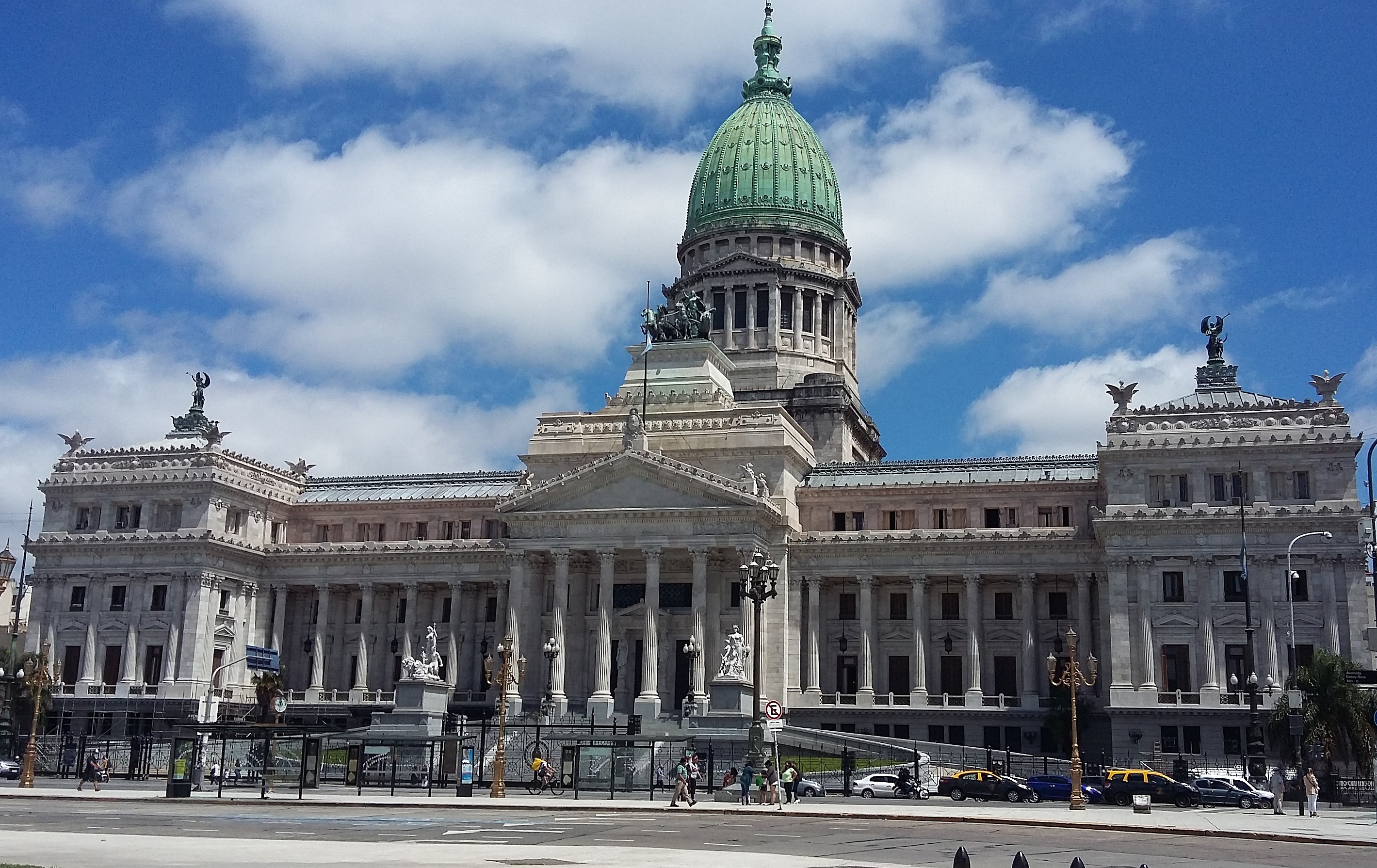
Milei’s win brings market optimism, but deep structural reforms lie ahead—from labor and tax changes to environmental and penal code revisions—requiring dialogue in Congress
What is the effect of the midterm elections?
Milei’s election win sparked euphoria in the markets, with international investors detecting signs of a fresh start. Investment risk is now seen as significantly lower—albeit from a very high starting point.
Milei must now tackle deeper structural reforms. A fiscal surplus and the curbing of inflation will not be sufficient in the long run. Milei adopted a more statesmanlike, conciliatory, and less aggressive tone since the midterm elections. He is conscious of the importance of a constructive dialogue with other pro-reform forces in Congress.
The first item on the agenda is the passage of the 2026 national budget. Since Milei took office, he chose not to negotiate with governors and opposition parties, opting to govern without a budget and to allocate and adjust funds by decree. It will be different next year. Both the IMF and President Donald Trump’s government have called for internal consensus and institutional sustainability.
Milei intends to put a series of reforms up for debate in Congress. Among them is a proposal likely to spark conflict with trade unions: the flexibilization of labor law, and another one that has put environmental groups on alert: amending the glacier protection law in favor of mining. A reform of the penal code is also planned, meant to reduce crime through harsher penalties.
The list of projects includes, among others, a proposal of particular interest to the executive branch: under the guise of a „tax amnesty“, the measure facilitates money laundering to funnel U.S. dollars from virtually any source into the economy. Further bills are planned for a later phase of the parliamentary debates and are already being drafted by the Milei administration; for instance, a tax reform and a pension reform.
What, specifically, does the labor market reform entail?
The following changes are planned:
- Food vouchers (“tickets canasta”): Meal vouchers will be introduced, which are not classified as remuneration and are exempt from social security contributions. They can be redeemed in supermarkets, thus creating a secondary consumer market.
- Performance-based pay: Salary increases will be linked to individual performance, the company’s economic situation, and sector-specific conditions.
- Flexible working hours: Working hours may be extended to boost production; a 12-hour rest period between shifts is ensured.
- Working time accounts: Companies will be allowed to offset days of higher workload with days of lighter workload, provided the weekly maximum working time of 45 hours is respected.
- Split annual leave: the annual leave may be divided into periods of at least one week each. Seven days must be guaranteed in summer. The statutory period for paid leave is extended from October 1 to April 30, provided a 45-day notice is given.
- Collective bargaining agreements will no longer be extended automatically. Only the provisions governing working conditions will remain in force until a new agreement is reached.
- Company-level agreements: Individual negotiations take precedence over sector-wide agreements; regional and production-related specifics are taken into account.
- Voluntary union dues: Union dues are deducted only with the employee’s explicit consent. Automatic deductions are no longer mandatory.
- Right to strike with minimum service levels: In essential services, at least 75% of operations must be maintained; in services of vital importance, the minimum is 50%.
- Full digitalization: In-person visits to public authorities will be eliminated and administrative procedures simplified.
- Mandatory membership: the requirement to belong to professional associations for carrying out several activities is eliminated.
- New statutory framework for suppliers: a special provision will be created for the self-employed persons who work for platforms such as PedidosYa, Rappi and Mercado Libre.
- Repeal of the telework law: It will be replaced with a flexible model, agreed upon between employer and employee.
- Restrictions for trade union meetings: These are banned in workplaces without prior authorization; the number of delegates is limited, particularly in small and medium-sized enterprises (SMEs).
- Severance pay and dismissals: Traditional severance pay can be replaced by funds or industry-specific insurance schemes. A distinction is made between dismissals with and without just cause.
The labor reform also foresees the creation of an incentive system for medium-sized investments (Régimen de Incentivo para Medianas Inversiones – RIMI). This initiative should promote the influx of domestic and foreign capital into productive sectors. The measure mainly intends to promote economic development, strengthen competitiveness, expand exports, and create new jobs through targeted tax incentives. It was driven by the demands of small and medium-sized enterprises (SMEs) to introduce the incentive system for large-scale investments (RIGI).
The RIMI establishes a legal framework for companies founded or registered in the Argentine Republic, committed to making new investments within the first two years after the law comes into effect. These investments must be used for the purchase or manufacture of new movable goods — excluding motor vehicles — and for activities directly related to productive operations. According to the legal text, financial investments, portfolio investments, and the purchase of goods for resale are not part of the program.
Investments must exceed a minimum amount, which depends on the company’s size, to qualify for RIMI’s benefits. According to these requirements, a microenterprise must invest at least USD 150,000, a small company USD 600,000, a medium-sized company (level 1) USD 3,500,000, a medium-sized company (level 2) USD 9,000,000, and larger companies at least USD 30,000,000.
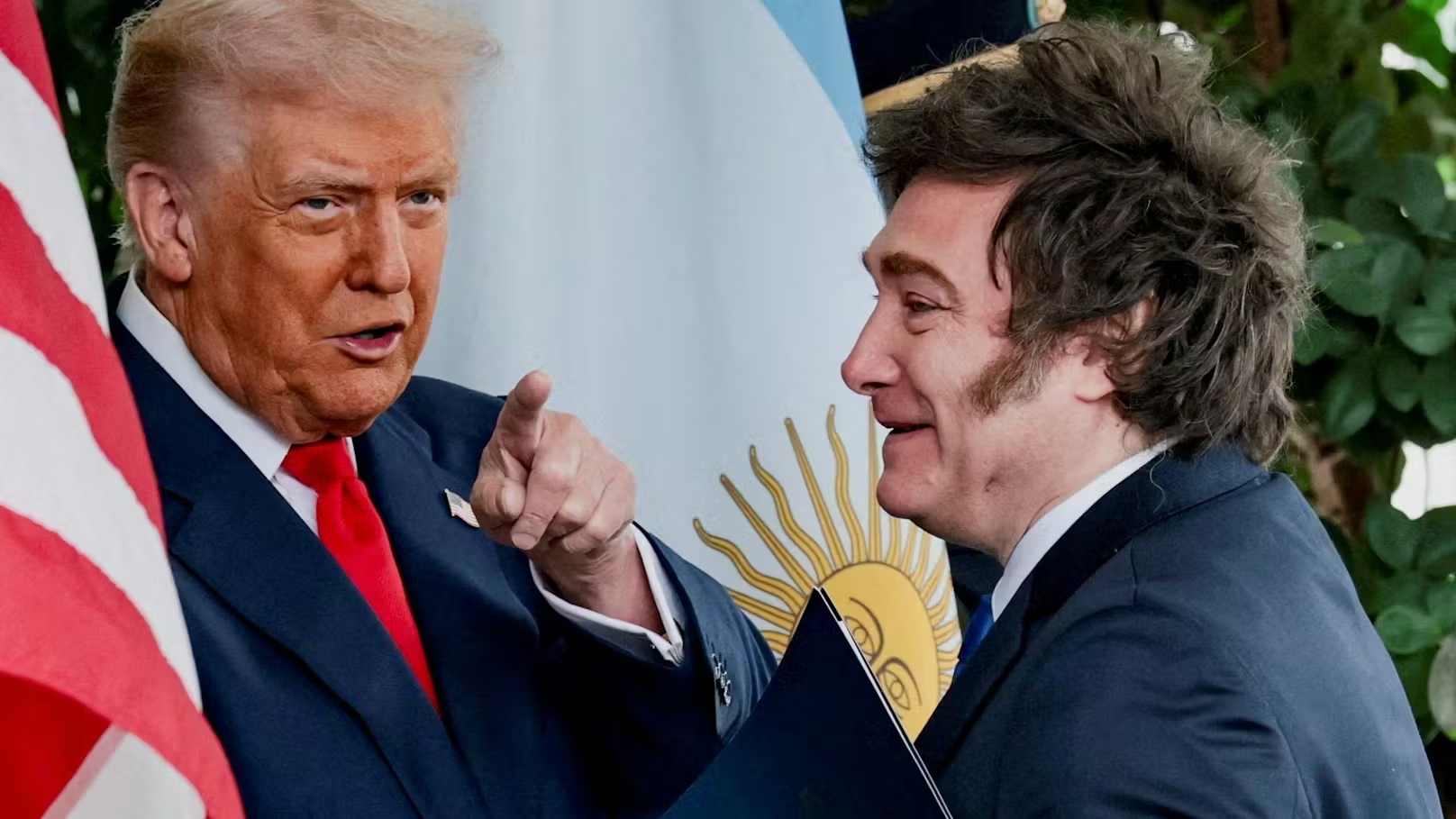
U.S. support under Trump positions Milei to pursue reforms, even as Argentina remains closely linked to China through trade, investment, and lending.
DJ Digitale Medien GmbH; https://www.heute.at/i/trump-gratuliert-milei-zum-wahlsieg-in-argentinien-120140195/doc-1j8jh17uh0
Financial backing provided by the US Administration
The US administration financially supports Milei’s agenda. Trump intends to strengthen the US influence in Argentina, especially regarding China. No easy task, given how closely intertwined the Argentine and Chinese economies are. Argentina mainly exports agricultural products (soybeans, soybean oil, beef), while China supplies a wide range of electronics, machinery, and automobiles. Chinese exports greatly exceed Argentine exports. China has made significant investments in critical minerals and energy projects; Argentina is therefore an important supplier of raw materials for China’s industry. China is also a major lender to Argentina. Argentina’s central bank reserves are thus strengthened, and payments eased.
Hopefully, Milei’s reforms will succeed and lead Argentina back to prosperity. However, he should reconsider his dismissive stance toward the United Nations, the 2030 Agenda, the Paris Climate Accord, and the UN Global Compact.

About the Author
Prof. Dr. Klaus Georg Binder has been working for the Hanns Seidel Foundation since February 2007. Between February 2007 to March 2014, he was a project manager in various Latin American countries and from April 2014 to December 2018, he led the Latin America Division in Munich. Since January 2019, he is a project manager in the HSF Argentina office.
Kontakt
