
Political Analysis
Who Controls the Feed in Morocco's Digital Election?
IHERPHOTO; HSS/; AdobeStock
A decisive result and a quieter electorate
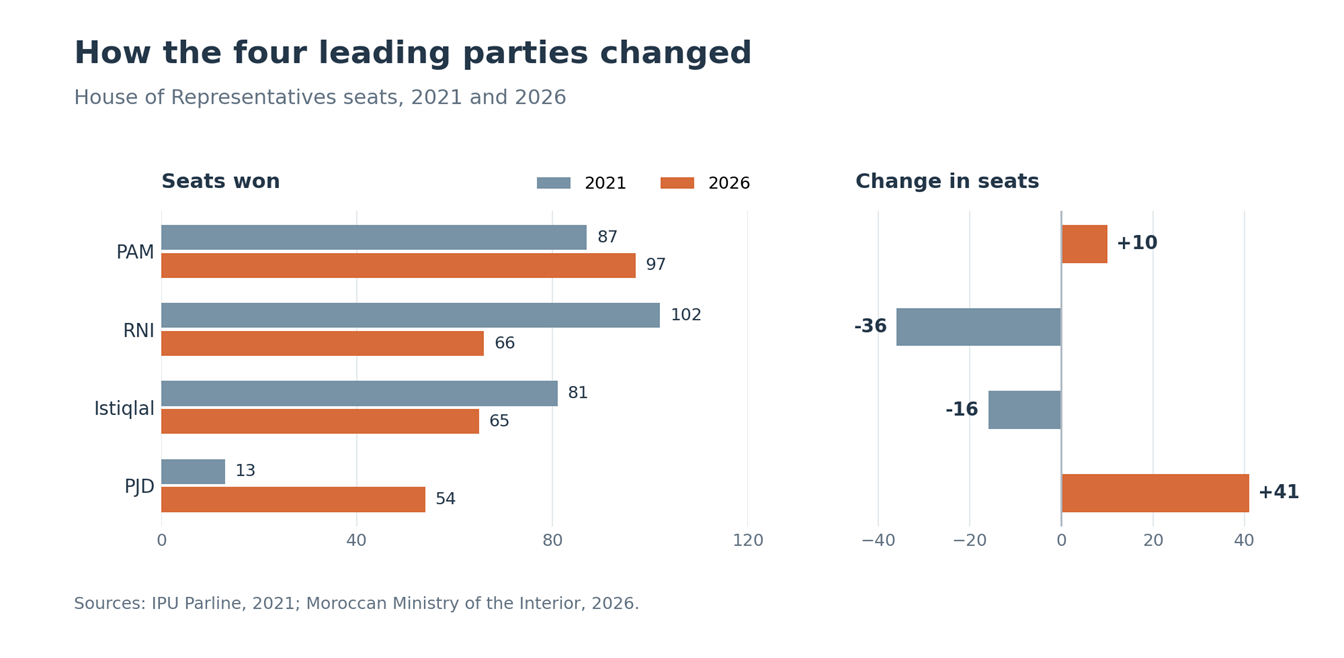
Morocco's parliamentary election on 23rd September 2026 changed the balance in the House of Representatives. The Authenticity and Modernity Party (PAM) finished first with 97 of 395 seats. The National Rally of Independents (RNI) won 66, the Istiqlal Party 65 and the Justice and Development Party (PJD) 54, returning the PJD to prominence after its heavy losses in 2021. In 2021, PAM held 87 seats, RNI 102, Istiqlal 81 and PJD 13.
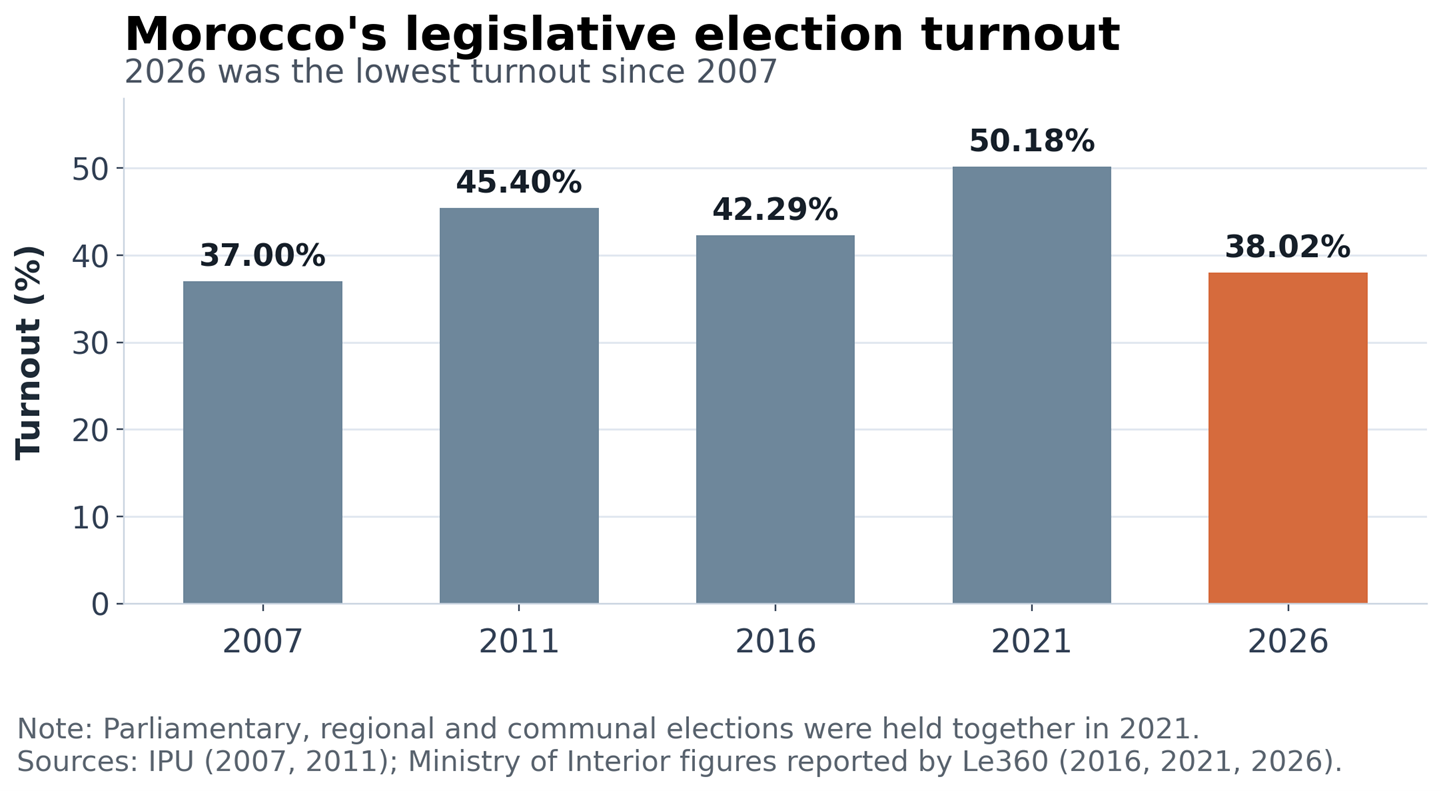
The other important result was participation. Turnout was 38.02 percent, compared with 45.4 percent in 2011, 42.29 percent in 2016 and 50.18 percent in 2021, but slightly above the 37 percent recorded in 2007. This was the second-lowest turnout among Morocco's five legislative elections from 2007 to 2026. The 2021 comparison needs caution: parliamentary, regional and communal elections took place on the same day, and election observers noted that local elections generally attract more voters. Even so, reaching people online does not necessarily translate into voting or greater trust in formal politics.
Being visible is not the same as being trusted
This distinction matters for electoral behaviour. A voter can encounter a candidate repeatedly on a phone, watch a rally, share a clip or argue in the comments without becoming more likely to vote in his or her favour. Digital exposure may create recognition, but recognition is not the same as trust, persuasion or participation.
This gap is particularly relevant among young Moroccans. Afrobarometer's March 2026 report, based on its latest national survey, compared respondents aged 18 to 35 with older respondents. The findings do not suggest political indifference among young people. While younger respondents show weaker attachment to parties and lower electoral participation, they are more active in political discussions on social media and more likely to participate in demonstrations. The study therefore points to a more differentiated pattern of political engagement rather than a simple decline in political interest. GenZ 212, a Moroccan youth protest collective named for the country's +212 calling code, had already shown how Discord, TikTok and Instagram could organise political discussion outside party structures.
Algorithms shape that space quietly, predicting what will hold attention and recommending more of it. Repetition creates familiarity, while engagement-driven systems can reward emotional messages. No public post-election study shows how many Moroccan voters changed their mind because of an algorithm or AI-generated content. The spending figures below document unequal capacity to buy visibility. They do not establish how far recommendation systems changed the visibility of Moroccan political messages.

When political attention could be bought
The scale of that inequality became clear in 2021. According to figures available through Meta's advertising tools, the RNI spent about USD 211,035 on its main Facebook and Instagram presence between 11 March and 29 August. The party won that election and went on to lead the new governing coalition. The incomplete data did not capture every platform, candidate or affiliated page, but showed that parties had very different capacities to purchase attention.
The disparity reappeared before the 2026 official campaign. Meta data for 9 August to 7 September showed USD 133,103 associated with the RNI, compared with USD 22,184 for the PAM, USD 14,489 for Istiqlal and USD 6,095 for the Socialist Union of Popular Forces. These incomplete Meta figures do not establish a violation, but they reveal a substantial disparity in paid online exposure even before the official campaign began on 10 September.
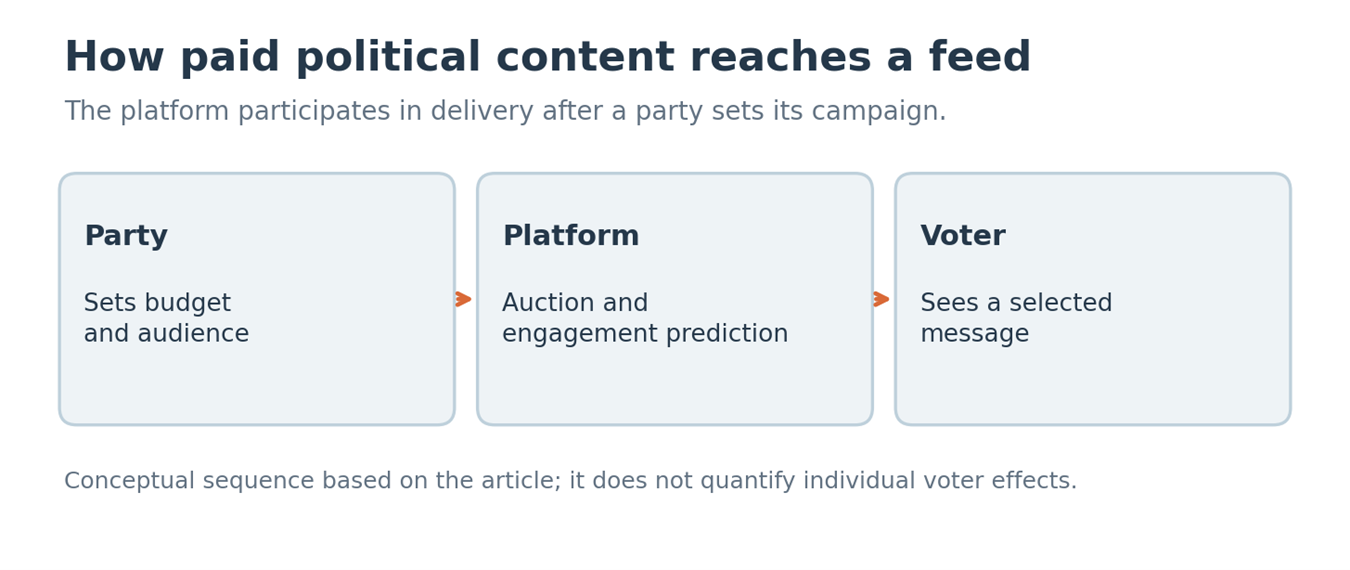
Sponsoring matters because money buys reach, repetition and experimentation. Yet payment is only the first decision. Meta's advertising system uses an auction and machine-learning predictions, including a person's likelihood of engaging with an advertisement. A party chooses a budget and an audience; the platform helps determine who within that audience sees the message, how often and at what cost.
The algorithm is also a political intermediary
Experiments with political advertising on Facebook have found that delivery algorithms can favour users whose presumed political orientation matches the content, even when advertisers use broader targeting. This can affect how widely an advertisement is seen and how much the advertiser pays. As a result, two parties spending the same amount and targeting the same audience may still reach different numbers of people at different costs.
An algorithm does not decide an election, and voters retain agency. But a private, opaque system now mediates between parties and citizens. Recognition can produce faster engagement, wider distribution and still more familiarity. Smaller parties may gain cheap production tools without gaining equal access to attention.
From QR codes to political chatbots
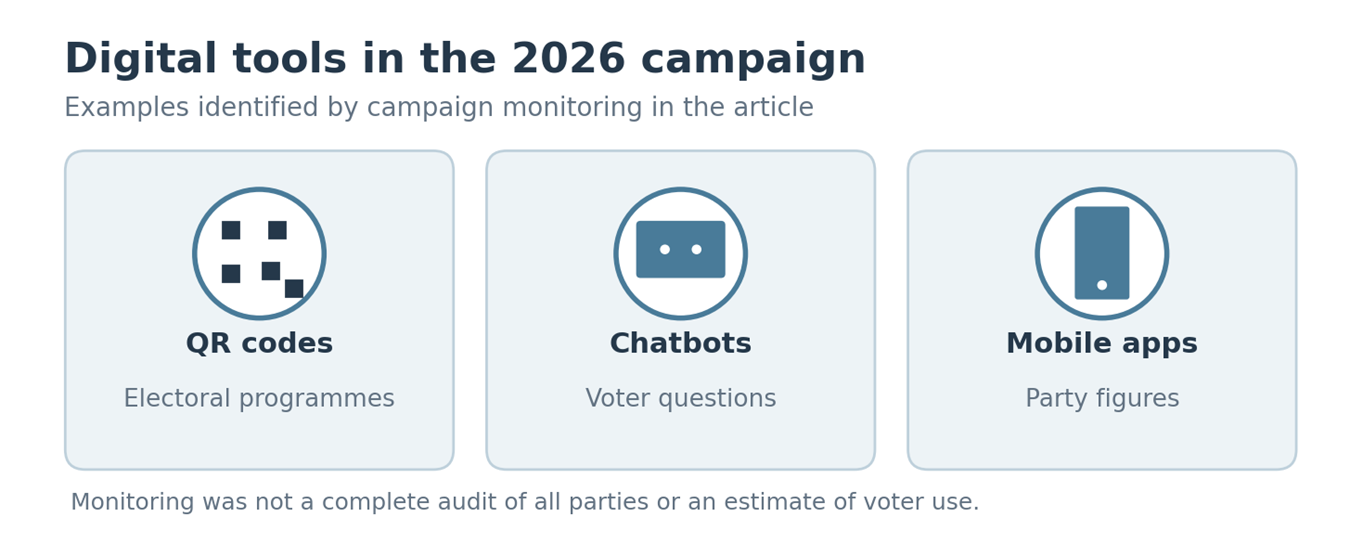
Digitalisation in 2026 moved beyond social-media posts. The International Center for Diplomacy Campaign Monitoring identified AI-supported chatbots associated with the PAM, Istiqlal and other parties; QR codes linked to electoral programmes; and mobile applications associated with prominent party figures. A few posts carried platform notices about generated content. Some candidates from parties without parliamentary representation created avatars to answer common voter questions.
Such tools can also reduce the cost of producing translations, visual content, video and voter information, potentially lowering barriers to political communication. This may help smaller parties compete. Yet the monitoring was not a complete audit of all 27 parties, and it cannot show how often voters used these services or whether they influenced a choice.
The same technology makes manipulation cheaper. Observers also encountered false or hostile material from accounts whose party links could not be established. Synthetic media can circulate before verification, while authentic material may be dismissed as artificial. Uncertainty itself can weaken trust in electoral information.
Digital promises need practical tests
Digitalisation was also part of what parties promised to do in government. Programmes referred to electronic health records, price-information portals, employment platforms and online participation. AI, programming and gaming were presented as sources of jobs. These proposals become politically meaningful only when parties explain who will govern the data, how cybersecurity will be handled, what the service will cost, whether people outside major cities can use it and how actual uptake will be measured. Otherwise, a technically attractive solution may do little to address existing inequalities in access and delivery.
Morocco is part of a wider democratic test
International cases show why transparency matters. In the United States, an AI-generated voice imitating President Joe Biden was used in illegal robocalls before the 2024 New Hampshire primary; the regulator fined the consultant responsible USD 6 million. In Europe, the European Commission opened proceedings concerning TikTok after Romania's 2024 presidential election, examining recommender systems and coordinated manipulation. These cases illustrate a broader problem: voters cannot fully assess political messages when they cannot tell who sponsored them, whether the content was artificially generated or how it was amplified.
Morocco has already introduced rules addressing some of these risks. Organic Law No. 53.25 penalises paid political material placed on foreign platforms. Article 51 cover false news, fabricated material and AI-enabled content intended to damage candidates or electoral integrity. The audiovisual regulator also restricted misleading AI-generated electoral material unless clearly identified for reporting or verification.
New rules narrow one gap but do not create equality
The restriction on sponsored political advertising can improve equality in one specific way: during the official campaign, a wealthy party should not be able simply to buy vastly more impressions on a foreign platform than a smaller competitor. That is a meaningful response to the disparities visible in 2021. It also reduces the direct role of foreign technology companies in allocating paid Moroccan electoral messages.
Yet, equal treatment under an advertising rule does not mean equal opportunity. Established parties begin with larger audiences, prominent candidates, professional teams and sympathetic pages. Recommendation systems may then amplify organic engagement without revealing why one party travels farther through a feed.
Timing matters. A ban during the campaign may arrive after parties have built an audience. Monitoring also becomes harder when communication moves through local branches, unofficial pages, influencers or private groups, leaving no consolidated public record.
Fair digital competition requires visibility into the system
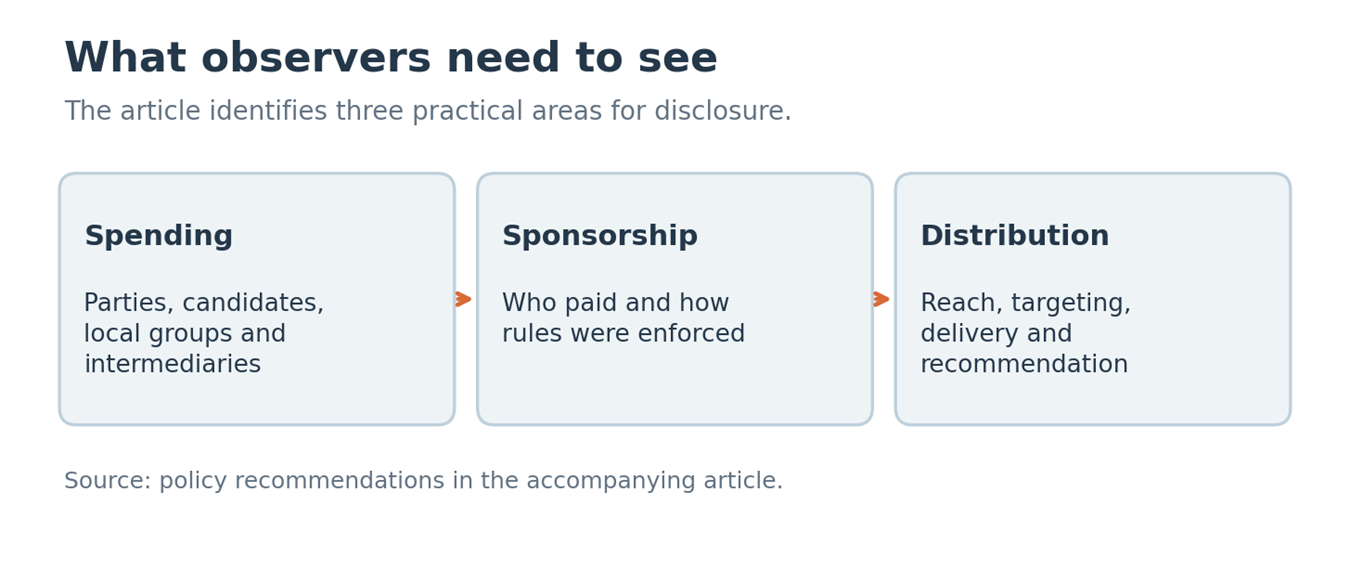
A fairer campaign requires more than prohibiting advertisements. Parties should disclose digital spending, including through candidates, local organisations and intermediaries. Sponsors and enforcement decisions should be identifiable, while observers need reliable information about reach, targeting and delivery.
Platforms also need to show how recommendation and advertising systems distributed political content. Otherwise, citizens can see the message but not the machinery that made it visible.
Technology did not choose Morocco's winner. The largest reported pre-campaign spender did not finish first, and digital activity did not prevent turnout from falling to 38.02 percent. Rules can curb the advantage of money and discourage manipulation, but cannot equalise political resources or create trust. Digital fairness depends not only on who may speak, but on who is made visible, by which system and on what terms.
About the Author
Karima Rhanem is a Moroccan multi-award-winning public policy and media expert and President of the International Center for Diplomacy, with over 20 years’ experience in international development, governance and human rights.
Contact
