
The World Watches Trump 2.0
The new Trump Age: Implications for Turkey
PIXABAY
Over the past 10 years, Ankara has moved away from cooperative diplomacy by strengthening its own position vis-à-vis Russia and China. At the same time, towards the collective West, Ankara behaved competitively as well. Especially in recent years, a number of ideological differences have emerged between the transatlantic partners. Turkey's relations with the USA in particular have become more difficult as a result. The problems between Ankara and Washington have become structural during the Biden administration. However, relations between the US and Turkey will look very different under the second Trump administration, and the following analysis examines the implications for Turkey's foreign policy following the change of administration in the US.
Turkey and the return of Trump
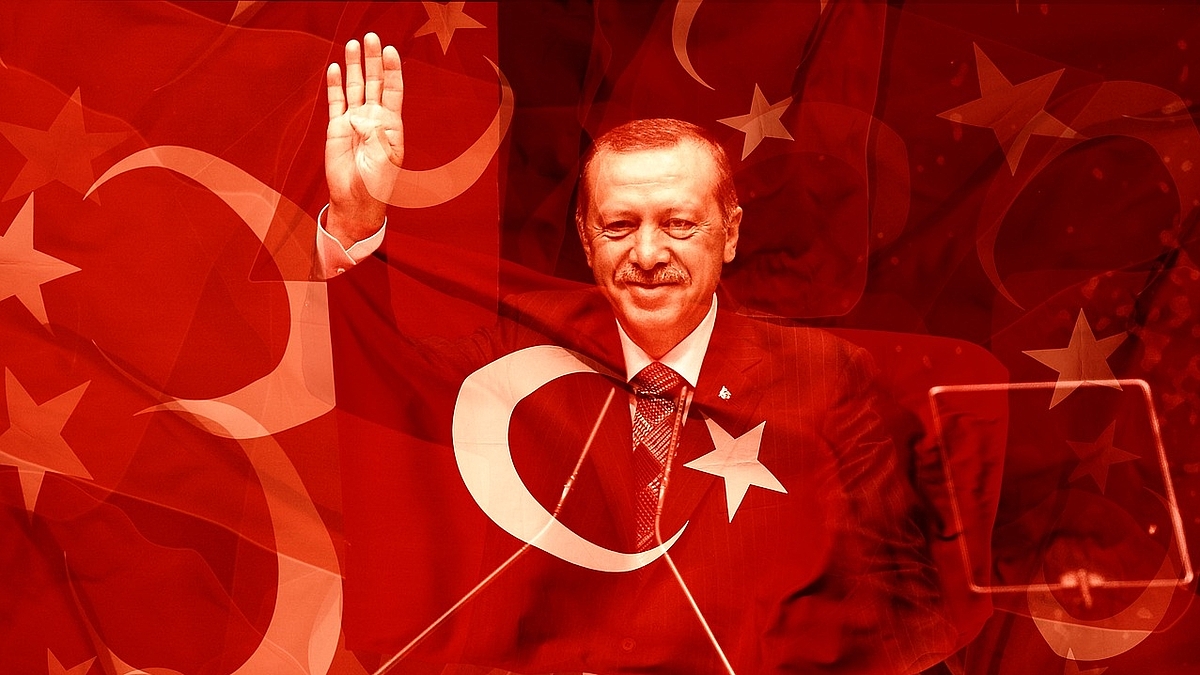
On November 6, 2024, Turkish President Recep Tayyip Erdoğan expressed clear optimism regarding Donald Trump’s re-election as president of the U.S., quickly congratulating him on X and calling him a friend. At a press conference with the Slovakian Prime Minister shortly afterwards, he expressed optimism about the future of relations between the USA and Turkey and referred to the two countries' previous affinity as a basis for new cooperation. The language and tone of his reaction immediately illustrated Erdoğan’s preference for Trump’s victory in the hope that it will reinforce a new age for Turkish-American relations, following the stage of stagnation during Joe Biden's presidency.
However, Ankara followed a more cautious approach to understand how Washington is going to design its behaviour towards Turkey. The American response, which came very quickly, indicated negative shifts in Turkish-American relations. The Trump administration's selection process, in particular the appointment of Republican Senator Marco Rubio as US Secretary of State, has caused great concern in the Turkish political establishment. Rubio is known for his anti-Turkish statements and belongs to the group of senators,who called on the Biden administration to urge the Turkish government to improve its human rights record..[1] Rubio strongly criticised Recep Tayyip Erdoğan, noting that Turkey has transitioned to authoritarian rule and that Erdoğan's government was weakening democratic institutions. Furthermore, Trump’s pro-Israel Cabinet has been seen in Ankara as a serious hurdle in calibrating diplomatic ties with Washington. It was obvious that the United States’ relation with Israel will remain the highest priority for Trump’s administration. Given the dramatic rift between Israel and Turkey since the military operation in Gaza and Erdoğan's tough rhetoric towards Israel,[2] there were shared concerns that this could lead to tensions between the US and Turkey.
The first open confrontation between Turkey and the U.S. unfolded much faster than expected, triggered by President Donald Trump’s announcement of his controversial plan to take control of Gaza and to relocate Palestinian people to Egypt and Jordan.[3] The Turkish president condemned the plan, deemed it unacceptable and criticized any attempt to forcibly resettle Palestinians. [4] The second crisis between Turkey and the U.S. has become increasingly evident, as Turkey has not been chosen as a mediator between Moscow and Washington, a decision that has sparked frustration within the country. Ankara had hoped to be part of these high-stakes discussions, given its strategic position and influence in the Middle East. However, its absence from these negotiations has left Turkey feeling sidelined, undermining its aspirations to play a more central role in shaping global diplomacy. In order to avoid a decline in its own geopolitical significance, Turkey responded to the ongoing bilateral negotiations in Riad by inviting Ukrainian President Volodymyr Zelensky to Ankara, demonstrating strong support for Ukraine. During the visit, President Erdoğan made a clear statement in which he recognized Ukraine's territorial integrity and reaffirmed Turkey's commitment to the country's sovereignty. [5] This action was a message to U.S. President Donald Trump, who had refused to support Ukraine. By offering its patronage to Kyiew, Turkey highlights its growing desire to strengthen its influence in Eastern Europe and beyond.
Such a crisis will not be an isolated incident in the coming years. The second Trump era will undoubtedly be marked by ambiguities and clashes in Turkish-American relations, which will require a significant amount of strategic manoeuvring by Ankara. Erdoğan will need to invest considerable efforts to maintain a robust and resilient political dialogue with Trump to ensure “his geopolitical acrobatics”[6].
From Ankara’s perspective, the following issues will be significant in Turkish-American relations in the coming years:
One of the most pressing issues is the U.S.’ support for Kurdish forces, particularly the YPG[7] which Turkey views as being identical to the PKK,[8] while the United States views them as separate groups, having recruited the YPG to defeat ISIS in northern Syria. During Trump’s first term, this issue was already a critical question between Ankara and Washington, and Turkish officials vehemently objected to the U.S.’ decision to provide additional arms to the YPG.[9] The U.S.’ stance on the Kurdish groups in Syria still remains a major source of tension between the two countries, and will likely continue to evolve, shaped by a combination of geopolitical and strategic factors, like the Israeli-Palestian conflict, the situation in Gaza and Iran’s involvement in Syria. Turkey’s vocal stance on the Palestinian issue, combined with its ongoing disputes with the U.S. over Syria and military alliances will be a key arena for future tensions between the two nations.
Secondly, the direct dialogue between Moscow and Washington could threaten Ankara’s security calculations and negatively impact Turkey's strategic role in Eurasia. Turkey has historically leveraged its unique position to maintain influence and act as a mediator between the West and Russia. Western support for Turkey was also long time the way to counterbalance Russia in the South Caucasus. If Moscow and Washington find common ground, Turkey's ability to balance its relations with both sides could be undermined. This shift could indirectly reduce Turkey’s strategic importance, weakening its leverage and potentially altering its role in broader Eurasian affairs.
Turkey's acquisition of the Russian S-400 missile defence system has caused a major rift with the U.S., as it led to Turkey's removal from the F-35 fighter jet program. Turkey is likely to continue pushing for a resolution that would restore its access to the F-35s, while the U.S. may insist on its own security concerns regarding the S-400 due to its incompatibility with NATO’s defence systems. Some experts see now an opportunity to settle the differences over the Russian S-400 missiles. Washington is proposing to move the Russian system to the US-controlled sector of the İncirlik airbase in order to take control of the Russian missile systems in Turkey.[10]. Experts assume that Washington in return could lift its arms sanctions on Turkey.[11]
The bilateral relationship will remain heavily focused on security matters. Turkish-American relations will remain exciting in the coming years and will be characterized by a strategic game of confrontation and cooperation. Despite occasional tensions, the U.S. it is unlikely that the US will reduce its commitment to Turkey as a NATO partner, especially given Turkey's strategically important geographical position. Furthermore, Turkey's military capacity ensures its status as a significant partner for the U.S. However, traditional Turkish diplomacy will soon reach its limits, particularly in light of Trump's pragmatic and often unpredictable approach to foreign policy. As a result, the dynamics between the two nations will evolve in unexpected and complex ways, making the future of their relationship both unpredictable and crucial for global stability.
[1] Stockholm Center for Freedom: US senators urge Biden administration to press Turkey on human rights record in bipartisan letter. 09.02.2021, available at: https://stockholmcf.org/us-senators-urge-biden-administration-to-press-turkey-on-human-rights-record-in-bipartisan-letter/.
[2] Cagaptay, Soner: Israel-Turkey Relations Nearing a Rupture, 09.08.2024, The Washington Institute-Policy Watch3910, available at: https://www.washingtoninstitute.org/policy-analysis/israel-turkey-relations-nearing-rupture.
[3] McKernan, Bethan: Netanyahu ‘committed’ to Trump’s plan to take over Gaza, the Guardian, 17.02.2025, available at: https://www.theguardian.com/world/2025/feb/17/netanyahu-committed-to-trumps-plan-to-take-over-gaza.
[4] Cebi, Gizem Nisa/ Sevencan, Seda: Turkish President Erdogan warns of US 'miscalculation' on 'unacceptable' Gaza plan, Anadolu Ajansi, 14.02.2025, available at: https://www.aa.com.tr/en/turkiye/turkish-president-erdogan-warns-of-us-miscalculation-on-unacceptable-gaza-plan/3482241.
[5] Soylu, Ragip: Turkey should be included in Russia-Ukraine war talks, Zelensky says, 18.02.2025, available at: https://www.middleeasteye.net/news/turkey-should-be-included-ukraine-talks-zelensky-says.
[6] Taylor, Paul: Can Erdoğan forge a new bromance with Trump? His future may depend on it, The Guardian, 28.01.2025, https://www.theguardian.com/commentisfree/2025/jan/28/can-erdogan-forge-a-new-bromance-with-trump-his-future-may-depend-on-it.
[7] People’s Protection Units
[8] Kurdistan Workers' Party
[9] Flanagan, Stephen at al: Turkey’s nationalist course, Rand Corporation. Washington D.C. 2020.
[10] Argiri, Lena: Talks on S-400 seen nearing a compromise, ekathimerini.com, 22.09.2024, https://www.ekathimerini.com/politics/foreign-policy/1249003/talks-on-s-400-seen-nearing-a-compromise/
[11] Taylor, Paul: Can Erdoğan forge a new bromance with Trump? His future may depend on it, The Guardian, 28.01.2025, https://www.theguardian.com/commentisfree/2025/jan/28/can-erdogan-forge-a-new-bromance-with-trump-his-future-may-depend-on-it.
Barbara Frommann
About the Author
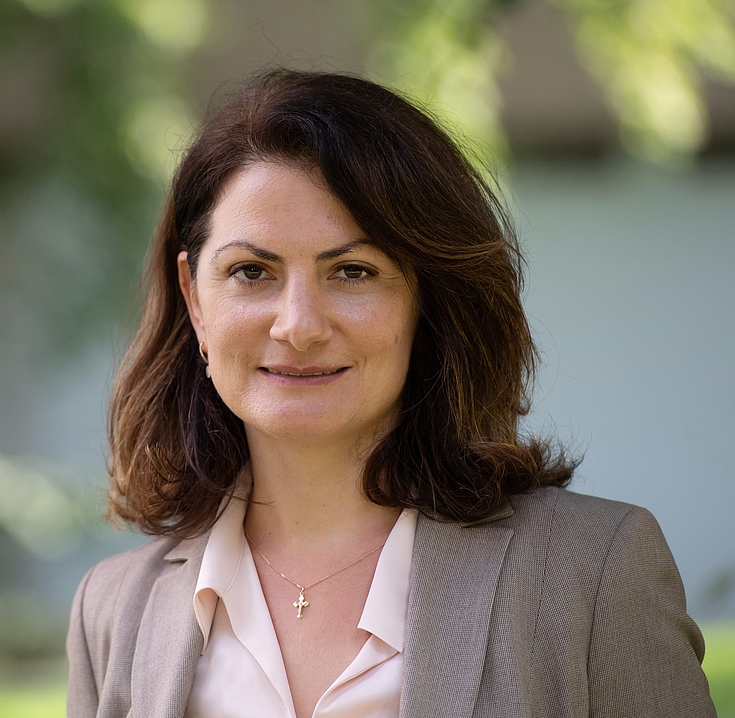
Dr. Shushanik Minasyan-Ostermann is Senior Fellow at the CASSIS in Bonn. Her research focuses on the new security order in Eurasia and the nexus between power discourses in the post-Soviet area.
Contact
