
Political Analysis
The Dushanbe Water Process: A Global Platform for Action and Partnership
Adobe Stock/kale.studio
Tajikistan’s Dushanbe Water Process has evolved into a key follow‑up mechanism to the UN 2023 Water Conference, connecting global commitments with concrete partnerships. The newly established Water Diplomacy Center adds an institutional engine for research, dialogue and policy advocacy on the road to the 2026 UN Water Conference.
Introduction: Tajikistan as a global water champion
Over the past two decades, the Republic of Tajikistan has emerged as one of the most active advocates of water on the global stage, consistently placing water security and sustainable water management at the centre of multilateral debate. As a mountainous, upstream country in Central Asia, Tajikistan is highly vulnerable to climate change, glacier melt and water‑related risks, but it also possesses significant hydropower and freshwater resources that are crucial for the region. This dual reality has shaped a foreign policy profile in which water is both a development priority and a diplomatic asset.
Against this backdrop, the Government of the Republic of Tajikistan has initiated and led several water‑related processes at the United Nations, including resolutions that paved the way for the International Decade for Action “Water for Life” (2005–2015) and the current International Decade for Action “Water for Sustainable Development” (2018–2028). These initiatives have been instrumental in keeping water high on the international agenda and in aligning national and regional efforts with the Sustainable Development Goals, in particular SDG 6 on clean water and sanitation.
The Dushanbe Water Process (also known as DWP) grew out of these diplomatic initiatives as a regular high‑level platform hosted in Tajikistan, bringing together governments, international organisations, experts and civil society to discuss water‑related challenges and solutions. It complements the UN‑led processes by offering a more focused, action‑oriented environment, rooted in the experience of a country that lives with water insecurity and transboundary water management on a daily basis.
The Dushanbe Water Process as a follow‑up mechanism to the UN 2023 Water Conference
The UN 2023 Water Conference in New York was widely recognised as a landmark event, leading to the Water Action Agenda and a large number of voluntary commitments by states, organisations and other stakeholders. However, the success of this conference depends on effective follow‑up and implementation mechanisms that can keep momentum, track progress and encourage new partnerships. This is precisely where the Dushanbe Water Process has assumed a distinct role.
Dushanbe’s high‑level water conferences, organised in the framework of the International Decade for Action “Water for Sustainable Development, 2018–2028”, have increasingly been framed as follow‑up and review platforms for global water commitments. They serve to monitor advances toward SDG 6, facilitate peer learning among countries and provide space for presenting progress on the Water Action Agenda. In this sense, the DWP acts as a bridge between the UN’s deliberative processes and more operational, regionally grounded initiatives.
The partnership entry of the Dushanbe Water Process in the UN system explicitly recognises it as a follow‑up mechanism to the UN 2023 Water Conference, underlining its function in mobilising stakeholders and consolidating information on implementation. For Tajikistan, this role reinforces its diplomatic positioning as a “global champion” on water, while for the broader international community, it offers a predictable, recurring space to take stock and adjust action. The decision to hold the 2026 UN Water Conference in Tajikistan can be seen as a logical continuation of this trajectory, further anchoring Dushanbe as a hub of global water governance.
A global platform for action and partnership
The Dushanbe Water Process is more than a series of conferences; it is designed as a global platform for action and partnership. Its meetings and associated events bring together representatives from UN agencies, international financial institutions, regional organisations, academia, civil society and the private sector. This diversity of actors is essential to addressing the multifaceted nature of water challenges, which cut across development, climate, energy, food security and peace.
A central function of the DWP is to facilitate the announcement, refinement and alignment of commitments under the Water Action Agenda. For example, during recent Dushanbe conferences, governments and organisations used the platform to present initiatives on accelerating access to safe drinking water and sanitation, strengthening climate resilience of water infrastructure and improving data and monitoring systems for SDG 6. One tangible outcome has been the consolidation of regional initiatives in Central Asia and beyond into broader multi‑partner programmes, including support for integrated water resources management and transboundary basin cooperation.
At the same time, the DWP serves as a venue for policy dialogue on sensitive but crucial issues such as transboundary water management, climate‑induced water stress and the nexus between water, energy and food. In previous conferences, sessions and side events addressed topics like glacier melt in the Pamirs and Tien Shan, its impact on seasonal flows and disaster risks, as well as the need to coordinate hydropower development with downstream irrigation demands. The relatively focused and technical nature of the Dushanbe conferences allows for in‑depth thematic discussions, often building bridges between global norms and regional practice.
The evolving architecture of the Dushanbe Water Process increasingly incorporates multi‑stakeholder participation, thematic tracks and side events that encourage direct interaction between practitioners, researchers and decision‑makers. This helps to generate new ideas, highlight good practices and identify replicable models. For international partners such as the Hanns‑Seidel‑Foundation, the DWP offers a natural entry point to connect their thematic priorities—such as governance, climate and regional cooperation—with concrete water‑related activities.
The Water Diplomacy Center: research and professional exchange
The establishment of the Water Diplomacy Center in Tajikistan adds an institutional “engine” to the Dushanbe Water Process by creating a dedicated hub for knowledge production, capacity building and dialogue in the field of water diplomacy. The Center has been created within the structure of the Academy of Public Administration under the President of the Republic of Tajikistan, reflecting the strategic importance that the country’s leadership attaches to water‑related issues and to strengthening the analytical base for foreign and domestic policy. This institutional anchoring links the Center directly to the training of civil servants and to broader state‑building and governance reforms.
Water diplomacy occupies a space at the intersection of international law, foreign policy, environmental governance and technical water management. In its first phase, the Water Diplomacy Center is expected to prioritise applied research on transboundary water cooperation in Central Asia, including analysis of existing legal and institutional frameworks in the Amu Darya and Syr Darya basins and their resilience under climate change. By mapping best practices and challenges in data sharing, joint monitoring and basin‑level planning, the Center can provide concrete recommendations for strengthening cooperative arrangements between riparian states.
A second pillar of the Center’s work is professional exchange and capacity development. By organising training programmes, workshops and dialogue formats for officials, experts and young professionals, the Center can help build a community of practitioners fluent in the language of water diplomacy. Initial plans include short courses on international water law and negotiation skills for staff of relevant ministries and agencies, as well as regional seminars that bring together representatives of river basin organisations, academic institutions and civil society from across Central Asia.
International exchange is another important dimension. The Water Diplomacy Center is well placed to establish partnerships with universities, think tanks and specialised centres worldwide that focus on water, climate and conflict prevention. In the context of the Dushanbe Water Process, it can co‑host expert roundtables with UN agencies and international NGOs on topics such as water‑climate security or financing mechanisms for resilient water infrastructure, thereby feeding technical insights directly into political discussions at the high‑level conferences. Over time, this may position Dushanbe as a recognised venue for regional and international dialogues on water diplomacy, complementing the more political and high‑level meetings held under the Dushanbe Water Process.
Policy advocacy and preparation for the 2026 UN Water Conference
Looking ahead to the 2026 UN Water Conference in Tajikistan, the combination of the Dushanbe Water Process and the Water Diplomacy Center creates a unique opportunity to align research, capacity development and policy advocacy. The Center can support national authorities in formulating coherent positions and priorities for the conference, backed by sound analysis of regional water dynamics, international commitments and the needs of different stakeholder groups.
One important contribution lies in producing concise, accessible policy briefs that translate complex water issues into clear options for decision‑makers. These briefs can address themes such as financing for water infrastructure, climate resilience, data sharing in transboundary basins, or the role of civil society in water governance. They can also suggest how Tajikistan and its partners might use the 2026 conference to strengthen the implementation of the Water Action Agenda, for example by calling for more systematic follow‑up, improved coordination between UN entities and better integration of water into climate and development plans.
In parallel, the Center can work with the Dushanbe Water Process secretariat and international partners to identify priority topics and partnerships to be highlighted in the run‑up to 2026. This might involve mapping existing commitments under the Water Action Agenda related to Central Asia, such as projects on rural water supply, irrigation efficiency or early‑warning systems for floods and mudflows, and identifying gaps where additional initiatives are needed. Dedicated thematic dialogues on these issues in Dushanbe before 2026 could help shape the agenda of the conference and result in new, jointly developed pledges.
Policy advocacy in this context is not limited to international audiences. The Water Diplomacy Center can also play a role in raising awareness among domestic stakeholders, including regional and local authorities, the academic community and media, about the significance of the 2026 conference and the opportunities it presents. Public events, briefings for journalists and cooperation with universities on student debates or model conferences can help translate the often technical language of global water governance into messages that resonate with citizens and local decision‑makers.
Outlook: strengthening Dushanbe’s role in global water governance
The Dushanbe Water Process and the Water Diplomacy Center together illustrate how a small, landlocked and climate‑vulnerable country can shape global debates on a critical resource. By hosting recurring high‑level conferences, Tajikistan has made Dushanbe a recognised convening place for water‑related discussions and a focal point for monitoring progress on the global water agenda. By establishing a specialised institution for water diplomacy within the Academy of Public Administration under the President of the Republic of Tajikistan, it is investing in the expertise and networks required to sustain this role over time.
As preparations intensify for the 2026 UN Water Conference in Tajikistan, several opportunities emerge for further strengthening Dushanbe’s contribution to global water governance. These include deepening the link between the DWP and the UN’s formal follow‑up processes, broadening participation from under‑represented regions and stakeholder groups, and using the Water Diplomacy Center as a platform for innovative policy ideas and South‑South cooperation. If these opportunities are seized, the Dushanbe Water Process can evolve into a lasting mechanism that not only reflects global debates, but actively shapes the policies and partnerships needed to achieve water security for all.
About the Author
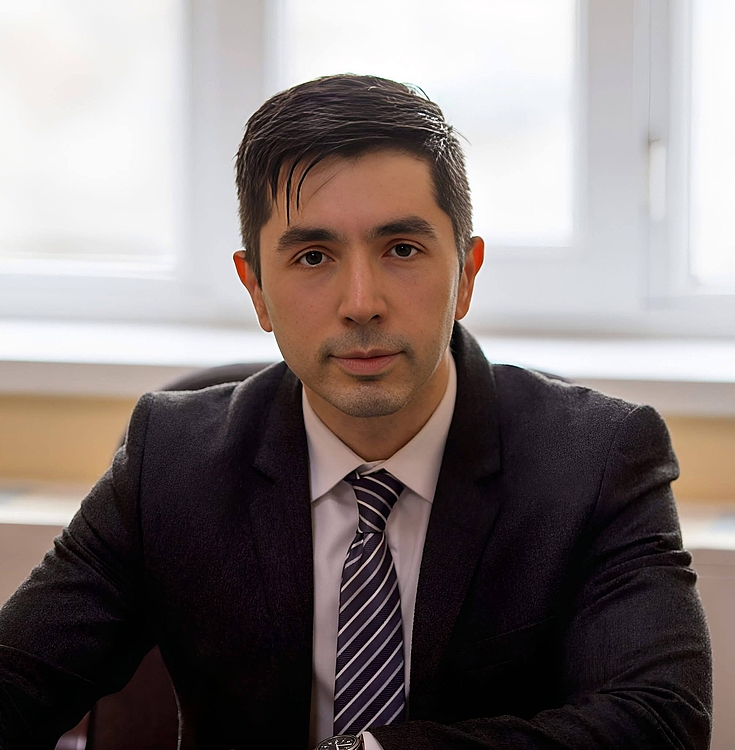
Alisherjon Saidmukhtorov is the Director of the Scientific Research Institute of Political Processes, Diplomacy and Globalization Issues at the Academy of Public Administration under the President of the Republic of Tajikistan. He previously served as Head of the Department of International Law at the same Academy. Before joining academia, he worked as a legal adviser and counsel for international energy companies and held a legal position at the Ministry of Energy and Industry of the Republic of Tajikistan. He holds a PhD in International Public Law.
Kontakt
