
Political Analysis
The Cuban crisis in 2026: background, outlook, and impacts
Causes of the Present Crisis in Cuba
Cuba was already facing a prolonged economic crisis marked by the country's failure to resume sustained growth. Following the collapse of 2020, which saw a 10.9% contraction in gross domestic product, the economy experienced a partial recovery between 2021 and 2022 (with growth of 1.3% and 1.8%), but contracted again in 2023 and 2024 (with declines of 1.9% and 1.1%). Estimates indicate a further decline of nearly 5% in 2025.
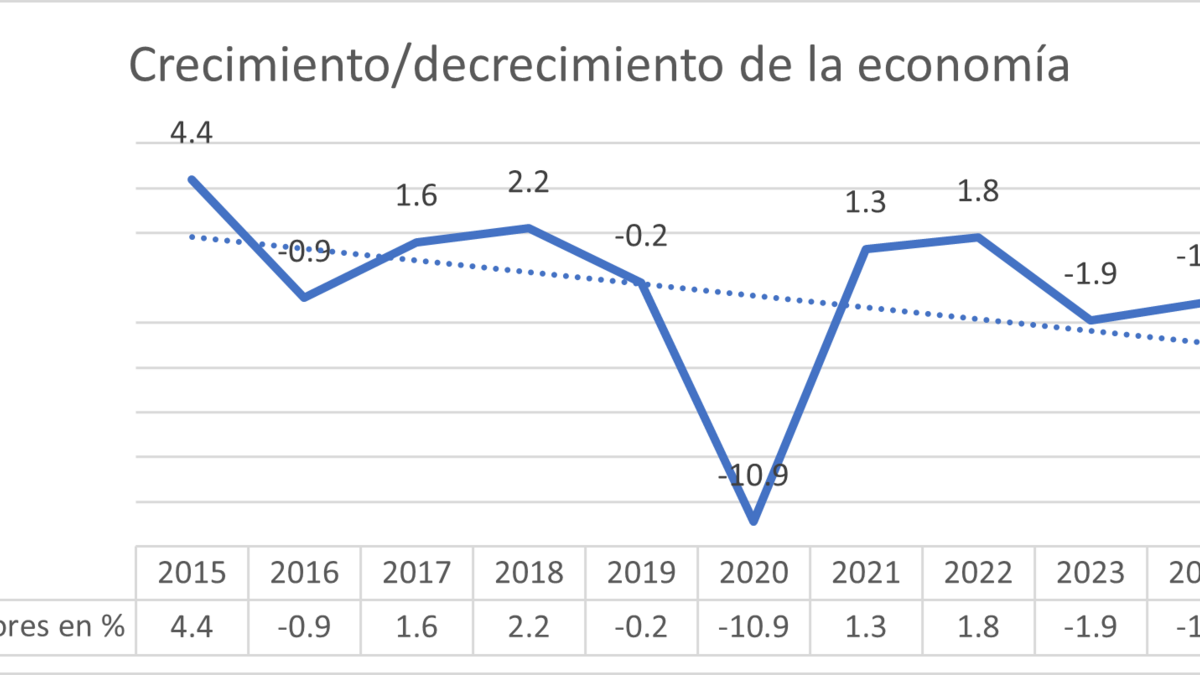
Compiled by the author based on official data. Estimates for 2025 are provided by the Center for the Study of the Cuban Economy.
Current official exchange rates show a sharp depreciation of the Cuban peso against major currencies[1]. According to data from the Central Bank of Cuba, the US dollar is currently trading at around 480 Cuban pesos (CUP). When compared to the average state salary - around 6,500 CUP per month in 2025, according to official data[2] - a significant gap becomes evident: the average state worker would earn barely 13 to 14 dollars a month.
This means that the state salary is virtually disconnected from any foreign currency benchmark, which determines access to goods and services in today’s economy. Those with access to foreign currency can afford basic necessities, while those who depend exclusively on a CUP salary face serious limitations, even when it comes to essential consumption.
Cuba’s exchange rate system currently operates as a State-controlled multi-rate scheme. There are two fixed exchange rates for certain transactions and a third segment where individuals can sell foreign currency to banks at a floating rate that changes daily based on supply and demand, although it is still managed by the Central Bank. However, the informal sector continues to influence the exchange rate due to the sluggishness of state-owned banks and the shortage of foreign currency.
| Fixed rate for subsidized businesses and institutions | Fixed rate for non-subsidized businesses | Fixed rate for non-subsidized businesses |
|---|---|---|
| 1 USD x 24 pesos | 1 USD x 120 pesos | 1 USD x 480 pesos (28/3/2026) |
This trend points to structural stagnation, in which low productivity, a shortage of foreign currency and dependence on imports are limiting growth and driving up the cost of living, against a backdrop of cumulative inflation that has steadily eroded purchasing power. To provide a frame of reference, a 2025 study by Cuban economist Omar Everleny Pérez estimated the cost of a basic food basket at 24,351 pesos for two people[3].

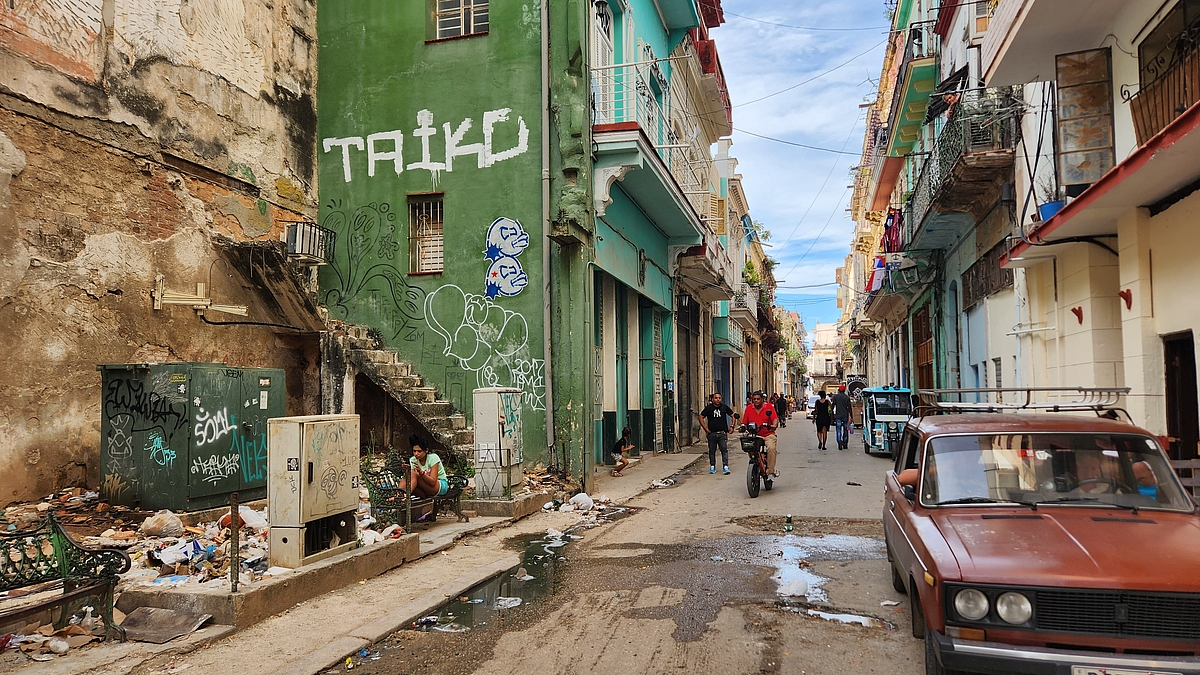
Increase in the number of vulnerable people ; Photo by Alba Leon Infante / La Joven Cuba
Social Effects
On the social front, the effects of this crisis are reflected in the deterioration of historically favorable indicators. A noteworthy long-standing accomplishment of the Cuban healthcare system, its low infant mortality rate, exhibited a notable increase from 7.1 per 1,000 live births in 2024 to 9.9 in 2025, according to preliminary data from the Ministry of Public Health[4]. This increase occurs amid shortages of medicines, supplies, and healthcare personnel, and highlights the pressures facing the healthcare system. During the 2024 parliamentary session, authorities acknowledged that the national system had been functioning with only 30% of its basic drug supply[5].
At the same time, the food crisis is directly impacting children. According to a 2024 UNICEF report, 33% of children under five suffer from moderate food insecurity, and 9% suffer from severe food insecurity. This means they have limited access to essential nutrients needed for a proper diet[6].

Alba Leon Infante - La Joven Cuba
The Energy Crisis
The energy crisis has become one of the most visible aspects of the current situation in Cuba. Since 2024, the country has experienced prolonged and widespread blackouts. In many areas, power outages exceed 15 or even 20 hours a day, affecting domestic life and economic activity. Beyond scheduled outages, however, the past two years have seen total collapses of the national power grid, leaving the entire island in darkness. In October 2024, the shutdown of the Antonio Guiteras thermoelectric power plant triggered a nationwide blackout that left virtually the entire country without electricity for several days.
These events have not been isolated. In 2025, there were several widespread blackouts - at least five in less than a year - including a 24-hour outage in September following a breakdown at one of the main power plants. The situation worsened in 2026 with multiple system failures in a short period. In total, there have been at least seven nationwide blackouts in a year and a half, reflecting the extreme fragility of the electrical infrastructure.
| Why are there blackouts in Cuba? |
|---|
| The electricity crisis in Cuba is the result of an aging, oil-dependent energy system. Decades of low investment and difficulties purchasing spare parts have deteriorated the thermoelectric plants. The absence of foreign currency has hindered the maintenance and modernization of infrastructure and the importation of fuel for the generators that support power generation alongside thermal power plants. Meanwhile, renewable energy projects have encountered delays or not materialized as expected. |
These blackouts have particularly severe consequences: they completely paralyze the economy, disrupt the water supply, impact hospitals and communication systems, and necessitate the reconstruction of the electrical grid from the ground up - a slow and complex process. At the household level, the effects are amplified, as the shortage of fuels such as liquefied gas significantly hinders domestic work, which, particularly in rural areas, is predominantly performed by women.
The recurrence of these blackouts underscores a systemic crisis in the energy sector, attributable to the deterioration of thermal power plants, fuel shortages, and a lack of sustained investment. Thus, the vulnerability of the electricity sector is a significant driver of economic instability.

Podcast La Reunión (La Joven Cuba)
The New Context [7]
On January 3, 2026, the United States cut off the flow of Venezuelan oil to Cuba following the capture of President Nicolás Maduro, and on January 29, it announced an executive order imposing tariffs on countries that supplied fuel to the island[8]. Cuba imports two-thirds of its energy. From then on, a de facto energy blockade was established, resulting in a significant reduction in fuel availability and further exacerbating the electrical grid's vulnerability.
On March 30, 2026, news outlets reported that a Russian oil tanker arrived in Cuba after about three months without significant incoming fuel shipments[9]. In that situation, Donald Trump stated that he would not stop other countries from sending oil to the island, even though the rules and sanctions still apply.
| What are the embargo and the blockade against Cuba? |
|---|
| These refer to a set of unilateral coercive measures referred to by the Cuban government as the “blockade” and by the United States as the “embargo.” This network of economic, commercial, and financial sanctions, in place since the 1960s, largely prohibits direct trade with U.S. companies, limits access to international financing, and imposes restrictions on third countries or companies that maintain economic ties with the island. Its scope has varied depending on the U.S. administration, but in recent years mechanisms have been strengthened that particularly affect access to foreign currency, fuel, and financial services. There is a wide-ranging debate over its effects: while some consider it a central factor in the crisis, others emphasize the importance of internal structural problems in the Cuban economy. |
In recent weeks, the effects of this pressure have led to an unprecedented energy crisis. In March 2026, the national power grid experienced multiple total blackouts. On March 16, a power outage occurred, affecting the entire island and more than ten million people. Even under normal conditions during the crisis, large parts of the country face daily power outages lasting more than 15 hours, making electricity an intermittent and highly unreliable resource.
The impact on the population has been direct and cumulative. Fuel shortages have limited public transportation, affected water pumping operations, hindered food preservation and preparation, as well as disrupted basic services such as hospitals - except for essential and emergency services - and universities. Additionally, nonessential work activities have been suspended, and the majority of state employees have been instructed to work remotely[10].
Podcast La Reunión (La Joven Cuba)
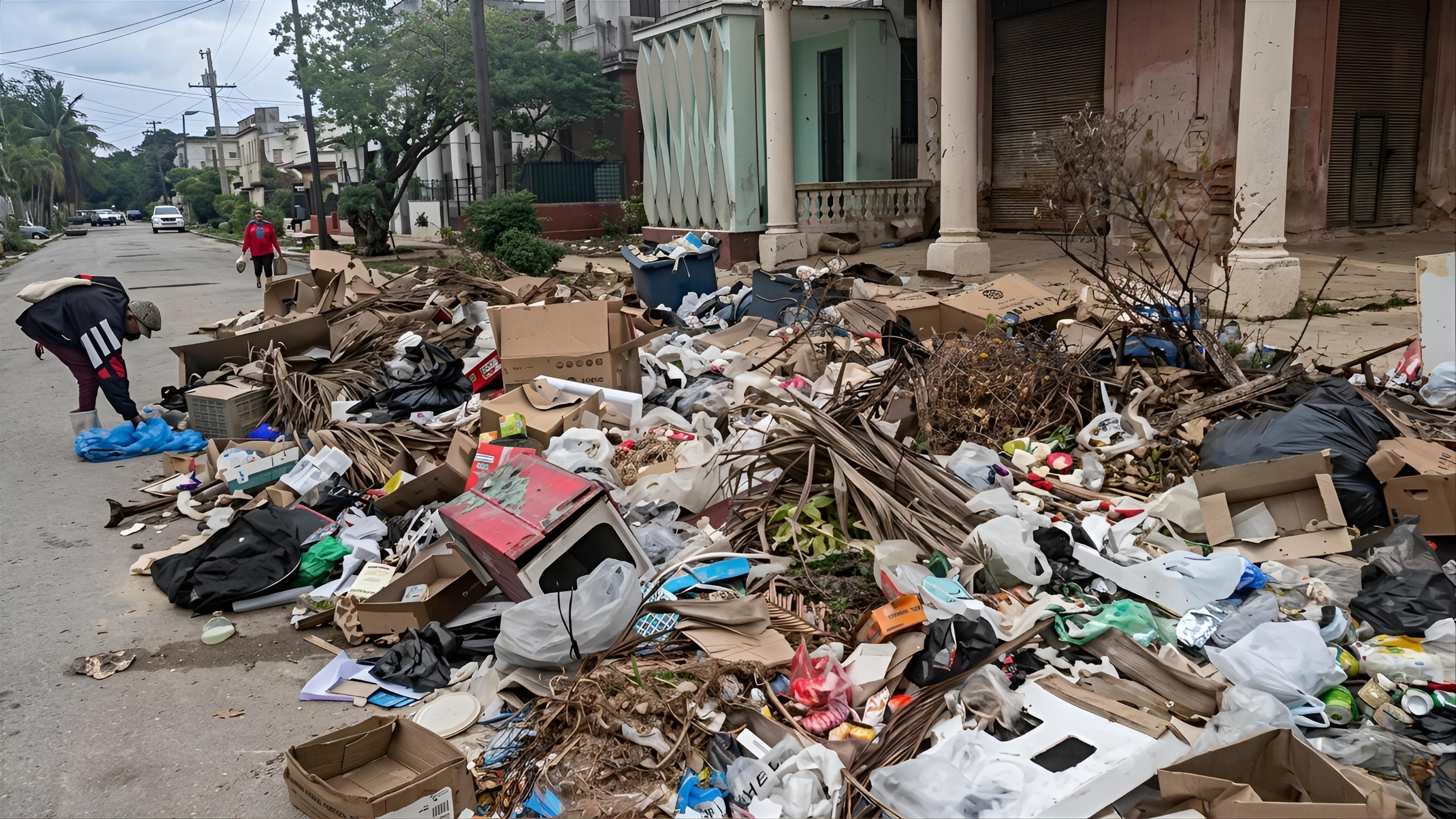
The energy crisis is having a ripple effect on other areas and severely impacting living conditions. In cities like Havana, the fuel shortage has led to piles of garbage due to the shutdown of garbage truck services, while agricultural production and food distribution have been severely impacted. In areas with frequent power outages, prices for frozen foods have risen significantly due to the difficulty of preserving them. Similarly, private transportation fares have skyrocketed, with a liter of fuel selling on the black market for over 4,000 CUP.
Compounding this scenario is a rise in social unrest, which has manifested in protests across the country. During February and March 2026, spontaneous demonstrations were reported in several cities across the country, many of them directly linked to prolonged power outages, food shortages, and the deterioration of basic services. These protests, which often take the form of pot-banging demonstrations and nighttime rallies, reflect pent-up discontent linked to the structural conditions of the current crisis.

Philipp Fleischhauer
Measures to Counter the Crisis
To address the crisis, the Cuban government has implemented a series of measures primarily focused on the energy sector and attracting foreign currency. One of the most significant was Resolution 169/2025 of the Ministry of Finance and Prices, published on June 27, 2025. The resolution expanded the tariff exemption for the import of solar photovoltaic systems and other renewable energy equipment. This measure extended the benefits that had been in place since 2021 to both state-owned and private companies and included tax incentives, such as an eight-year exemption from income tax for energy projects.
Another significant measure was the authorization of private entities to import fuel, announced in February 2026 in response to the energy crisis[11]. This development coincided with the United States' decision to establish legal mechanisms through the Office of Foreign Assets Control (OFAC) to allow the sale of oil, including Venezuelan oil, to private entities in Cuba, as part of a strategy that combines pressure on the State with selective concessions to the non-state sector[12]. However, the impact of this measure has been limited due to the financial and logistical constraints faced by MSMEs.
| How does the private sector operate in Cuba? |
|---|
Since the 1990s, the private sector in Cuba has undergone a gradual evolution, marked by the emergence of self-employment in the aftermath of the economic crisis that afflicted the country during that decade. The most significant change occurred in August 2021, when micro, small and medium-sized enterprise (MSME) ownership was approved. Today, MSMEs represent the most advanced form of private property ownership in the country. These entities can operate as corporations, hire up to 100 workers, and carry out activities on a larger scale than the former self-employment system. Their legalization took place amid an economic crisis exacerbated by the pandemic and shortly after the protests of July 11, 2021, as part of an effort to revitalize the economy. However, the sector continues to face significant limitations, including restrictions on access to foreign currency, dependence on the State for foreign trade, and exclusion from strategic sectors, which limits the sector’s capacity for growth and consolidation. |

Philipp Fleischhauer
Economic Openness
On the economic front, the government has promoted the creation of joint ventures between the state and private sectors through Decree-Law 114/2025, approved on December 10, 2025, and published on March 3, 2026, which establishes the legal framework for these partnerships. The regulation allows for the formation of mixed limited liability companies and other collaborative structures.
However, some economists warn that high levels of discretionary power, bureaucracy, and centralized control persist because all partnerships require approval from the Ministry of Economy and Planning[13]. In general, they believe the measure can help revive underutilized state productive capacities through private capital, but its impact will depend on the actual autonomy of the enterprises. Experts also note that excessive approval requirements, ambiguity regarding state ownership representation, and the lack of comprehensive state-owned enterprise reform may limit the measure's effectiveness, while a history of reforms and counter-reforms fosters mistrust among economic actors. In this regard, they agree that the decree is a positive and long-awaited step, but insufficient if not accompanied by deeper transformations in the business system and the institutional environment.
Another significant milestone was the announcement in March 2026 regarding the possibility of facilitating investment by Cuban emigrants in the national economy, as part of a strategy to attract foreign currency amid the crisis. The measures, presented on the television program Mesa Redonda by Deputy Prime Minister Óscar Pérez-Oliva Fraga, allow Cubans living abroad to become partners or owners of private companies, form partnerships with MSMEs, cooperatives, or state entities, and even participate in larger-scale projects related to infrastructure and strategic sectors[14]. Cubans living abroad will also be permitted to open foreign currency bank accounts in the national financial system and participate in investment funds to finance economic projects, which will significantly expand their scope of action within the country.
Although the measure formally represents a significant step forward in terms of openness and recognizes the economic role of the diaspora, it lacks specific legislation and clear implementation procedures. This creates uncertainty regarding its scope, particularly given institutional constraints, a history of regulatory instability, and limited investment guarantees. These factors could hinder the measure's effectiveness in raising capital and promoting economic recovery.
Conclusions and Future Outlook
The current crisis in Cuba is deep-seated and cumulative. Overall, the policies implemented in recent months indicate a shift toward controlled openness and resource mobilization, but their piecemeal and reactive nature limits their ability to reverse the economy’s structural problems in the short term.
The scope of the announced measures remains limited. The persistence of institutional restrictions, the fragmented nature of reforms, and the absence of deeper structural transformations reduce their effectiveness. In this context, initiatives such as the recognition of a floating exchange rate market, the opening up of investment opportunities to emigrants, or the creation of joint ventures represent specific advances, but they are still insufficient to generate systemic change.

Photo: Marcel Villa / La Joven Cuba
Internal and External Factors
The outlook for the future is uncertain and will depend on how internal and external factors interact. At the internal level, the outcome will be determined by the effective implementation of the announced measures and by the responsiveness of the business sector - both state-owned and private - and the market itself. Moreover, the outcome will also depend on whether new economic opportunities are promoted in response to the crisis, given that a significant portion of Cuba's reforms have emerged precisely during periods of high economic tension.
At the external level, the scenario will be shaped by the evolution of U.S. policy toward the island, which may range from negotiation and détente to increased economic pressure. In this regard, the November elections in the United States will be a key factor: a potential Democratic control of Congress could open avenues for easing sanctions, while a continuation of the political status quo would maintain or even reinforce the current pressure strategy.
In this context, potential bilateral dialogue processes leading to specific agreements take on greater significance, but one should also be aware of escalation scenarios that deepen the economic stranglehold. Recent events demonstrate that the latter cannot be ruled out in an international context in which the United States has shown a readiness to employ economic, political, and even military pressure to influence the region.
Overall, the evolution of the crisis will depend on the interaction between these variables, with no clearly defined trajectory. The country's internal capacity for adaptation, the scope of reforms, and the behavior of the international environment will determine whether the country stabilizes or, conversely, continues to experience economic and social deterioration.
References
[1] It is worth noting that Cuba’s exchange rate system currently operates as a State-controlled multi-rate scheme. There are two fixed rates (1 USD x 24 CUP and 1 USD x 120 CUP) for certain transactions, as well as a third segment in which individuals can sell foreign currency to banks at a floating rate. This floating rate changes daily based on supply and demand, though it is still controlled by the Central Bank.
[3] https://jovencuba.com/costo-vida/
[6] https://www.unicef.org/media/157686/file/SPANISH-child-food-poverty-2024-brief.pdf
[7] For a more detailed account of the events, please refer to the timeline compiled by La Joven Cuba https://jovencuba.com/cronologia-usa-cuba/
[9] https://www.bbc.com/mundo/articles/c0mj94nr04eo
[12] https://ofac.treasury.gov/faqs/1238
About the Author
Rubén Padrón Garriga (1993): Cuban researcher and journalist. Member of the La Joven Cuba team. Social communication expert with a master's degree in human rights. His academic background includes studies in communication, public policy, and polarization dynamics.
Contact
