
The "Bukele Model" Part II
The Bukele Model or the Seduction of the Immediate
FOCOS; FOCOS
FACING A REALITY
This article is not meant to judge the political leader of El Salvador, a country with which we share many historical and cultural ties. It also doesn't question Bukele's intentions or deny the positive results he's achieved in terms of citizen security. The goal is to explain the circumstances and the success of the Bukele model in a wider context. Bukele employed a clever social media campaign to spread the word about how quickly and effectively he was tackling a pervasive crime problem in El Salvador. It's important to look into why this model has been so widely accepted and why it generates such high expectations. By analyzing El Salvador’s lesson, we can gain a better understanding of the dynamics at play in societies like Guatemala that face multiple needs and unresolved problems. This raises the question of whether the model can be replicated in Guatemala. There is a growing consensus that it should.
DIRECT APPROACH
First of all, the Bukele model utilizes an approach that is focused on and addresses a genuine problem with a precise profile that is experienced by all. It does not dwell on broad concepts that are difficult for the general population to grasp, such as "sustainable development", "achieving equal opportunities," or "gender equality.” Instead, it gets right to the point and does so in a straightforward way with concrete, accionable measures.
The second factor pertains to the provision of services to the population and the resolution of a real and enduring problem. Furthermore, the strategy implemented in El Salvador also enjoys the support of the armed forces and the police. This is in contrast to Guatemala where the Peace Accords reduced the army’s involvement and reorganized its roles. Besides, the Guatemalan army has faced social criticism for being repressive, while cases of corruption have been reported among the police.
LEADERSHIP STYLE
The third factor is Bukele’s style of leadership, which is not a novel phenomenon. Throughout history, we encounter examples of leaders who exhibit similar traits. Machiavelli, for instance, wrote extensively about them and elucidated their behaviors. Bukele's boldness in addressing the enemy renders him a social leader, a designation that aligns perfectly with his cultural extraction: the term "leader" is derived from the Arabic word delid, which means "one who shows", a term associated with the soldier who led the way and engaged the enemy. Great, if not mythical, accounts surrounding rulers like Ubico and electoral masquerades vindicated, albeit unsuccessfully, by Ríos Montt, also thrive in Guatemalan society. Furthermore, the Salvadorean model embodies and is predicated upon fostering closeness and empathy with the population. Therefore, Bukele presents himself as "one of them," separates himself from the political class, and breaks with it—at least in appearance, since he is, in fact, part of it. It is not a false messianism based on promises and abstractions —as has been said— but a movement founded on immediate and well-publicized results.
EMBODIMENT OF AN IDEAL AND AN AMBITION
A further factor to be considered is that the model represents a form of vertical authoritarianism that has been prevalent in our societies since the establishment of the republic. This model is appealing to many individuals because it is emotional and knee-jerk.
Additionally, a fifth factor is how the model presents an expectation of how one would envision oneself to be as a person: resolute, successful, confident, one who breaks with the system, challenges it, and has a large following. These elements make the model extremely attractive to young people, who view it as a model of how to be or become. There is an underlying paternalism to it, as the leader represents a collective ideal and the ambition of a strong government, which many voters are drawn to. This phenomenon was observed in Guatemala during the implementation of mano dura, or "iron fist" policy, which ultimately proved to be a fraud in every sense.
A BEACON OF LIGHT
Bukele presents himself as charismatic ruler who cares about everyone's problems. This situation empowers him, and he wouldn't be recognized without it. Bukele is so charismatic that it is difficult not to be drawn in by the way he speaks and moves. His presence and image convey a compelling message. He's impeccable, firm, and armed with a smile. His nonchalant and shrewd demeanor is particularly appealing. And importantly, in current times, he's known to be active on social media platforms that are popular among young people, particularly those that are fashionable and accessible. In this regard, Guatemala is no exception.
BY WAY OF CONCLUSION
One additional element to consider is the level of force and violence used without hesitation to implement "his solution". This is very much in tune with a society, in our case, that tolerates lynchings as a necessary lesser evil (in Guatemala this is a daily occurrence, with alarming statistics). They fail to recognize the moral principle that evil does not justify evil. This is why it is argued that the model can exemplify the seduction of pure evil, or the seduction of the immediate, but this does not align with the notion of democratic rule of law. And therein lies the problem. The underlying principles of this social paradigm do not resonate in Guatemala. It is not acknowledged that the State cannot and should not act contrary to natural law, which is most obviously expressed today in human rights, including those of prisoners and those who are presumed to be criminals, regardless of the desires of its rulers at any particular moment.
It would also be incorrect to assume that the sole elements causing societal ills like crime are poverty and marginalization. Due to their strong positivist roots, the social sciences often overlook the underlying causes of these effects. The lack of the morality that natural law upholds is one of them. It is commonly forgotten that those who live in poverty frequently exhibit the civic virtues that Aristotle identified as necessary for harmonious social interactions, peaceful cooperation, and ultimately the common good. Actually, people who are regarded as rich and powerful are more likely to be the source of political and corporate corruption than are those who are regarded as underprivileged. There is evidence of this in Guatemala. Crime is not solely rooted in poverty, unemployment, or a lack of education; it also stems from a lack of morality among citizens or from the deformation of moral conscience that leads to relativism and utilitarian materialism, where anything goes and anything is acceptable in the pursuit of power or wealth. Therefore, the model ultimately offers no solution at all; rather, it serves as a sobering reflection of the extent to which society is plagued by anomie and moral apathy as it promotes and elevates evil as a means.
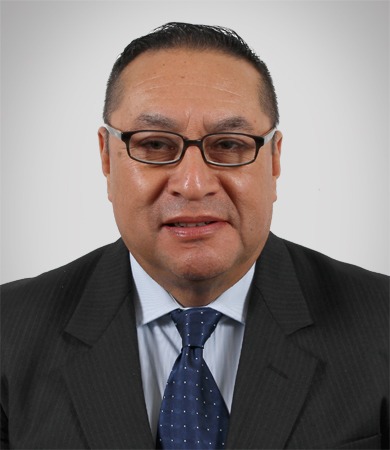
Author
Marco Arévalo (Guatemala)
Philosopher, psychologist, political analyst, university professor, opinion columnist for various media outlets, former government official, and political advisor
Contact
