
Short Article
Syrian Christians and the Complexity of Power and Fear under the New Political System
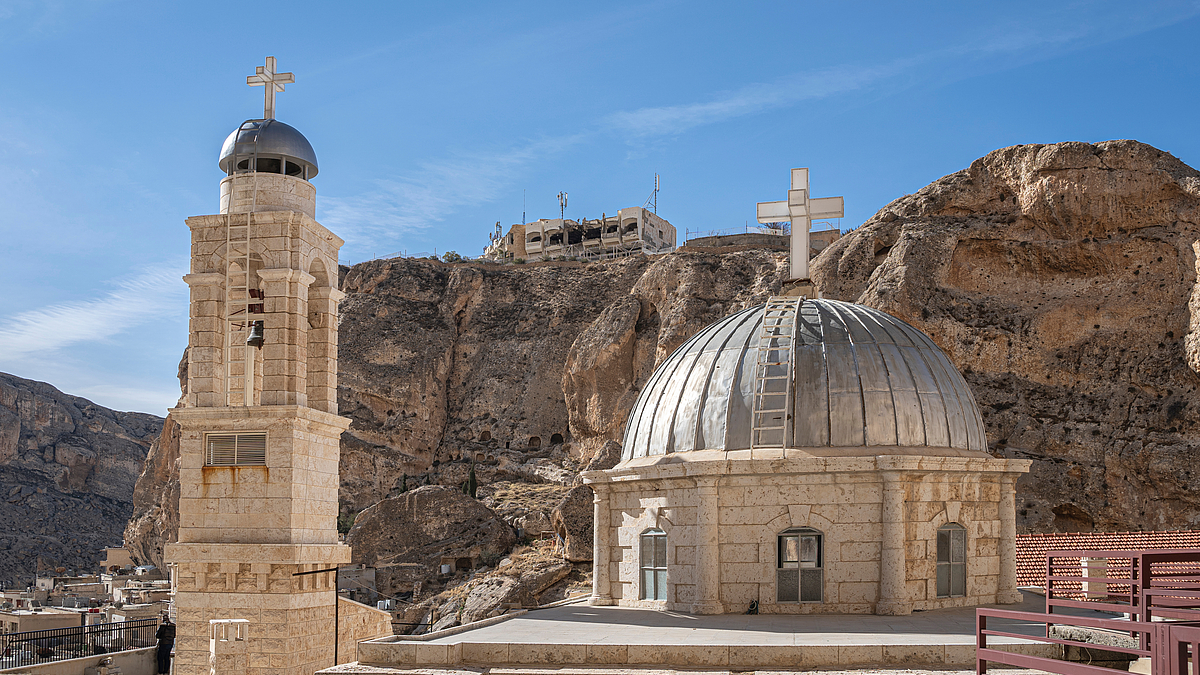
St. Thecla Monastery in the Christian village of Maaloula, southern Syria
Adobe Stock/Torsten Pursche
Introduction
There is no doubt that the question of Syrian Christians has become a topic with enormous potential for debate since it became clear that Hay’at Tahrir al-Sham (HTS) and other Islamist forces would take power in Syria. Since that moment, discussions concerning Syrian Christians - whether within Christian communities inside the country, among the diaspora, or at the international level - have not merely focused on religious freedom in general. Rather, they have increasingly revolved around the future existence of Christianity in Syria itself, including the physical presence of Christians and their churches within the country.
Without making a substantive judgment on these discussions, which have continued intensively until the present day, it must be acknowledged that emotional considerations often play a more significant role than rational analysis in this regard. On the one hand, the fact that Christians have been an integral part of Syria’s social and cultural fabric for centuries cannot easily be ignored, even by a political system with an Islamist character. On the other hand, the current period of uncertainty and political transition following the fall of the Assad regime - after more than a decade of civil war, economic collapse, and social fragmentation - has created fertile ground for emotional speculation, particularly within Syrian Christian communities, which no longer constitute a critical mass within Syrian society.
The Question of Power and Equality in Syria from a Christian Perspective
Based on their historical understanding of Syria, many Syrian Christians reject being described as a minority and instead view themselves as among the original inhabitants of the country. The Christian heritage of Syria is recognized by the new Syrian administration, just as it was by the previous regime, and this heritage is generally not a controversial issue within Syrian society, especially among the Sunni majority. Nevertheless, it is a fact that the proportion of Christians within the Syrian population has continuously declined since the independence in 1946. Today, according to available estimates, between 250.000 and 300.000 Christians remain in Syria, representing no more than 2-3 percent of the population.
From this perspective, there is little doubt that Syrian Christians were not a decisive factor of political power under the previous regime, nor are they a significant factor under the current political system. Consequently, Syrian Christians constitute a minority not only in demographic terms but also from a political perspective. At the same time, they remain a visible component of Syrian society, reflected in churches, religious attire such as priests’ and nuns’ garments, and Christian-majority neighbourhoods and villages. Christians also continue to be represented within the Syrian administration, judiciary, and media sectors.
The complexity of the position of Syrian Christians within Syria’s political system has accompanied them since the rise to power of Hafez al-Assad and the Alawite-dominated political elite. Some observers, including Syrian Christians themselves as well as international experts, have frequently referred to what has been termed an “alliance of minorities” in Syria. According to this view, the Alawite-dominated regime was able to govern Syria and maintain its rule despite the demographic predominance of the Sunni majority only through the support - or at least the acquiescence - of other minority communities, including Christians, Druze, Ismailis, and Shiites.
Regardless of the actual realities of the previous regime - which suggest that such an alliance was largely a political fiction rather than a coherent political project - this issue became particularly significant during the military campaign against the Assad regime and in the period following its collapse. The notion of an “alliance of minorities” was frequently invoked in political debates, both by supporters and opponents of the former regime, and it continues to shape perceptions of the position of religious minorities, including Christians, within the emerging political order in Syria.
One of the central questions was whether the new Syrian leadership under Ahmed al-Sharaa would regard Syrian Christians as an essential component of the so-called alliance of minorities that allegedly constituted the social basis of the former authoritarian order. Clearly, this has neither been the case nor appears likely to become so.
Against this background, it is noteworthy that the clergy of Syria’s various Christian denominations openly supported the state apparatus, both institutionally and personally, before and after 2011, despite the absence of any meaningful distinction between state and regime under Assad’s authoritarian system. Today, the same clergy publicly expresses support for the new Syrian administration, notwithstanding significant concerns and scepticism stemming from a general mistrust of political forces with Islamist ideological roots, as well as incidents such as the suicide attack on a church in Damascus and attacks against Christian communities in Suqaylabiyah.
The justification traditionally advanced for the position of the Christian clergy under the Assad regime was that the leadership of a vulnerable minority could protect its community and ensure its security only by avoiding confrontation with an unpredictable authoritarian state. Today, the Christian clergy in Syria repeats a similar principle: as Christians, they support the state, its institutions, and its leadership.
Beyond the clergy, this has become the prevailing attitude among much of the Christian population in Syria. Nevertheless, many Syrian Christians - like many Syrians regardless of religious affiliation - remain sceptical of the new administration and its power structures. This scepticism is linked, among other things, to the uncertainty surrounding the future political system and to unresolved questions regarding the form and substance of political authority in Syria. At the same time, Syrian Christians are fully aware that they are unlikely to play any significant role in decision-making processes under the current political order.
Although this was largely the case under the previous regime as well, it is true that Christians were represented in high-ranking state positions during different periods of Assads-Ara, including positions such as Minister of Defence, Speaker of Parliament, and even Chief of Intelligence. While their influence in these positions was often more symbolic than substantive within a highly authoritarian system, their presence nonetheless carried political significance. In contrast, many Syrian Christians today are convinced that even such symbolic representation is unlikely under the emerging political order.
Moreover, a considerable number fear that genuine equality of citizenship and equal rights may not be achievable under the current system, regardless of whether such principles are formally enshrined in constitutional texts. In their view, belonging to the Sunni majority may, in one form or another, continue to provide advantages within state and society.
Extensive Fears among Syrian Christians regarding Personal Freedoms and Religious Rights
Given the perception that Christians occupy a marginal position within the current power structure, the protection of personal freedoms and religious rights has become a matter of central importance for many Syrian Christians.
Many Christians, both within Syria and throughout the diaspora, remain deeply concerned about the ideological foundations of the groups currently exercising power and whether these foundations may eventually undermine the protection of minority rights and personal freedoms. A widespread fear is that Islamic norms governing permissible and impermissible behaviour may gradually be incorporated into the legal, administrative, and judicial systems, thereby limiting personal freedoms and minority rights. Such developments could occur not only through formal legislation but also through the gradual dominance of social and political convictions that regard the implementation of Islamic norms as a societal obligation.
In this context, several governmental decisions and public debates - such as discussions concerning alcohol restrictions, gender segregation, dress codes, and similar issues - have reinforced existing fears among many Syrian Christians. These concerns are closely linked to broader security anxieties, which remain particularly significant at the present time.
Such fears become even more pronounced at the local level, far from the political centre in Damascus. Due to fragmentation in administrative decision-making, law enforcement, and judicial practice, local actors do not always feel bound by the policies or directives of the central government. In some areas, extremist elements are either tolerated or insufficiently confronted by local authorities. This represents a significant challenge for Christian communities, particularly in regions where state institutions remain weak or fragmented.
Conclusion
It must be emphasized that many Syrian Christians, like other Syrians, broadly welcomed the end of the authoritarian Assad regime after years of conflict that devastated the country and forced millions to flee. It is also a fact that President Ahmed al-Sharaa and the new Syrian leadership have repeatedly highlighted the importance of Syrian Christians as an inseparable component of Syria’s pluralistic society. Numerous meetings have taken place between President al-Sharaa, other representatives of the new leadership, Christian clergy, and representatives of Christian communities. Furthermore, efforts have been made to involve Christians in various sectors of public administration and the judiciary.
However, it remains questionable whether these messages and initiatives are sufficient to alleviate the concerns outlined above. The principal challenges facing Syrian Christians - and indeed other minorities in Syria - are not necessarily the declared intentions of the political leadership, but rather the fragmentation of power and the uncertainty surrounding the future direction of the country.
Instability regarding Syria’s future trajectory and ambiguity concerning the practical implementation of Islamic norms constitute two major sources of anxiety under the current circumstances. Although these concerns are shared by many Syrians regardless of religious affiliation, they carry considerably greater weight for minorities, particularly religious minorities, and consequently generate a much deeper sense of fear and vulnerability.
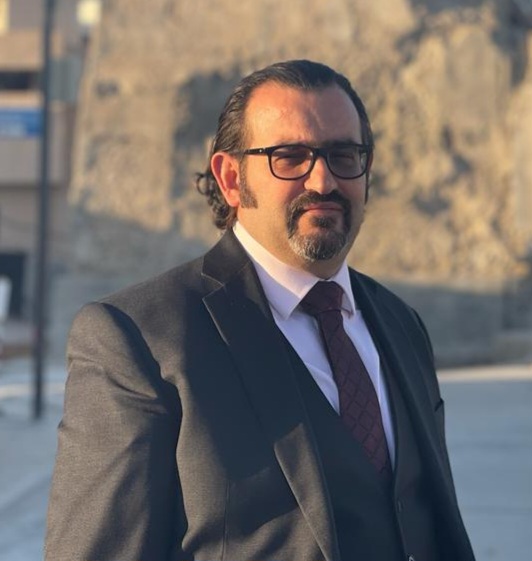
Dr. Naeem
About the Author
Dr. Naseef Naeem is a German-Syrian legal scholar, specializing in constitutional and public law, governance, mediation, and conflict resolution in the Arab world. He currently serves as Head of Research at the Candid Foundation. Naeem has facilitated peace dialogues in and on various countries, including Syria, Iraq, and Yemen. Naeem has published extensively on constitutional, legal, and political issues in the Middle East.
Contact
