
Political Analysis
Spain is different, again – this time, thank Pedro Sánchez
Pile of fifty euros on the table with the European Flag and the Spanish Flag
Raf Master/AdobeStock
Spain, the European Union’s fourth-largest economy –and currently the only country in the bloc experiencing significant growth– has traditionally punched well below its weight in international politics since losing its last overseas territories in 1898. Past times. Thanks to its socialist Prime Minister, Pedro Sánchez, the country now appears to have returned to the international arena, albeit in the role of its moral conscience.
Before American actress Susan Sarandon received her Goya (a premier national film award) in Barcelona in February this year, she told the press:
“I just think Spain is doing an amazing job and also […] to see Spain and to see the President and what he says and the support he is giving to Gaza is so important to us in the United States. […] and when you see how strong Spain is and how clear you are morally about these issues, it makes you feel less alone and it makes you feel that there is hope.”
On a more personal note, she added that the Spanish Prime Minister was “handsome and tall”. Indeed, in these troubled times, Pedro Sánchez appears to stand out among his peers. Amid the Spanish government’s vocal criticism of Israel’s war against Hamas and the US administration’s course of action in the Middle East, the Financial Times has even dubbed him “Mr Trump’s nemesis” (FT, 4 March 2026).
No bipartisan consensus on Spanish foreign policy
Not only in the media, but also in academic and related fields, assessments of Spain’s approach to international relations tend to be predominantly positive. The director of the Spanish CIDOB think tank (Barcelona Centre for International Affairs) explained that the “Spanish government’s position” vis-à-vis the United States was “in line with […] a structural foreign policy stance”.
However, had the 2024 winner of the general elections, Partido Popular (PP) candidate Alberto Núñez Feijóo, been able to form a government, American fighter jets and bombers would, without doubt, not have faced any restrictions when operating from Spanish bases in attacks against Iran. Mr Sánchez, by contrast, imposed a ban. Indeed, it was Mr Sánchez himself who reminded readers in an op-ed for The Economist that it was the former conservative Prime Minister José María Aznar (1996-2004) who drew Spain into a US-led forever war in Iraq – a fate he claims to have consciously spared the country.
Mr Sánchez’s assertive demeanor on the international stage is, in fact, yet further evidence for the absence of a common foreign policy stance among Spain’s mainstream parties. This should concern both Spaniards and Spain’s (European) allies, as the issue of Spanish exceptionalism returns to the headlines.
The slogan “España es diferente”, once used by the Franco regime to promote tourism, has been employed by historians to debate whether the Sonderweg metaphor aptly describes Spain’s modern history. In this sense, one could argue that it was Mr Aznar who broke with the traditional anti-American instincts in Spanish politics (whether on the left or the right), while Mr Sánchez has merely helped to return the country to that earlier trajectory, alongside his socialist predecessor José Luis Rodríguez Zapatero (2004–2011).
Happy abroad, gloomy at home
For now, however, the perception that Spain stood –from the outset– “on the right side of history” (Susan Sarandon, again) appears to be gaining recognition among Spain’s European partners. This is politically leveraged at home. For example, Foreign Minister José Manuel Albares publicly questioned German Chancellor Friedrich Merz’s “European spirit” when the latter allegedly declined to defend Spain from President Trump’s criticisms in the Oval Office. Merz has since voiced more direct concerns about the course of the war against Iran. Thus, a “told-you-so” moment appears to be boosting morale within Spain’s government, which domestically has little to celebrate.
The last three regional elections have been won by the centre-right Partido Popular, which nevertheless still depends on the far-right Vox party to govern. At the national level, Mr Sánchez’s Socialist Party has failed to present a national budget for the past three years – and is not expected to do so before the parliamentary term concludes in 2027. His coalition with the far-left Sumar movement appears dysfunctional, with major reform bills rejected by the Congreso de los Diputados (Spain’s national parliament).
Meanwhile, corruption cases are being investigated across three domains: the party, the government, and even Mr Sánchez’s family. While it is clear to the public what their Prime Minister opposes (“the right”, both at home and abroad), it is becoming increasingly unclear what he stands for.
Lost in coherence
Even George Orwell, who fought in the Republican trenches during the Spanish Civil War (1936–1939), would be struck by the degree of doublethink exhibited by Mr Sánchez. The ousting of his predecessor Mariano Rajoy (PP) through a vote of no confidence in 2018 was justified, according to PSOE (Spanish Socialist Workers' Party) officials at the time, by the entrenched corruption within the conservative party and government. Yet the Prime Minister now accepts no personal responsibility for two hand-picked PSOE party secretaries that are currently imprisoned on corruption charges for allegedly receiving kickbacks from construction firms – cases that strikingly mirror the patterns of political patronage that fueled the indignados movement following the 2008 financial crisis.
Moreover, it would be difficult to imagine a Prime Minister in any democracy north of the Pyrenees surviving a situation in which his partner (who does not hold a formal higher education diploma) co-presides over a chair at a prominent public university, while simultaneously recommending the chair’s sponsors through personal letters for public tenders.
In policy terms, Mr Sánchez presents his planned mass regularisation of undocumented migrants as an act of humanitarian responsibility, while his envoys negotiate with the Catalan right-wing Junts party over the transfer of competences concerning border control – so that the separatists can fend off an upstart extremist party (Aliança Catalana) with their own signature anti-migration policies.
To govern is to resist
The partisan character of many government policies is perhaps best illustrated by its historical memory law (Ley de Memoria Histórica). Although apparently inspired by Germany’s process of confronting its past, responsibility for addressing the dark side of Spain’s recent history is effectively outsourced to the opposition. Calls for the Partido Popular to apologise “for Francisco Franco” (Spain’s ruler from 1939 to 1975) are frequent on the political left, despite the absence of direct organisational or personal links between today’s conservatives and the dictatorship.
A similar logic applies in the international domain. Spain’s long history of institutional antisemitism –from the expulsion of Jews in the Middle Ages, through Francoist ideology, to the anti-Israel positions of early democratic governments– does not appear to constrain the government’s confrontational stance towards Israel following 7 October 2023.
Furthermore, the Prime Minister himself executed a significant U-turn in Spanish foreign policy in early 2022 by endorsing Morocco’s autonomy plan for Western Sahara (a former Spanish colony), a move that surprised even members of his own party. Any sense of shared national responsibility, whether historical or contemporary, appears largely absent from the current administration.
And last, but not least, Spain is an EU outlier regarding its openness to cooperation with China, even in areas deemed security-sensitive such as communication technologies and data centres. Here, intriguingly, while Prime Minister Sánchez has been very vocal about the democratic transgressions of allied nations, no comparable criticism has been voiced during his four visits to the Asian giant over the past four years.
The Prime Minister’s two faces
Against this backdrop, the international portrayal of Mr Sánchez as a steadfast defender– or even last guarantor– of the international order appears almost paradoxical. A closer examination of his record reveals a different picture.
On the one hand, Mr Sánchez’s ability to remain in power into his eighth year in office, despite persistent challenges, attests to his excellent political skill, Machiavellian instinct, and relentless determination. His capacity to transform both domestic and international policy issues into ideological instruments in the Spanish party competition positions him as a highly effective representative of postmodern democratic politics in Europe.
On the other hand, as “Donald Trump’s nemesis”, he has also displayed several parallels with the US president: both portray themselves as victims of an entrenched establishment; both embrace a Schmittian logic of political conflict; both cultivate loyal inner circles while marginalising dissent; both seek to tilt institutional frameworks in their favour; and both appear motivated by a form of historical messianism.
As Mr Sánchez himself writes in his 2019 political autobiography, “Manual of Resistance” (Manual de Resistencia), his mission is to resist the forces that obstruct progress in (Spanish) society.
Capture of the State
Spaniards must hope that their Prime Minister conducts this mission within the bounds of democratic fair play. Yet growing evidence suggests otherwise.
Despite the long-standing presence of political patronage and clientelism in Spanish politics, Mr Sánchez’s government appears to be stretching these practices ever further. Political programming on public national television has become so openly partisan that PP representatives often waive their airtime. Nevertheless, they might have to reconsider soon: The government’s 2024 “Democratic Action Plan” proposes requiring future prime ministerial candidates by law to participate in televised debates. The public opinion research institute (Centro de Investigaciones Sociológicas, CIS) is led by a long-standing Socialist Party member, and its increasingly unconventional polling has significantly undermined its public credibility.
When the government’s amnesty law for Catalan separatists faced judicial scrutiny on constitutional grounds –ironically, the same concerns previously raised by Mr Sánchez– government officials increasingly dismissed the principle of judicial independence, arguing instead that courts should reflect “social and political majorities”, or accusing judges outright of “lawfare”. Mr Sánchez had already broken convention by appointing a former justice minister as general prosecutor. Her successor was later found guilty of leaking confidential information about the partner of a political rival, yet retained the Prime Minister’s confidence throughout the proceedings. The government has also initiated reforms to the judicial career in the name of “plurality and transparency”, alongside draft legislation on media regulation, including the creation of a mandatory register overseen by a government agency.
The political climate in Spain is now so polarised, and positions so entrenched, that few within the Moncloa Palace– the Prime Minister’s official residence– appear to engage with broader European debates on democratic backsliding, despite the parallels with developments in some EU member states in Central and Eastern Europe. When examining the evolution of established indicators measuring the quality of democracy (like V-Dem or the World Bank’s “rule of law” index), the trend for Spain during Mr Sanchez’ tenure is clear: downward.
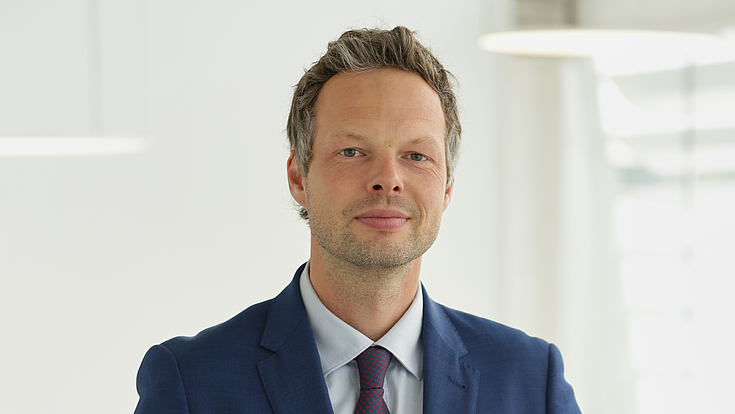
Adriaan Kühn
About the Author
Dr. Adriaan Kühn is a lecturer of Political Science and International Relations at University Francisco de Vitoria in Madrid, Spain. He also serves as UFV’s Director of the Robert Schuman Institute for European Studies.
Contact
