
Political Analysis
Is the Sahel turning Russian?
The countries considered part of the Sahel include Mauritania, Mali, Burkina Faso, Niger, and Chad. Four of these countries are currently governed by the military. Mali, Burkina Faso, and Niger have formed a Sahel States Alliance, openly confronting the Western world while simultaneously enhancing cooperation with Russia. The security situation in all Sahel countries has significantly deteriorated over recent years.
In Burkina Faso, the media are no longer allowed to report on terrorist attacks. Since 2021, at least 40% of Burkina Faso's territory has been under the control of armed groups. Currently, five of Niger's seven regions are considered "completely unsafe." This situation seems not to have improved under military governments. 2023 saw a total of 2.1 million internally displaced people in Burkina Faso (corresponding to 10 percent of the total population) and approximately 700,000 in Niger.
Anti-French Sentiment and Anger towards the Western World
France, the former colonial power, serves as the perfect scapegoat for the crisis To this day, France is accused of ongoing colonial oppression, economic exploitation (especially of natural resources), political interference, and cultural suppression. Many view France as one of the main causes of enduring poverty and economic underdevelopment. A common accusation is that the country supports corrupt regimes under the guise of democracy, which serve French interests rather than the well-being of their own people. This resentment towards France is somewhat projected to other Western countries and the EU.
France is also blamed for the worsening security situation in the region, as bilateral military cooperation and several high-profile operations have not led to the defeat of terrorism. Therefore, the majority of public opinion points mainly at France, creating an anti-French sentiment, which is fueled by media hype on social networks. It is nearly impossible to browse social networks without coming across a video, an image, or a text that doesn't hold French imperialism responsible for the bankruptcy of Sahel countries. Such reports and rumours are readily accepted by the public and hardly ever questioned.
Various Terrorist Groups
The Sahel is primarily terrorized by Al-Qaeda offshoots, which are partly independent and integrated into the local population. In some regions, they rival Islamic State offshoots, and in northern Mali, there are also attacks by Tuareg rebels. In addition to Al-Qaeda and IS offshoots, Boko Haram is present in the south of Niger In 2023 alone, an estimated total of over 2,200 terrorist attacks were committed in the three countries by Al-Qaeda spin-offs; 600 by IS-affiliated groups and around 50 by Boko Haram.
In Burkina Faso, 80% of terrorist acts are committed by Al-Qaeda affiliates, which mainly recruit among nomadic communities. In 2023, over 8,000 people were killed by acts of terrorism in the country, setting a regrettable record high with an upward trend.
It is well-documented that some Gulf states, notably Qatar, finance terrorist groups. However, the terror groups also self-finance: they steal livestock from the population, control gold panning sites, or impose their own taxes and levies on the people.
High Esteem for Military Governments
The military governments (still) enjoy significant popularity among the population. The coups occurred due to the weakness of state institutions and the deteriorating security situation, coupled with the loss of state control of territory, the increase in internally displaced people, resulting in growing poverty and a worsening food crisis. Ironically, security should have been the military's responsibility. The military accused their legitimate governments of having cooperated too closely with the West (and France in particular), militarily, economically, and politically, thereby causing the current crisis. Thus, the goal now is the restoration of state order, control, and security, as well as a fundamental change in cooperation with the West. This is also feasible since Russia stands ready as a new partner that does not demand democracy, elections, or even human rights.
However, the military regimes are currently unable to stop the terrorist threat, so the security situation across the region continues to deteriorate. This poses a major problem for the military governments, as their central promise of security – which is the basis of public support – is currently unmet.
Also the military itself still has the backing of the population. This support is based partly on the hope for peace, security, and improvement, but also on the "Robert Mugabe Phenomenon": popularity through the demonization of the West – "finally, we have leaders who stand up to Western arrogance." Therefore, hatred of France and the West is vital for the survival of the military regimes and is fed accordingly through disinformation and fake news.
On the other hand, growing dissatisfaction can be observed among the population: in Burkina Faso, for example, the forced recruitment of critics and the arming of civilians (about 90,000 people) are ) is still raising eyebrows behind closed doors. Also, the costs of war are omnipresent: every bottle of beer, every phone call, every cigarette carries a special levy for the war, constantly reminding the citizens of the ongoing conflict.
Popularity of Russia
Russia did not have to do much to gain popularity in the Sahel. Initially, the reason is the (orchestrated) hatred of the Western world, particularly France. In this way, there is a common enemy. From the perspective of the Sahel countries, cooperation with the West has never been sincere nor a win-win situation and the feeling of being exploited by the West prevails.
Russia promises a different partnership with genuine independence and sovereignty. It refrains from lecturing rulers on democracy and good governance, focusing instead on making win-win deals with the ruling class. Human rights and the socio-economic development of the African population do not play a role for Russia.
Also, for anti-terror cooperation, Russia is an attractive partner and arms exporter: "One can simply buy weapons without the conditions and prerequisites imposed by Western countries." – a common stumbling block for the military governments, as conditions are perceived as lectures and interference in internal affairs.
Expectations of Germany and the European Union
The expectations of Europe in general and Germany in particular are relatively simple: a sincere partnership that respects and values the other, respects the independence and sovereignty of peoples, and is flexible enough to respond to changing challenges; a partnership aimed at improving security, advancing economic development, and sustainably improving the living conditions of the people.
In theory, this sounds very simple, but it is not. AS already mentioned, military regimes understand a sincere partnership also as "non-interference in internal affairs," and thus the abandonment of the demand for common standards, human rights, democracy, and other conditions. A typical example would be the expectation of modern arms supplies, which should ideally be provided without any conditions – which is exactly what Russia is doing in the highly unstable region, and reaping the financial benefits.
Outlook
The situation in the Sahel remains tense. It is doubtful whether the current military regimes can bring about any improvement. Cooperation with Russia is likely to serve their own power retention and currently guarantees public support.
Some very pessimistic experts fear that a caliphate with 70 million people might emerge in the Sahel. This seems too pessimistic, as so far, there have been no attempts by the terrorists to take over a complete state. On the contrary, the terrorist organisations have their roots and support mainly in the poor rural population. These people must be given a peaceful life perspective so that they are no longer forced to join terrorist groups. Military actions are therefore not a long-term option to contain terrorism. Structural solutions for development (health, education, water, electricity, roads, etc.) must be found, and the peaceful coexistence of communities must be promoted. In the short term, however, military action against terrorist groups seems inevitable.
Due to the poor security situation, unfortunately, an increase in poverty, hunger, internally displaced people, and ultimately refugees to the EU is to be expected. An increase was already recorded last year following the coup in Niger. .
Russia remains the major beneficiary of the current situation, as it continues to expand its economic and military relations with the Sahel states, reap the financial benefits and also indirectly burdening Europe with increasing numbers of refugees.
And yet, there are also glimmers of hope: Civil society in the Sahel countries is very active and demanding. Although it may currently be somewhat subdued by bans and fear, this state cannot and will not last forever. This civil society must not be abandoned.
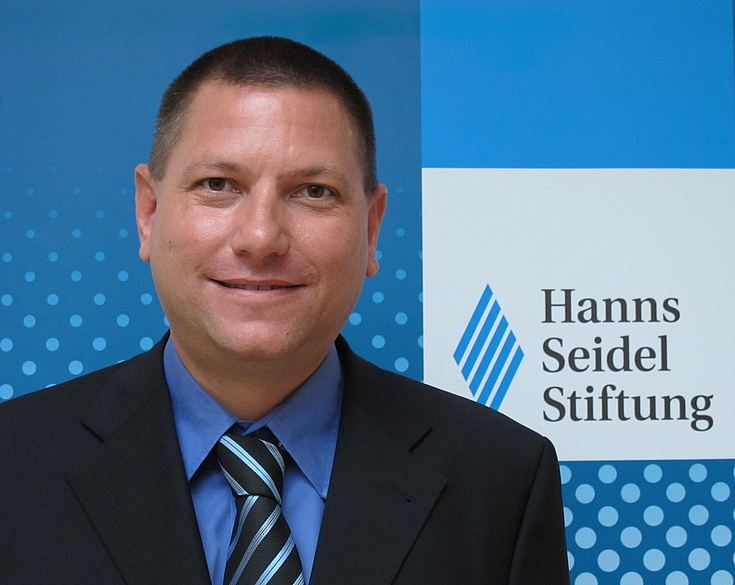
Götz Heinicke, Resident Representative HSS Western Africa
HSS; HSS
About the Author
Goetz Heinicke, a German attorney from Munich, is currently Hanns-Seidel-Foundations Regional Representative in Western Africa. He is in charge of HSF project offices and project activities in Niger, Burkina Faso, Benin, Togo and Ghana. Before moving to West Africa, he was previously the Representative of the Hanns Seidel Foundation in the Philippines and in the Democratic Republic of Congo.
Contact
