Hezbollah in Lebanon
Disclaimer – Developing Situation (as of 12nd of August 2024)
In the afternoon of July 27, 2024, 12 children playing soccer in a Druze village in the Israel-held Golan heights got killed in a rocket attack, allegedly originating from Lebanese territory. While the Islamist Hezbollah denied responsibility, the Israeli Defence Forces announced massive retaliation, as “all red lines had been crossed”. The IDF went on to eliminate top-level figures of the “Axis of Resistance” in rapid succession. Fuad Shukr, founding member of the Hezbollah was killed in the Lebanese capital Beirut in the night of July 30, the political head of Hamas died in the Iranian capital Teheran in the early morning of July 31 on the sidelines of the inauguration of the new Iranian president. Both Ayatollah Khamenei in Iran and Hezbollah’s leader Hassan Nasrallah entered the stage and ramped up their rhetoric, announcing massive retaliation, thereby technically entering a new stage of the conflict. Such retaliation is likely to occur in the near future; its degree (and targeted location) will set the stage for the future months of the situation in the Near East.
Burning rhetorical figures, threats and sabre-rattling have a long history in the Near East. Despite deep cultural and economic ties and interdependencies, bilateral and multilateral relations in the region historically known as the Levant (Lebanon, Israel, Palestinian Territories, Jordan, Syria, western Iraq) are characterised by a complexity that may surprise the unbiased observer when looking at the population figures in purely quantitative terms.
Since the Hamas attack on Israel on 7 October 2023 with 1,139 dead (including 71 foreign nationals) and Israel's subsequent military response in the Gaza Strip, in which hitherto well over 35,000 people were killed on the Palestinian side, huge internal displacements have occurred throughout the region. Almost 2 million Palestinians and 80,000 people on the Israeli side have fled their homes. Fears of a wider regional conflagration have been growing, which would have devastating consequences not only for the Near East. The overwhelming media attention given to the current situation in Israel and the Gaza Strip has occasionally obscured the situation in Lebanon in international reporting. Recently the latent decade-old instability in inter-state relations with Israel has led to widespread diplomatic activism. German Foreign Minister Annalena Baerbock, amongst many others, has travelled to Beirut at the end of June as part of her intense crisis shuttle diplomacy to campaign for an immediate calming of the tense situation, which threatens to explode at any time. She was by far not the only high-ranking representative of a Western government in the country’s capital Beirut in recent weeks.
State within a State
The Lebanese Hezbollah (‘Party of God’) has yet again become a pivotal actor within the region. Classified as a terrorist organisation by the USA and Germany, among others, the organization has long come to be a ‘state within a state’ in Lebanon. Hezbollah commands a highly equipped militia, a political party, charity organisations andmedia outlets. Its intensive relations and patronage networks with the regime in Tehran, including recognition of Ayatollah Khamenei as its spiritual leader are characteristics of the Islamist structures originating from the Shia community of Lebanon in the 1980’s. As part of the self-declared ‘Axis of Resistance’ (alongside, most prominently the Hamas, the Syrian Regime, and the Huthis in Yemen) Hezbollah has intensified its attacks on military targets in northern Israel since 8 October 2023, massively fuelling fears of a two-front war among military planners in Tel Aviv. Internationally this has been stoking apprehensions of regional turmoil. In the south of Lebanon, almost 100,000 people are currently on the run from possible further escalations. Israeli soldiers last advanced to just outside the Lebanese capital Beirut in 2006, a spectre that still haunts many Lebanese today, regardless of their confession.
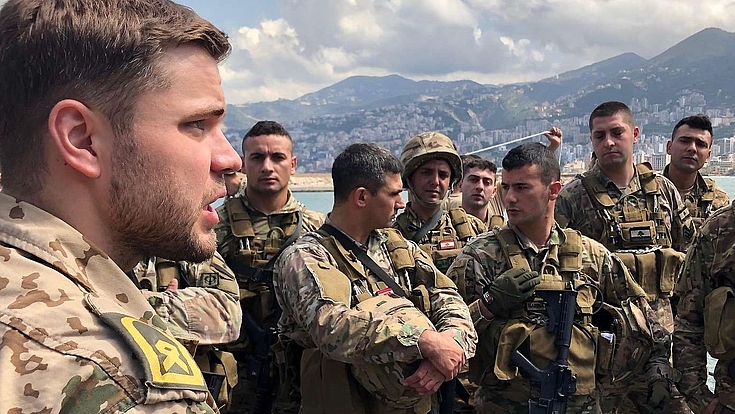
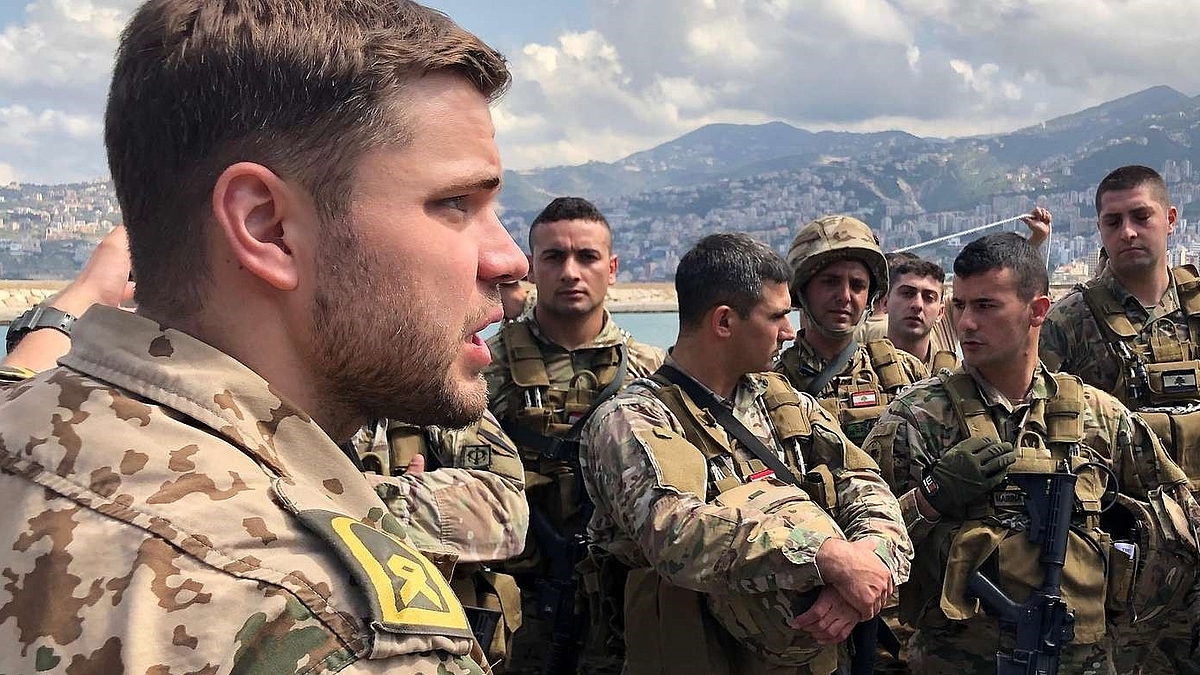
Figure 1: Bundeswehr in Lebanon: Since 2021, the German Navy has been in command of Maritime Task Force 448 to protect Lebanese coastal waters as part of UNIFIL.
The difficult relations are visibly characterised by the presence of a United Nations observation mission, UNIFIL (United Nations Interim Force in Lebanon). In existence since 1978, UNIFIL is the longest-serving observation mission of the UN. In a strip approximately 30 kilometres wide between the so-called ‘blue line’ – the international border between Lebanon and Israel – and the Litani River in southern Lebanon, UNIFIL has had the mandate to document the withdrawal of Israeli troops, to support the build-up of the regular Lebanese armed forces and to help prevent the establishment of militias along the border. Currently represented by 10,541 soldiers, UNIFIL is supported by a maritime component, the so-called Maritime Task Force 448, which is tasked with ensuring the security of coastal waters, preventing smuggling attempts and helping to train the Lebanese navy. The German Navy has been in command of this MTF448 since 2021. Despite UN resolutions to the contrary and the robust mandate of UNIFIL, Hezbollah’s presence South of the Litani has been massively expanded in recent years in various –largely coveted – locations. UNIFIL is hence limited to the training and monitoring component, but also makes important contributions to the protection of coastal waters.
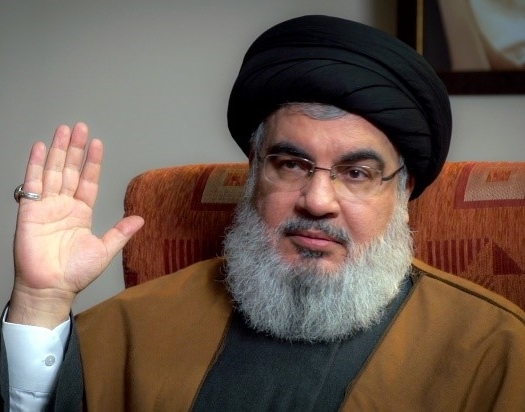
Hassan Nasrallah is the commander-in-chief of the Lebanese Hezbollah militia
Who is Hassan Nasrallah?
In the political meteorology of the Near East, statements by the leader of Hezbollah, Sayyed Hassan Nasrallah, play a major role. For fear of possible attacks by Israel, these speeches are usually broadcast from unknown locations and aired on large screens.
The Shiite cleric with the characteristic full grey beard and black turban still enjoys considerable support, and in some cases reverence, in the predominantly Shiite areas in the south of the country and in the Beka'a plain in the east of Lebanon. Born in 1960 in a suburb of Beirut, he joined the early Hezbollah in 1982 in response to the Israeli invasion of Lebanon. In 1992, he was appointed leader of Hezbollah after his immediate predecessor and supporter Abbas Musawi was killed in a targeted attack by Israeli Apache helicopters in southern Lebanon. In 2006, he announced massive retaliation following the advance of Israeli troops into the suburbs of Beirut during the 34-day Lebanese-Israeli war. Ever since, Hezbollah's military power has been massively expanded under his leadership.
Today, Hezbollah has ‘more firepower than most European countries put together’ commanding more than 50,000 highly trained fighters and an arsenal of an estimated 150,000 missiles, as well as corresponding combat experience from operations in neighbouring Syria. This makes Hezbollah the most heavily armed non-state actor in the world. Its capacities are not merely military in nature. Rather, Hezbollah has a broad base of supporters in predominantly Shiite-inhabited areas of Lebanon, as well as in neighbouring Syria, thanks to its extensive social (and medical) network. In the Lebanese parliament, the political wing of Hezbollah is represented by 13 MPs and thus accounts for around 10 percent of the lower house. Together with the country's other Shiite force, the Amal movement, which is represented by 14 MPs and is in a quasi-permanent coalition with Hezbollah (similar to the CDU and CSU in Germany), its institutionalized political influence is also considerable.
In the wake of the world's worst economic crisis since 1830, which has affected Lebanon since the end of 2019, and in the course of which petrol stations across the country were temporarily closed in 2020, the Lebanese Pound lost over 99 percent of its long-term value in a short period of time. More than 80 percent of the population complained of increasing food insecurity, figures which were confirmed by various international bodies, such as the World Bank, or the World Food Programme. The electricity grid collapsed. Hezbollah imported fuel for generators from Iran and made it available at cheap rates. The organisation's hospitals have a good reputation, particularly in rural regions, due to their reliability. Patients receive affordable treatment regardless of their religious affiliation.
Walking the Talk?
Between 2001 and 2021, researchers recorded a total of 435 public speeches by Hassan Nasrallah, thereby averaging in fortnightly appearances. The talkative Nasrallah’s speeches can last up to two hours. They are usually broadcast on Hezbollah's own television channel Al Manar, which is banned in several countries (including Germany) due to its anti-Semitic and violence-glorifying content. While such speeches are consumed by supporters of Hezbollah, and observed by international observers, most Lebanese hardly take notice of them. After October 7, Nasrallah took a break from broadcasting for almost a month – probably also out of fear of possible action by the Israeli armed forces. On November 2, the Hezbollah supremo then proceeded to give one of his most followed speeches to date on the relationship between Hamas and Israel. In a speech lasting just under an hour and a half, he reiterated his threat of Israel's absolute destruction should even one Israeli soldier enter Lebanese territory. However, there was no declaration of war, as some had feared.
When Saleh Arouri, the highest-ranking Hamas commander in Lebanon was killed in a targeted drone attack in his home in a suburb of Beirut on January 2, 2024, Israeli authorship was hardly challenged. Nasrallah reacted on January 3 and gave a further speech on January 5. In these condolence speeches he condemned the attack, once again emphasised that Hezbollah was prepared to fight and destroy Israel. He continued to be emphatically combative, but once again did not make a direct declaration of war. When civilians were killed in an Israeli air strike in the south of Lebanon in mid-February, Nasrallah emphasised in his subsequent speech that the daily attacks by Hezbollah on Israeli territory, which had intensified since 7 October, would not stop until the war in the Gaza Strip was ended. Two further speeches in May and June had a similar tenor, again in direct response to the killings of high-ranking militiamen. In practice, Israel and Lebanon exchanged about 7,000 attacks since October 2023. Until mid-July, Hezbollah ‘limited’ itself to attacking military positions of the Israeli armed forces along the northern border, while Israeli tit-for-tat attacks were flown against (para-)military positions of Hezbollah. Due to the nature of the capabilities of the IDF, the Israeli response so far has been fivefold Hezbollah’s, covering a significantly larger area across Lebanon in areas dominated by Hezbollah, destroying terrorist infrastructure and killing the organisation’s operatives. So far, more than 100 civilians have been killed in the shelling. In border villages in Lebanon, up to 60 percent of houses have been destroyed, as satellite imagery analyses show.

Figure 2: Cross-border attacks since 7 October, blue by Israel in Lebanon (and Syria), yellow by Hezbollah in Israel.
War or no war?
Despite the widespread fear and destruction on both sides of the border, both parties are aware of the huge escalation potential the other side commands, and carefully weigh their words and (re)actions. While the capabilities of the IDF largely are uncontested, Hezbollah has proven that it does have the capabilities to reach targets across Israel, stretching as far as the red-sea coastal town of Eilat, or nuclear facilities in the Negev desert. So far Hezbollah’s actions have remained limited to a thinly defined stretch along the Northern border. According to observers, the relative restraint so far is due to two things: firstly, a broad political majority in Lebanon has spoken out against a declaration of war in talks with Hezbollah representatives. Due to its deep roots in the area, an open declaration of war by Hezbollah against Israel would be tantamount to the entire country taking up arms, at least geographically speaking. The consequences of an Israeli reaction would be almost impossible to bear for the country and its population, which are already on their knees. Such fears are being stoked by public statements of senior Israeli politicians threatening a “Second Gaza” in Lebanon.
Secondly, there appears to have been an outlier in the anti-Israel coalition supported by Iran: Hamas did not coordinate within the coalition before its shocking act on 7 October 2023, which ultimately took both Tehran and Hezbollah by surprise and left them no time for a coordinated pincer movement against Israel. According to reports, Saleh Arouri, at the time the highest ranking Hamas official in Lebanon, advised the Hezbollah leadership about the incumbent operation on 7 October a mere thirty minutes before its start. The resulting discontent has persisted to this date.
In a wider context, the reactions to date also fit into Hezbollah's rhetorical scheme, which presents itself as the ‘protecting power’ of Lebanon against Israeli incursions. This protective legend has so far also caught on, at least in part, among non-Shiite population groups in the country, and Hezbollah's further-reaching deterrent effect against a renewed invasion by Israeli troops has been, if not welcomed across the board, at least tacitly (and sceptically) accepted.
A third possible reason for Hezbollah's reticence is suggested by the latest Arab Barometer survey in Lebanon: over the last two years, i.e. since the height of the economic crisis, Iran's image has increased among non-Shiite Lebanese to roughly the same extent as America's image has declined. Currently, 36 percent of the Lebanese population have a positive attitude towards Iran, an increase of eight percentage points since 2022, which is due to an improved image among Druze (+9 percent), Christians (+5 percent) and Sunni Muslims (+4 percent). Currently, only 27 percent of Lebanese view the US favourably, compared to 42 percent in 2022. Taking up arms now would lead to a collapse in Hezbollah's (and Iran's) popularity ratings, which could come in handy at a later date in light of Donald Trump's possible re-election as US president. If Trump actually picked up in the Middle East where he left off when he was voted out of office, this would have far-reaching consequences, particularly for the Arabic-speaking majority population in the Middle East.
Does talking matter?
While Lebanon would certainly be better off without Hezbollah, there is currently no way around it. The organisation has the means to drag Lebanon into a war, yet at the same time provides urgently required social services to the mostly poor Shiite community. In June, Hezbollah released footage of a drone flight over the Israeli harbour city of Haifa, impressively demonstrating that, unlike in the past, it would be able to successfully identify targets throughout the entire territory of Israel. Nasrallah also announced that he would be able to reach nearby Cyprus, meaning that in principle, the European Union could also be involved. Such a war would not only have serious repercussions for the western Levant, but would in all probability be the spark that would set off the powder keg that is the Near East.
This realisation has also grown among decision-makers in the League of Arab States, which announced in mid-2024 that a decision had already been taken at the end of 2023 to no longer regard Hezbollah as a terrorist organisation in future, expressing their will to keeping relevant channels of communication open. Western states do not have this option; according to current press reports, they either rely on intelligence sources or hold talks via intermediaries such as the Lebanese movement Amal. Although such indirect dialogue has its disadvantages, it can be a good idea in view of Hezbollah's origins. Within Lebanon, the influential Future Patriotic Movement (FPM), one of the major Christian parties in the country, had entered into a coalition with Hezbollah as early as 2006 (in the so called March 8 Alliance), thereby securing the presidency of Michel Aoun from 2016 until October 2022, and subsequent electoral gains in the parliamentary elections in 2022. This relationship again was based on mere power assumptions, and has been experiencing ups and downs ever since, with a current low in mutual understanding.
In view of the numerous risks, but also the relative rationality of the actors involved to date, every effort should continue to be made to prevent the start of a direct war between Israel and Hezbollah/ Lebanon. An important step in this direction would be an end to the war in the Gaza Strip as soon as possible, and credible initiatives by Western leaders in this direction. The Lebanese population (as well as the populations of other Arab states) is emotionally very close to the Palestinian Cause. Siding with a (Shiite) Tehran-controlled militia thus is only a relation of convenience, rather than shared values. If Hezbollah could be deprived of its central argument of supporting the (fundamentally more Sunni) Palestinian cause, while at the same time maintaining the manifold efforts within the framework of bilateral and multilateral initiatives to help Lebanon out of its crisis, Hezbollah would be degraded to what it de facto should be: a regionally very limited Islamist militia with a whimsical leader, and not the sham giant it has become in recent years.
Supporting Lebanon includes maintaining development cooperation, strengthening civil society structures and Lebanon's regular armed forces, which, despite their inter-confessional nature, have so far enjoyed high approval ratings among the Lebanese population The worst thing that could be done at the moment would be to give Nasrallah the place he claims for himself and regard him as the mouthpiece of all Lebanese. Because he is not, and certainly never will be. Now is not the time to listen to exclusivist leaders, and step in the trap of bipolar black-and-white thinking. Zooming out to the region, sane voices such as Jordan’s King Abdullah II. should be taken seriously, for now, and in the formulation of any post-war situation.
About the Author
Kristof W. Duwaerts, Hanns Seidel Stiftung’s Regional Representative for Jordan, Lebanon and Syria, based in Amman/ Jordan since December 2018
Contact