
Short Article
Elections in the US and consequences for the Korean Peninsula
When the results of the US elections became known, South Korean president Yoon Seok-Yeol was one of the first foreign heads of state to congratulate Donald Trump for his return to the White House. On X, president Yoon posted that “under your strong leadership, the future of the ROK-U.S. alliance and America will shine brighter” and that he would look forward to cooperate with him. However, the US elections poses some hard challenges for South Korea, in particular also regarding future relations with North Korea; currently these relations are worse than almost ever.
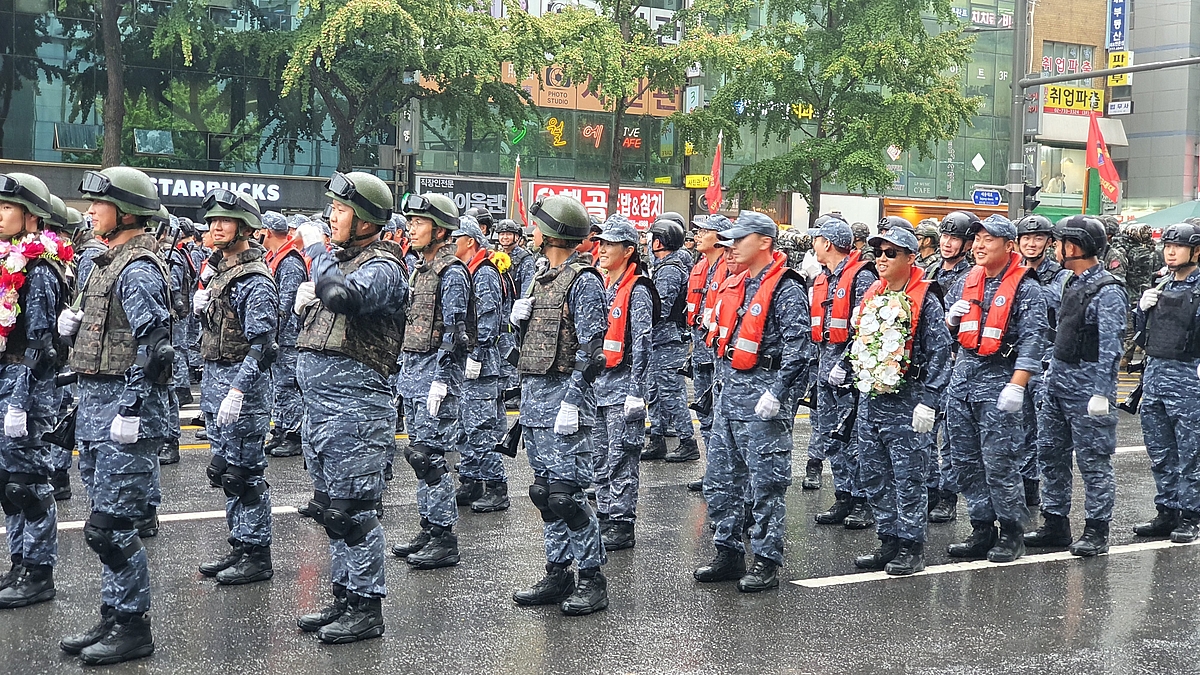
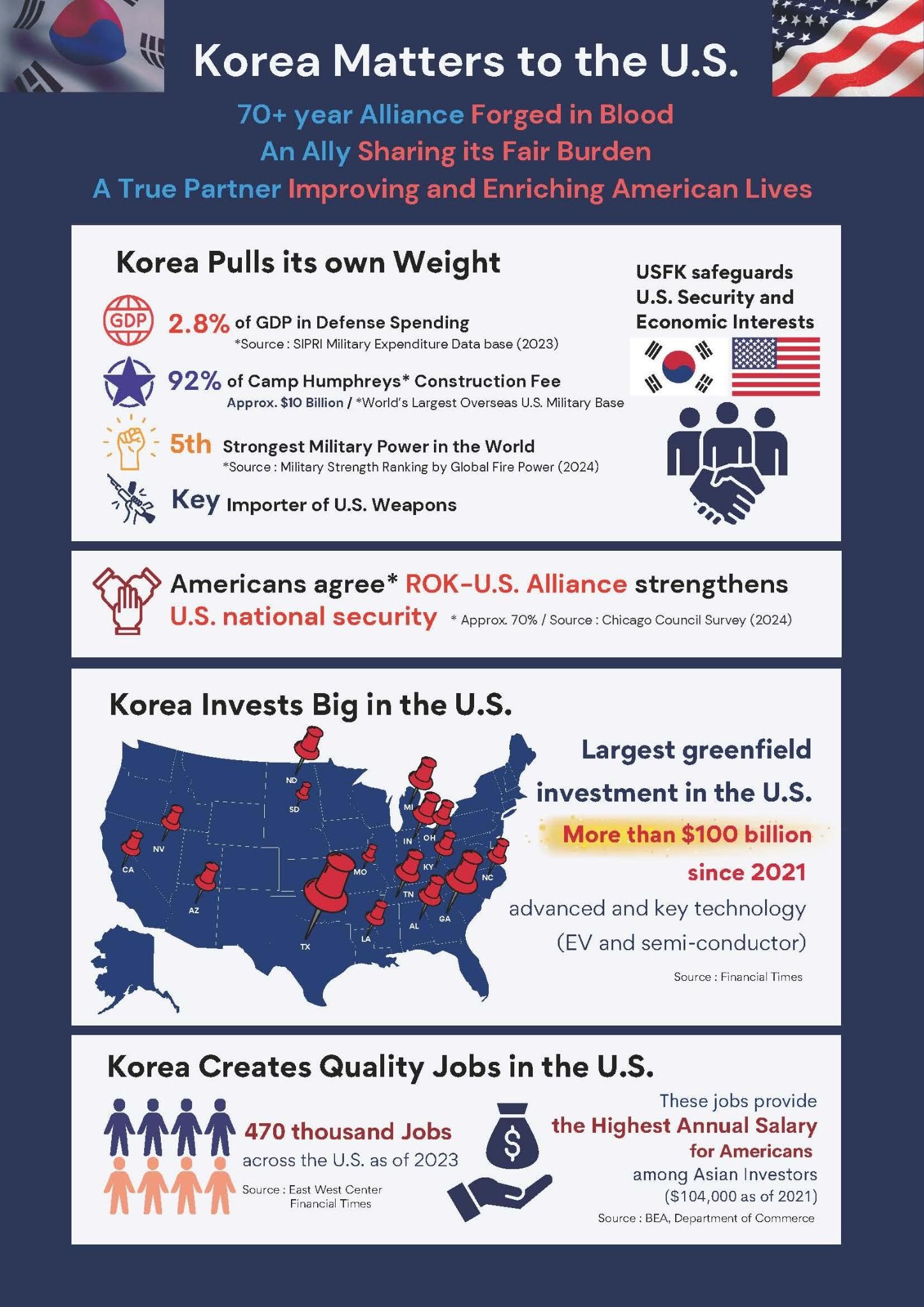
South Korea and the USA since the division of the country in 1945 and the subsequent Korean War (1950-1953) were in a close political, economic and military alliance, which was crucial for the survival of South Korea vis-à-vis the aggressive North. In recent years, under president Yoon Seok-Yeol and with encouragement of the Biden administration, a “triple alliance” between the US, Japan and South Korea developed with joint military exercises, closer political alignment and exchange of military intelligence. Since Japan had been colonizing Korea (1910-1945), this met with a lot of mistrust, however, the fact that both Japan and South Korea are democracies and market economies facing the same adversaries in the region, the PR China, North Korea and increasingly Russia, makes them natural allies. Around 28500 US soldiers stationed in South Korea guarantee the alliance.
Already under the first Trump presidency the South Korean participation in stationing costs of US soldiers became a bone of contention. Currently South Korea pays one billion USD per year, regulated in the so-called Special Measures Agreement, which runs until the end of 2025. This is around 40-50 percent of the total stationing costs. Trump wanted to have five times the amount, but ultimately negotiations dragging on until Biden took office and this sum was agreed upon. This year, during the election campaign, Trump announced a target of 10 bn. USD per year, calling South Korea a “money machine“ and predicting they would be happy to pay it. South Korea and the Biden administration accelerated negotiations for a new agreement and after eight rounds of talks came up with an increase from one billion to 1,23 bn. USD for the new agreement until 2030. This, however, still has to pass the South Korean National Assembly, which is overwhelmingly in opposition to president Yoon. Also, it drew the ire of incoming president Trump, since so obviously it was concluded to bypass him, so it is not at all clear, if it will remain.
How will future relations with North Korea look like?
However these negotiations end, much more interesting will be the question how a new Trump administration deals with North Korea, which in the last four years massively increased it´s nuclear and missile program. During his first presidency, Trump after initial exchange of threats and vile remarks from both sides developed a regular “bromance” with North Korean leader Kim Jong-Un with the exchange of letters. He agreed to meet him in two unprecedented summit meetings in Singapore 2018 and Hanoi in April 2019. This last summit, however, ended in a fiasco for Kim Jong-Un, who had to leave empty-handed after hoping for sanctions relief. During the Corona pandemic, North Korea choose complete isolation and practically severed relations with the international aid organizations who had been in the country since 1995. Afterwards, the Russian war in Ukraine gave Kim Jong-Un an opening for a closer alliance with Russia: North Korea delivered millions of artillery shells and rockets, and received urgently needed cash, food and also help for its nuclear and missile program. Currently, there are even North Korean troops on Russian ground.
During the US presidential election campaign, the possibility of new negotiations with North Korea were raised, for example by Robert C. O’Brien, the last National Security advisor of Donald Trump. After the failure of the previous negotiations and the close military alliance between Russia and North Korea, what can be expected from such negotiations? First of all, it is crucial what happens in the Ukraine. President-elect Trump had – with his usual hyperbole – announced he would end the war in Ukraine in 24 hours. Certainly, his more skeptical attitude on support for Ukraine puts enormous pressure on Ukraine to seek a peace agreement. However this will look, any armistice or peace agreement would have an immediate consequence for the Russian-North Korean relation. Suddenly, North Korea would loose almost all of its strategic value for the Russians, in particular, if Russia wants to reenter some form of multilateralism in the UN system. This again would put pressure on them to reevaluate their relations with Western powers, widening an opening for more successful negotiations. Also, in the first Trump administration, often starkly different personalities and policy views clashed; in particular, former National Security advisor John Bolton was extremely skeptical on any deal with North Korea. This time, the Trump team could be much more aligned with his own ideas of the art of negotiations.
For South Korea, this raises the fear of being bypassed. Since this year, North Korea gave up any pretensions of looking for peaceful unification with the South and called it a hostile nation. A growing number of politicians and political analysts call for South Korea to go nuclear itself. Technically, it is certainly feasible with the South Korean advanced science sector and experience with civil nuclear use. Politically, it might antagonize the US and other international partners, but it might also be seen by Trump as a logical consequence of his call for nations to defend themselves rather than to bank on US protection. While a decade ago, calls for South Korean nuclear armament were a radical minority position often derided by opponents, currently a majority of South Koreans would agree on nuclear armament in case the US protection is gone. For international non-proliferation efforts, this does not bode well. In South Korea, interestingly, the left-wing opposition, which controls a huge majority in the National Assembly, is much more anticipating a Trump presidency. The last four years were full of frustration for them, since Biden showed zero interest in any improvement of relations with the North and rather re-enacted the “strategic patience” of Obama. However, both under Obama and Biden this resulted in constant missile tests, and progress in the nuclear program, and finally even the complete cut off of relations to the South.
The South Korean economy, possible US protectionism …and some good news
Besides these political questions, there are also concerns regarding the future US trade policy. In his most far-reaching remarks, Trump announced a complete substitution of income taxes by tariffs. While this might not be feasible, certainly for an economy dependent on trade openness like South Korea the question of higher tariffs is crucial. Already under the first Trump administration, South Korean companies moved production to the US to overcome protectionism and curry favor with the US administration. The Biden administration did not really make it easier for South Korea, in particular with the so-called Inflation Reduction Act. Given the lackluster performance of the economy and the importance of some economic success in the run-up for the next South Korean presidential election, this will certainly create more headaches for South Korean bureaucrats.
Some good news in the end: one of the few agreements between Trump I and Biden administrations was on the importance of alliances in the Indo-Pacific. Both Trump, who adopted the “Indo-Pacific concept” first and Biden saw the importance of countering a more assertive China and North Korea, and both supported structures of cooperation between their allies in the region. Despite some frustration with Trump´s negotiation techniques, alliances were rather strengthened when he left office the first time and it is very improbable that he would change this in his second term. Firmness in alliance politics, plus flexibility regarding negotiations with North Korea, plus a renewed focus on East Asia, could bring a new dynamic to the seemingly impasse in the political relations here. Ultimately, there might also be some positive surprises awaiting South Korea and the region.

About the Author
Prof. Dr. Bernhard Seliger is representative of Hanns-Seidel-Foundation in Korea since 2002. He also is honorary professor of economic policy, in particular East Asian economies, at Zwickau University of Applied Sciences.
Kontakt
