
Short Article
Total Defence in Comparative Perspective: What Sweden and Lithuania Reveal About Germany's Preparedness
A New Security Reality in Europe
Russia’s full-scale invasion of Ukraine has fundamentally altered Europe’s security landscape. Since 2022, countries along NATO’s eastern flank as well as traditionally neutral states have undertaken significant reforms of their defence policies. At the center of these efforts is the concept of total defence - the systematic integration of military capabilities with civilian resilience, economic preparedness, and societal mobilization.
Sweden and Lithuania have adopted distinct approaches to this challenge, yet both pursue the same overarching objective: ensuring that the state remains functional and capable of responding effectively during crises and armed conflict. A comparison of the two models highlights not only their structural differences but also the challenges Germany continues to face in preparing for both hybrid and conventional threats.

wideshuts; Adobe Stock Image
Sweden: An Integrated Approach to Total Defence
Since 2022, Sweden has developed one of the most ambitious total defence systems in Europe. The Totalförsvar strategy, adopted in 2024, integrates military defence, civil preparedness, and societal resilience within a single security framework. Its objective extends beyond deterrence and territorial defence to ensuring the long-term resilience of the state and society as a whole.
A defining feature of the Swedish approach is the close integration of military and civilian structures. Defence is not viewed solely as the responsibility of the armed forces but as a shared national undertaking. Under the country's Total Defence Duty, nearly all residents between the ages of 16 and 70 can be called upon to contribute to national defence in times of crisis or war, which are not limited to military service; civilian expertise in sectors such as healthcare, logistics, engineering, and public administration can also be mobilized.
The reintroduction of conscription in 2017 represents only one component of this broader system. More significant is Sweden’s ability to rapidly mobilize reservists, specialists, and civilian resources. Joint exercises involving government agencies, the military, private-sector actors, and civil society organizations are designed to ensure that communication networks, supply chains, and essential services remain operational under wartime conditions.
Another key pillar is information resilience and psychological defence. Swedish policymakers assume that modern conflicts are fought not only on the battlefield but also in the information domain. As a result, Sweden has invested heavily in countering disinformation, strengthening crisis communication, and enhancing media resilience. Government agencies cooperate closely with media organizations and private stakeholders to identify false information quickly and reinforce public trust and societal cohesion.
Institutionally, Sweden benefits from a clearly defined governance structure. Civil defence is centrally coordinated by the Swedish Civil Contingencies Agency (MSB), which works closely with the armed forces and other public authorities. Responsibilities at the national, regional, and local levels are legally defined, reducing bureaucratic friction and improving coordination during emergencies.
Financial commitments underscore the scale of Sweden’s ambitions. By 2030, the government plans to invest substantial resources in both military and civilian defence. Alongside military modernization, investments target critical infrastructure, healthcare preparedness, communications systems, and strategic stockpiles. Civil preparedness has thus become a fully funded and institutionalized pillar of national security policy.
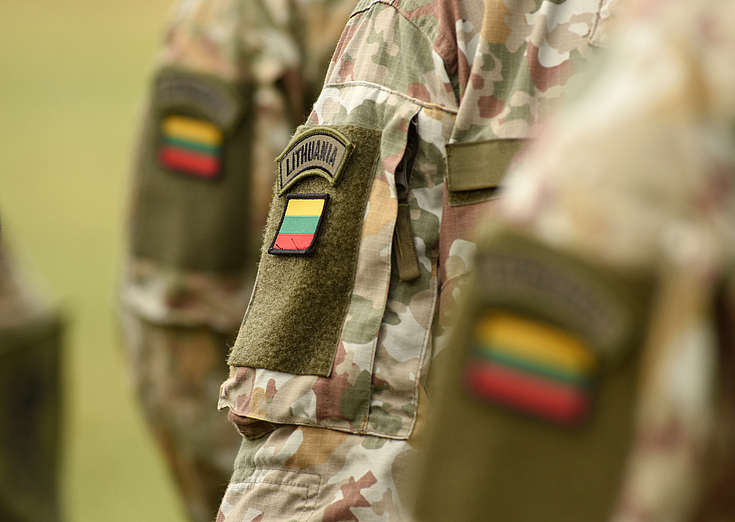
Bumble Dee; Adobe Stock Image
Lithuania: A Defence Model Focused on Deterrence
Lithuania also embraces the concept of total defence, but its approach reflects a different strategic reality. Located on NATO’s eastern flank and facing direct security concerns related to Russia and Belarus, Lithuania places a much stronger emphasis on rapid military response and territorial defence.
This focus is reflected in both strategic priorities and defence spending. Lithuania's revised National Security Strategy emphasizes credible deterrence, the ability to repel armed aggression, and the preservation of state continuity under crisis conditions. To support these objectives, the government plans to allocate between five and six percent of GDP to defence between 2026 and 2030, placing Lithuania among NATO's highest defence spenders. These investments are intended not only to modernize the armed forces but also to establish a fully operational national division capable of integrating seamlessly into NATO operations.
Lithuanias close integration with NATO is a central pillar of its defence model. Beyond strengthening national capabilities, Lithuania has invested heavily in its role as a host nation for allied forces. The permanent deployment of the German brigade is the most visible example of this strategy, serving both as a military reinforcement and as a political signal of NATO's commitment to collective defence. Supporting infrastructure, logistics networks, and military facilities are being expanded accordingly, reflecting Lithuania's view that national defence and allied reinforcement are inseparable components of deterrence.
Personnel generation and mobilization also play a prominent role. Lithuania has reinforced conscription as a core element of national defence and continues to expand its reserve structure. Unlike Sweden, however, it does not maintain a comprehensive legal framework comparable to the Total Defence Duty. Instead, Lithuania relies on a combination of national security legislation, reserve planning, and emergency powers that enable the state to mobilize civilian resources when required. The country's security doctrine explicitly defines defence as a shared responsibility of state institutions and society, while critical sectors can be directed to support defence efforts during crises.
Civil preparedness is therefore integrated into defence planning, but largely in support of military objectives. Critical infrastructure operators, public authorities, logistics providers, and other essential services are expected to maintain continuity and contribute to national defence functions during emergencies. Unlike Sweden's broader resilience model – which seeks to sustain society over prolonged periods of disruption – Lithuania’s approach is primarily designed to ensure that military operations can be conducted effectively and that the state remains functional under conditions of high-intensity conflict.
Institutionally, this results in a comparatively streamlined structure. Coordination is centred on the Ministry of National Defence, which works closely with other ministries and public authorities. Lithuania lacks a dedicated civilian defence agency comparable to Sweden's MSB, yet a broad political consensus regarding the threat environment has facilitated rapid implementation of defence reforms and sustained public support for increased defence spending.
Germany: Between Sectoral Resilience Policies and Integrated Total Defence
The comparison with Sweden and Lithuania illustrates that modern total defence extends far beyond military capability alone. Both countries integrate defence policy with mobilization planning, critical infrastructure protection, crisis preparedness, and clearly defined responsibilities across government and society. Germany has increasingly addressed these issues in recent years, yet it has not developed a similarly integrated framework.
This is particularly evident in the area of mobilization. Unlike Sweden, Germany currently has neither universal conscription nor a legally established system for civilian mobilization. While Sweden’s Total Defence Duty provides a binding framework and Lithuania closely links conscription, reserve forces, and defence planning, Germany’s security architecture continues to rely heavily on voluntary participation and sector-specific responsibilities. As a result, questions surrounding large-scale personnel mobilization and the integration of civilian expertise remain only partially addressed.
A similar pattern can be observed in the field of civilian resilience. Since Russia’s invasion of Ukraine, Germany has devoted increasing attention to critical infrastructure protection, healthcare preparedness, civil protection, cybersecurity, and supply-chain security. The introduction of the KRITIS Umbrella Act established cross-sector minimum resilience standards for operators of critical infrastructure, while implementation of the NIS2 Directive has strengthened cybersecurity requirements. At the same time, debates surrounding energy security, strategic dependencies, and the protection of critical assets from foreign influence demonstrate that economic resilience is increasingly viewed as an element of national security.
Unlike Sweden, however, these efforts are largely organized along sectoral lines. Whereas Sweden integrates infrastructure protection, civil defence, information resilience, mobilization, and military preparedness within a single total defence framework, responsibilities in Germany remain dispersed among federal and state authorities, the Bundeswehr (German Armed Forces), the Federal Office of Civil Protection and Disaster Assistance (Bundesamt für Bevölkerungsschutz und Katastrophenhilfe, BBK), intelligence and security agencies, and numerous other actors. No institution currently exists with a coordinating role comparable to that of Sweden’s MSB, creating potential challenges in terms of prioritization, coordination, and crisis management.
The comparison therefore reveals less a lack of German activity than a different organizational approach. While Sweden and Lithuania have adopted total defence as an overarching strategic framework and structured their institutions accordingly, Germany continues to strengthen resilience primarily through reforms within individual policy sectors. Nonetheless, current initiatives demonstrate that key elements of modern total defence – from critical infrastructure protection and supply security to cyber resilience – are increasingly becoming part of Germany’s broader security debate and institutional development.

About the Author
Natalia Valeria Müller is a policy officer and project coordinator at the HSS Institute for European and Transatlantic Dialogue with a focus on European Policy Issues.
Contact
