
HSS in Ecuador
Breaking barriers, transforming destinies
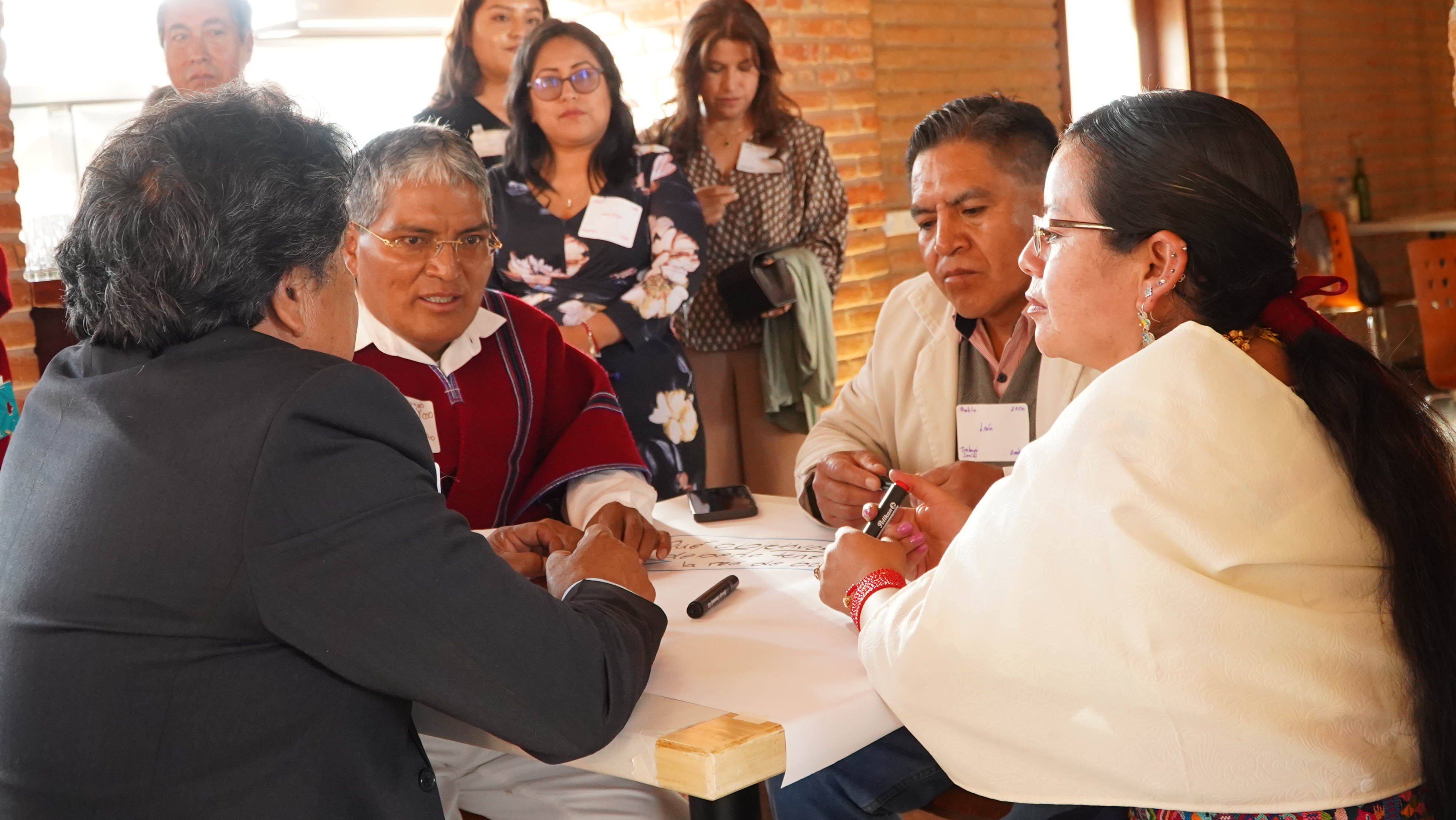
Ecuador, one of the most iconic countries on the equator, is a highly diverse nation in South America. Despite its relatively small size of 256,000 km², it boasts four distinct regions: the Amazon rainforest, the Andean highlands, the Pacific coast, and the Galápagos Islands. This geographical diversity is mirrored in its people, where 14 indigenous nationalities coexist. Today, indigenous people are a cornerstone of Ecuadorian society, proudly presenting themselves in their traditional garments everywhere: in ministries, parliament, banks, offices and markets. But it wasn’t always this way. What now seems normal is the result of a long and arduous process of social vindication.

Institutional and Social Marginalization
Until the late 20th century, indigenous people faced systematic exclusion. When the Ecuadorian constitution was reformed in 1978, illiterate citizens were granted the right to vote for the first time, finally opening democratic life to those who did not speak Spanish. Before the 1960s, many lived under semi-feudal exploitation. Afterwards, discrimination was still overt: indigenous people were often forced to sit at the back of buses, and laws even restricted the registration of indigenous names, allowing only "national" (Hispanic) ones.
To survive and fit into a hostile society, many suffered a profound loss of identity. Traditional braids were cut off, mainstream clothes were adopted, and ancestral music was replaced by European styles, like the waltz, even at indigenous weddings. It was only in the 1980s that a process of regaining cultural consciousness began. While the political left initially empowered indigenous farmers through the lens of class struggle, Dr. Ariruma Kowii of the Simón Bolívar Andean University pointed out a missing link: "We are more than a social class; we are a culture." It was time to revalue their languages, art, and worldview.
The Turning Point
The nineties were a turning point in Ecuadorian history. With the First Great Indigenous Uprising of June 1990, debates on plurinationality were finally forced onto the national stage. This momentum led to the Constitution of 1998, where Ecuador defined itself as a multicultural and multi-ethnic state, granting collective rights to indigenous and Afro-Ecuadorian peoples for the first time. Indigenous leaders emerged as powerful voices in public opinion, finally influencing the country's political trajectory.
In this process of revindication, indigenous people began to overcome the historical shame imposed upon them. Young people who had once assimilated started to re-identify with their origins and culture. As they claimed their place in society, studying in the capital, Quito, promised better life opportunities: to become a professional, to hold a stable job, and to begin to dream.
However, it wasn't easy. They had to leave behind everything they knew and find their way in a large city with different cultural rules, struggling also with the language, while still facing overt discrimination. Moreover, they had to find ways to make a living to finance their university degrees. And this is where Hanns Seidel Foundation (HSS)bentered the stage: Armin Schlegl, during the nineties Resident Representative of HSS in Quito,created the first overseas scholarship program of the Foundation in 1992, with the firm belief that education is a fundamental pillar of a nation's development.
Besides financial aid to cover student expenses, the program made it imperative to foster pride in one's origin. This is why all scholarship holders were required to wear their traditional garments at every capacity-building event—even in high-society hotels. At that time, it was very unusual to see indigenous people in such establishments, but the HSS scholars grew accustomed to showing their cultural differences with dignity and pride.

Embracing interculturality
With access to higher education, the indigenous population was able to participate in society and shape it through professional positions. As shown in the video, indigenous people today contribute to every economic sector.
Perhaps the most famous example in Ecuador of overcoming unequal conditions is Mr. Alfonso Chango. As he frequently reports, his family was so poor that as a child, he didn't even own shoes; thus, studying seemed like an impossible dream. However, his vision, persistence, and perseverance earned him a scholarship and transformed him into a leader and influential businessman, eventually featured in Forbes Magazine Ecuador.
For many, obtaining a degree was a far-fetched dream due to their family's economic condition or socio-cultural constructs. This was particularly true for indigenous women, for whom the academic path was often fraught with additional obstacles. Today, young indigenous people have numerous role models to look up to, but they are not the only ones inspired.
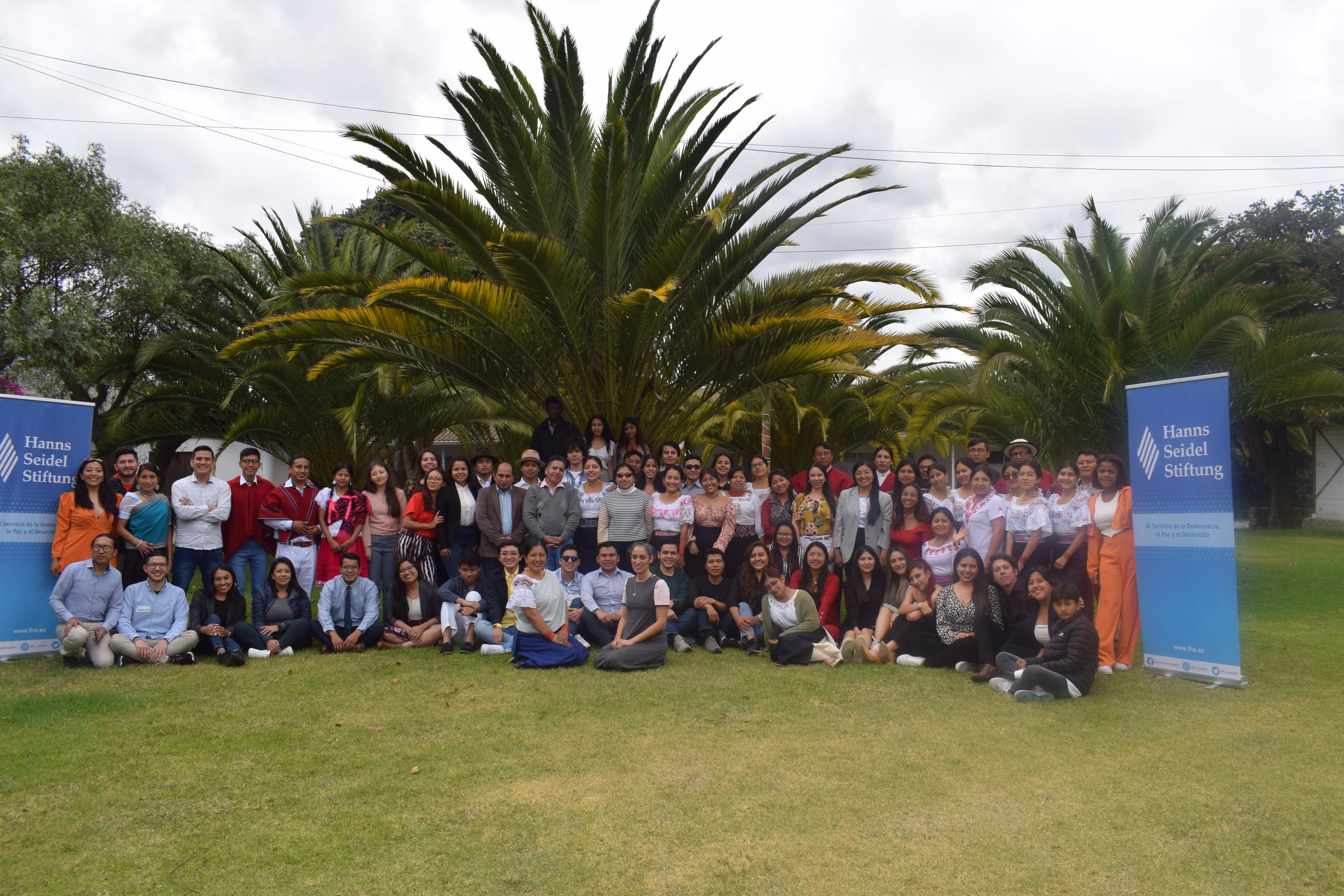
Many young Ecuadorians of all origins have met leaders like Councilwoman Sandra Caiza during school visits, where she delivers motivational speeches or shares her autobiography, highlighting the vital support of the HSS Scholarship Program. Many of them now apply to the program, as it has evolved to support socially marginalized, highly motivated young Ecuadorians of all backgrounds. This creates a unique space where cultural differences are appreciated and the exchange of diverse knowledge is boosted—a space that truly represents the modern Ecuador.
Although much has changed for the better over the last thirty years, "hidden" discrimination persists. During the most recent national elections, the ease of sharing opinions on social media allowed harsh, discriminatory comments to resurface, deepening the divide between the Coast and the Highlands. Similarly, during the latest protests led by indigenous organizations, the stigmatization of indigenous people revealed that Ecuadorian society remains conflicted. In moments of crisis, mutual racism often re-emerges, proving that the progress made is still fragile.
This is why value-oriented spaces for exchange among young people remain vital. They provide a platform where individuals can learn from one another and truly understand their differing realities. Through this experience, (future) decision-makers can exert a positive impact within their respective spheres, shaping a society based on the principles of human dignity, tolerance, freedom, personal responsibility, solidarity, and subsidiarity—just as so many HSS scholarship holders continue to do today.
Witness the Transformation
The journey of our scholars is a testament to the fact that when opportunity meets determination, barriers crumble. We invite you to watch our latest video, where you can see interculturality in action and the faces of those who are redefining the future of Ecuador.
Contact
