
Political Analysis
Antarctic Peninsula: Geopolitics at the Far South of the World
COPYRIGHT: iStock
Introduction
At first glance it seems that Antarctica is very similar to the Arctic: vast ice masses at the North and South poles. But just as the name 'Antarctica' derives from the Greek 'antarktikos', which means 'opposite to the Arctic', there are major differences not only in its geography but in its governance that distinguish Antarctica as a singularity in history. And within this singularity, the Antarctic Peninsula emerges as a barometer of geopolitics in the extreme south of the world.
The Arctic is an ocean surrounded by sovereign States with exploitable resources that provides an important maritime and air communication route. Antarctica, on the other hand, is a continent larger than Europe, surrounded by the Southern Ocean, without effective exercise of exclusive territorial sovereignty, and subject to strict regulations regarding the exploitation of natural resources.
Its governance, based on the Antarctic Treaty System (ATS) initiated in 1959, is unique in the world. The principles of this system are demilitarization, cooperation in scientific research and the practical non-consideration of territorial claims, which have managed to maintain constructive peace for more than 63 years.
Subsequent agreements on conservation and environmental protection further distinguish Antarctica as “natural reserve devoted to peace and science, embodying a collective commitment to preserve it for the benefit of all humankind” (the Madrid Protocol 1991).
Antarctica´s remoteness from major global power and population centers, combined with its harsh climate and substantial logistical hurdles to economic resource exploitation, has provided, until now, protection in a world transitioning from multilateralism and a rules-based order to one increasingly governed by transactional dynamics, power and influence.
However, this successful track record in governance is no guarantee for the future. Geopolitical tensions will be exacerbated by the interest in exploiting natural resources, increased tourism and eventual covert militarization, and will test the strengths of the system.
COPYRIGHT: iStock
Antarctic Peninsula, barometer of geopolitical trends
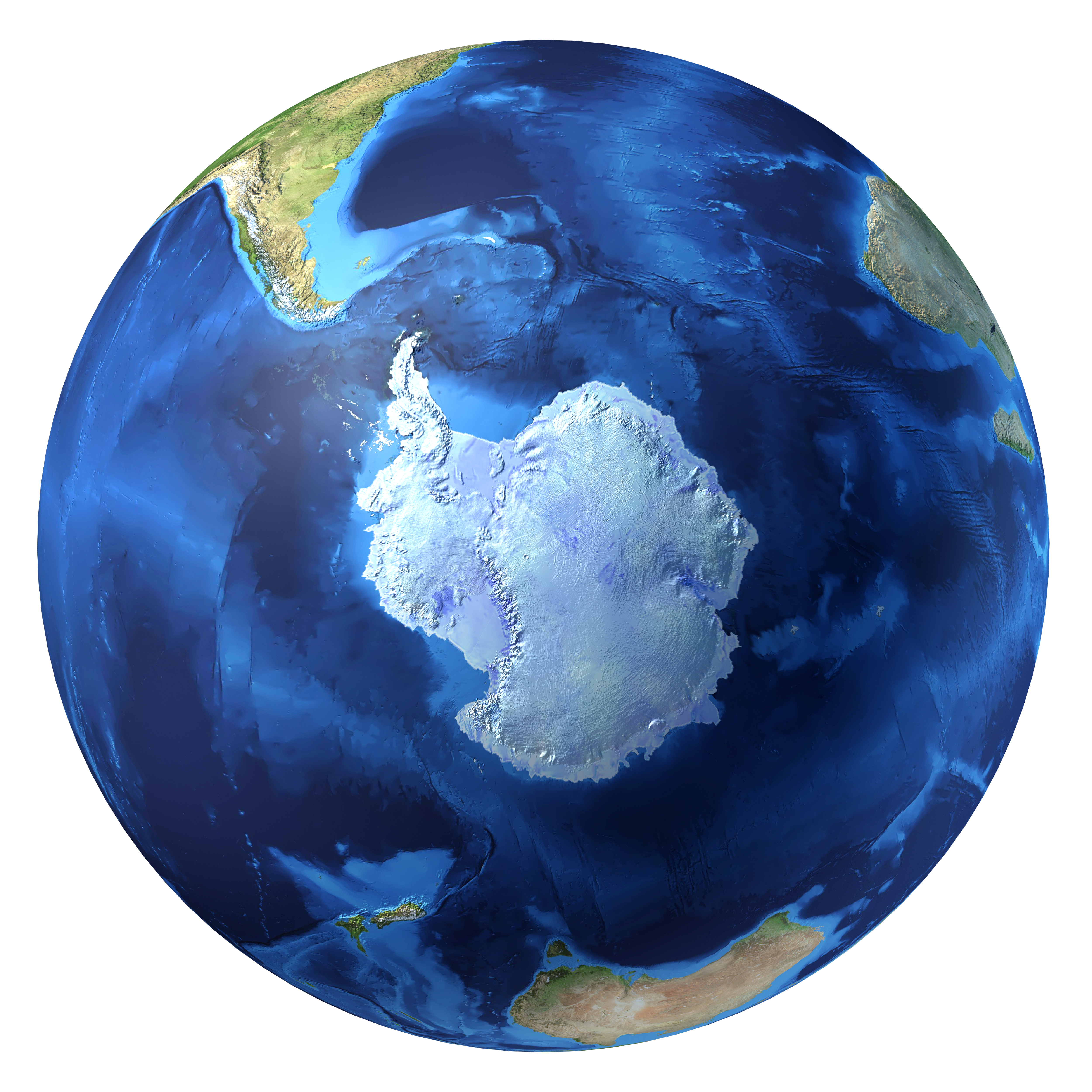
The Antarctic Peninsula extends towards South America extending to less than 1,000 kilometers from Cape Horn. It has good accessibility from the open sea and is the main gateway to the continent.
This peninsula holds the only overlapping territorial claims (Argentina, Chile and the UK)[1], and is the area with the greatest fishing exploitation, the largest number of bases, scientific activity and massive Antarctic tourism. It also has the greatest potential for the eventual exploitation of mineral resources.
It is here, then, where the trends and tensions that could modify the status quo will be observed, making it a sensor not only of climate change but also of the capacity for peaceful governance based on consensus. Antarctic geopolitics in the coming decades will be marked by the following interrelated issues.
Conservation vs. exploitation
Antarctica is home to about 70% of the Earth's fresh water and contains immense natural resources such as proteins, minerals and hydrocarbons. It is also one of the places on Earth most affected by global warming, with melting ice and variations in the surrounding Southern Ocean which, in turn, affect the climate, ocean currents and natural resources in the whole interconnected planetary ecosystem.
This scenario positions Antarctica as an area of global interest for humanity, which should be cared for and protected from unilateral actions that cause harm to current and future generations. And while these are the kinds of problems that the United Nations should face, the weakness of multilateralism makes it difficult to establish an effective alternative to the current ATS as the most appropriate system of governance.
On the other hand, this vision of conservation clashes with economic interests related to the exploitation of natural resources, which necessarily produces environmental impact. Moreover, if this exploitation is carried out by individual countries, it generates tension with other nations that consider Antarctica as the "common heritage of humanity" and, therefore, they can claim shared benefits from those activities.
This issue has been under discussion for decades and to date the majority position that has prevailed is to prohibit mining and generate norms for the protection and sustainable exploitation of Antarctic marine living resources. This stance avoids conflicts over sovereignty rights over natural resources and reactions to unilateral actions.
A scenario that combines scarcity of raw materials and the economic feasibility of exploiting these resources in Antarctica, although unlikely, cannot be ruled out, and would be of high impact.
In this sense, the positions of China and Russia in the Antarctic Treaty consultative meetings, which aim at avoiding an extension of restrictions on fishing exploitation alleging lack of scientific evidence are seen as worrying trends. Likewise concerning are efforts to determine potential mining resources and hydrocarbons, as is the case of the Russian expedition that discovered giant hydrocarbon reserves under the Weddell Sea, east of the Antarctic Peninsula. Their results were published in the world press in May 2024, being a topic of discussion even in the British parliament.
The Madrid Protocol on Environmental Protection could be revised starting 2048, which would increase pressure from certain countries to release the ban on mining exploitation, although its consensus rules make it very unlikely. Likewise, unilateral actions out of ATS consensus would be constrained by the majority of countries opposed, including Chile and Argentina, which provide the necessary logistical and operational support for exploitation activities.
Massification of Antarctic tourism. A trend of greater concern now is the increase in Antarctic tourism, with more than 100,000 visitors in the last season, mostly travel and disembark in specific sectors within the Antarctic Peninsula, such as Deception Island and Paradise Bay.
While tourism activity is regulated by voluntary industry guidelines (such as IAATO), there is a high risk of environmental impacts like the introduction of invasive species, wildlife disturbance and pollution.
In addition, the growing flow of cruise ships and expeditions poses security challenges. A large-scale tragedy would test the capability to respond and could trigger pressures to impose annual quotas, a measure resisted by those with economic interests associated with the tourism industry.
Covert militarization. Although the use of Antarctica for military purposes is prohibited, the use of military means in a role of support for scientific activities and safety in the event of accidents is accepted.
On the Antarctic Peninsula, military units from Chile and Argentina, sometimes acting in coordination, have a permanent presence in valued peaceful roles: they oversee compliance with environmental conservation and protection standards and provide search and rescue (SAR) assurances.
Other dual-use national capabilities, such as telecommunications, satellite positioning, satellite tracking, or surveillance, are not so relevant as to generate a strategic imbalance in a global conflict. More relevant in this sense could be the strategic position of the Antarctic Peninsula with respect to the control of the Drake Passage, which naturally connects the Pacific and Atlantic Oceans.
In any case, the ATS contemplates a system of cross-inspections of bases and facilities that, although seldom used, is a way to manage suspicions regarding the type of capabilities that each country maintains on the continent.
Science revalued. Antarctic science, which was a vehicle to facilitate the agreement between great powers and countries with interests in Antarctica in 1959, has continued to act as a bridge of cooperation to the present day and has also taken on an irreplaceable value in facing the greatest existential crisis of human life on the planet: climate change of anthropogenic origin.
Furthermore, scientific activity legitimizes the physical presence of countries on the continent and their influence on the decision-making mechanisms of ATS.
[1] Overlapping claims from the United Kingdom (20° W – 80° W), Argentina (25° W – 74° W) and Chile (53° W – 90° W), all include the Antarctic Peninsula and adjacent sea. Other claimant countries include Norway, France, Australia and New Zealand.
Different countries and interests
In the face of these trends, it is possible to distinguish four groups of countries with different interests in Antarctica.
Claimant countries. For these seven countries, maintaining a strategic presence through bases, scientific activity and state-operated patrols and logistical support is a key priority.
This effective presence is a way of preserving their rights based on history, geography, presence and legal acts prior to the 1959 Treaty, even if their territorial claims are not altered by the terms of the ATS. These countries support the status quo because it guarantees stability and allows for some control over activities on the continent.
Argentina and Chile, the closest countries, consider the Peninsula as an integral part of their national territory and the collective consciousness of their respective populations. Added to this are its SAR responsibilities and the economic advantages associated with tourism and scientific activity to Antarctica from South America.
The third actor with overlapping claims on the peninsula is the United Kingdom. It has a growing capacity as a point of support for tourism and science from the Falkland/Malvinas Islands, whose sovereignty Argentina claims, and which was the scene of a war in 1982. For Argentina, the vision of sovereignty over Antarctica and the South Atlantic Islands is integral and indivisible, with the United Kingdom regarded as an extra-regional actor, therefore perpetuating the underlying conflict.
Great global powers. The United States, China and Russia have reserved their rights in Antarctica and adhere to the Treaty being very active in scientific research and have bases on the Peninsula. Their strategic priority is to guarantee access and presence in Antarctica while positioning themselves in a future scenario in which the use of resources is disputed.
China and Russia in particular defend their fishing interests and potential rights to natural resources. Sometimes their visions clash with the majority, for example, in debates on the creation of marine protected areas proposed by other countries in the last consultative meetings of the Treaty.
Countries with outstanding scientific activity. This group includes European nations (mainly Germany, Spain, Poland, the Netherlands and others), as well as some Asian countries. They are nations that have invested significantly in science, whose interests are to ensure that Antarctica continues to be a natural laboratory for research and to maintain their influence on the governance of the continent.
Other States and the international community. Many developing countries have joined the Treaty in recent times so as not to be left out of decisions. In the 1980s, some proposed at the UN to declare Antarctica a "common heritage of humanity", seeking greater inclusion in its management, an equitable distribution of benefits or, alternatively, the extension of the environmental moratorium to protect the continent.
The future of Antarctica
Antarctica is a unique land where the ATS has made it possible to maintain a rules-based order ensuring peaceful coexistence, scientific cooperation and environmental protection.
Its governance is based on consensus, which favours the status quo but rigidifies evolution, whether towards greater ease in the exploitation of natural resources, tourism or military uses, or towards more protectionist measures for the conservation of ecosystems.
Geopolitical tensions will manifest mainly in the Antarctic Peninsula. While in the short term the greatest tensions will be the effects of massive Antarctic tourism and overfishing, in the medium term, tensions are foreseeable due to the interest in lifting the ban on mineral exploitation, particularly in this peninsula and adjacent seas.
On the other hand, the possibility of an escalation of tensions due to possible covert militarization or activation of sovereignty claims outside the ATS agreements is perceived as low, favored by the greater priority and strategic interests in other parts of the world far from Antarctica.
A strength of the current system is that the interests of different groups of countries can be better safeguarded by staying within the ATS and periodic conventions, with transparency measures and cross-inspections that help deterrence and mutual trust.
The ability to harmonize the diverse interests at stake, particularly in light of the intensified activities on the Antarctic Peninsula, will serve as a key indicator of the Antarctic Treaty System’s vitality. Successfully doing so will help safeguard this marvelous heritage for future generations, preserving Antarctica as a continent dedicated to scientific research, environmental conservation, and climate change mitigation.
Antarctica's system of governance differs from the norms that govern the Arctic and most other regions of the world. This historical singularity, born of effective diplomacy and a spirit of international cooperation, serves as a beacon guiding toward a different climate change; the change in the climate of coexistence in our common home: the planet Earth.
About the Author
Cristian de la Maza is a Retired Admiral, former Chile's Undersecretary for Defense 2018-22. Harvard University ALI Fellow 2022, Naval Electronic Engineer and MA in Maritime Sciences. Research Fellow Universidad San Sebastián and Center for International Studies, Universidad Católica, Chile.
Contact
