
Political Analysis
Canada as Germany’s Energy Resilience Partner? LNG and the Politics of Diversification
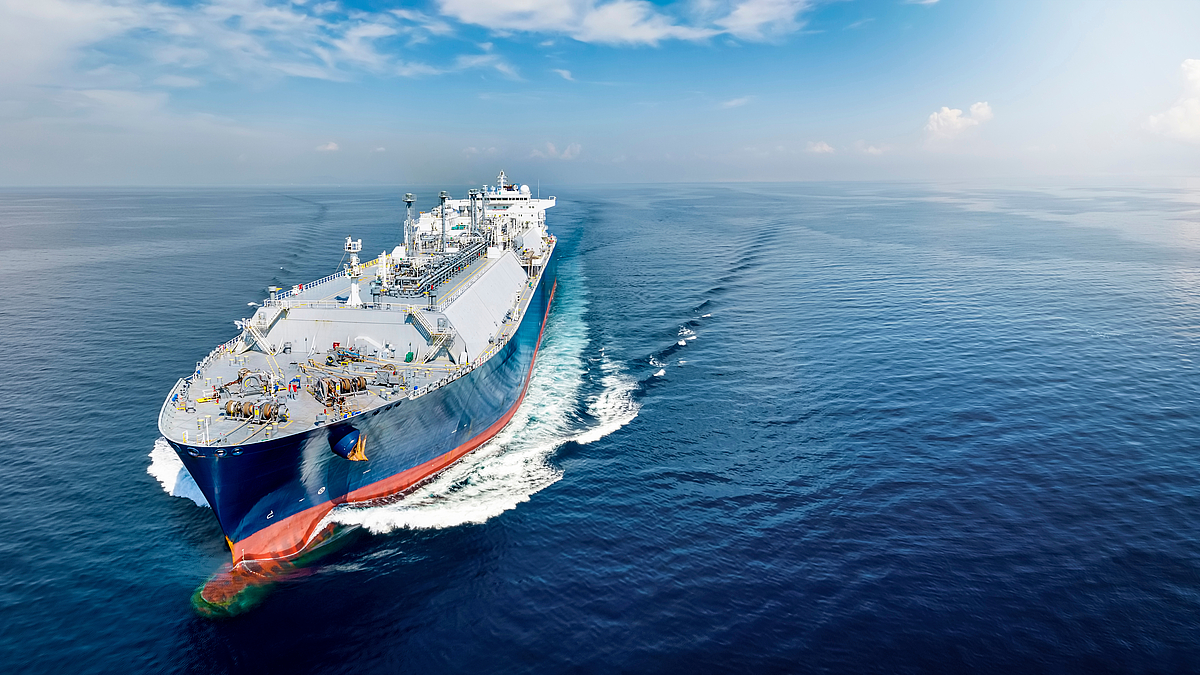
moofushi; Adobe Stock
While an ocean away, Canada-Germany trade relations should not be considered far-fetched: Germany is Canada’s sixth-largest merchandise trading partner, with Canada’s top exports in 2024 including machinery and equipment, mineral fuels and oils, and precious stones and metals. Currently, Germany is Canada’s sixth-largest foreign investor, with 2026 showing a deepening in cooperation between these two likeminded nations.
On 29 July 2026, Düsseldorf-based Uniper and Canada’s Ksi Lisims LNG signed a 20-year Sale and Purchase Agreement (SPA) for 2 million tonnes per annum (MTPA) of liquefied natural gas (LNG) on a free-on-board (FOB) basis, with first deliveries expected from 2032. The SPA follows a Letter of Interest (LOI) signed between Uniper and Ksi Lisims LNG on 8 June 2026 and marks the first major long-term LNG supply agreement between Canada and Germany, and Ksi Lisims’ first with a European utility. The agreement represents a significant step in strengthening the strategic energy partnership between both countries and the beginning of an important long-term relationship between the two companies.
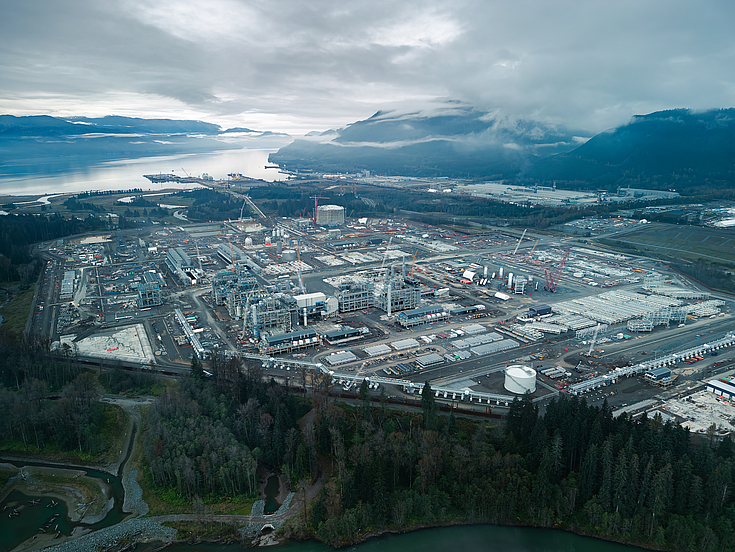
scottshoots; Adobe Stock
The Players: who’s on either end of the Canadian-German LNG offtake agreements?
Ksi Lisims LNG, pronounced s'lisims and meaning “from the Nass River” in the First Nations Nisga’a language, is a proposed net-zero LNG project in British Columbia, Canada. The project will connect with British Columbia’s renewable hydroelectric grid supply, resulting in up to 90% lower greenhouse gas intensity compared with conventional LNG facilities. Pending a Final Investment Decision (FID) by the project co-developers expected in 2026, construction could begin on the ultra-low emissions LNG facility that is targeting to be net-zero at the start of operations by early 2027.
Uniper is a leading gas trader and one of Northwestern Europe’s most important LNG importers, providing energy and services to about 1,000 municipalities and industrial companies in its home market, Germany. As a FOB purchaser, Uniper is responsible for the LNG once it is loaded onto the ship on Canada’s west coast, including the costs of shipping the LNG to its destination. The FOB pricing model allows Uniper to retain flexibility to resell the cargo anywhere in the world, creating additional value for the European energy company with global reach. This flexibility is also a win for German energy-policy, as the 2030 renewables target was recently implemented in the German Renewable Energy Sources Act. But as European LNG prices in 2025 were double those prior to Russia’s invasion of the Ukraine, the flexibility FOB deals can offer is likely top of mind for decision-makers.
The Uniper news builds on Ksi Lisims’ Heads of Agreement (HoA) with Germany's SEFE (Securing Energy for Europe, a German state-owned energy company) for a SPA of 1 MTPA of LNG for up to 20 years. The agreement is a non-binding document that outlines the key terms and conditions agreed upon by both parties.
The road to 2050: LNG as a part of Germany and Europe’s energy security
Long-term LNG offtake agreements are not new to Germany: in 2022, EnBW increased the quantity of its LNG imports from American Venture Global to 2 MTPA, signing a 20-year SPA to take imports from their U.S. Gulf Coast liquefaction facility. Meanwhile, in the Middle East, QatarEnergy and ConocoPhillips signed long-term agreements to supply up to 2 MTPA of LNG to Germany from the QatarEnergy-ConocoPhillips joint ventures in Qatar’s North Field East and North Field South projects. The latter marked the first LNG supply agreement to Germany for a period of 15-years.
While these 2022 agreements built the baseline for Germany’s long-term energy security, in an increasingly uncertain world, diversification of supply can benefit the security of supply. In particular, as a trusted-partner supplying low-carbon hydropower, LNG offtake agreements with Canada can help diversify Europe’s energy supply and strengthen resilience against future disruptions. And world leaders seem to agree: In June 2025, Canadian Prime Minister Carney and European Commission President Von der Leyen issued a Leaders’ Communiqué committing both jurisdictions to renewing discussions on the potential for Canadian LNG to be exported to Europe.
Over a year later, diversity of supply concerns continue to be magnified by the European Union’s (EU) ban on Russian LNG imports effective 1 January 2027, geopolitical tensions with the U.S. (the EU’s largest LNG supplier at 58% of demand in 2025, equivalent to 77 MTPA), and supply disruptions due to the closure of the Strait of Hormuz. Existing long-term contracts suggest the EU will depend on the U.S. and Qatari LNG to meet 25-50% of annual demand to 2050. However, since a significant portion of EU demand is uncontracted, Europe may be forced to buy more U.S. and Qatari supply (contracts or spot market), as they will hold 43-67% of total global LNG market share from now to 2050. Investing in Canadian LNG projects can be one part of changing the equation.
vladim_ka; Adobe Stock
Global Competition: a tale of two oceans
Germany is not the only buyer looking to secure LNG from Canada: Pacific Energy–which holds a 70% stake in the fully-electrified Woodfibre LNG project currently under construction in British Columbia to produce 2.1 MTPA of LNG–shared the company is receiving offtake interest from the Middle East despite offtake already being fully contracted to Britain's BP. Asian buyers are also part of the conversation: Pacific Energy President, Ratnesh Bedi, has said, "Almost every week, someone is approaching us to say, ‘hey, do you still have capacity?” This interest reflects a broader shift among global LNG buyers seeking to diversify supply as disruptions to the Strait of Hormuz continue.
Ksi Lisims LNG has received key environmental approvals and has been identified as a Project of National Interest by the Government of Canada. The facility will produce 12 MTPA of LNG from two floating LNG production and storage facilities. The SPA with Uniper and HoA with SEFE add to 4 MTPA of legally binding offtake agreements between Ksi Lisims LNG and offtakers from Britain’s Shell (2 MTPA) and France’s TotalEnergies (2 MTPA), bringing the total allotted offtake amount to 7 MTPA of 58% of Ksi Lisims’ capacity. On 14 September, Ksi Lisims announced its third international offtake agreement, signing an HoA with Australia’s Santos for 1 MTPA. Project proponent Western LNG Founder and CEO, Davis Thames, previously shared that Ksi Lisims LNG would like to secure 8-9 MTPA of production through offtake agreements before committing to FID and starting construction. This goal follows the historic convention that 80% contracted offtake is often required in order for LNG facilities to reach a positive FID. Therefore, even non-legally binding LOIs and HoAs have a role to play in helping the project cross the finish line. In particular, as we saw with Uniper, these tools can be used to pave the way for binding SPAs.
What’s next for Canada: the future of LNG trade relations
Canada’s natural gas market is currently heavily integrated with that of the U.S. largely because of the location of supply basins, demand centres, and the availability of transportation infrastructure, as well as existing Canada-U.S. trade agreements. Canada's first LNG export terminal began shipments in 2025, exporting LNG from Kitimat, British Columbia, to the global market. While the majority of exports from this terminal in 2025 were directed to Asia, locking in long-term contracts with European allies broadens Canada’s customer base, offering greater economic and job stability and increased trade sovereignty.
With a quarter of Ksi Lisis’ LNG now tapped for Canada’s European allies, the stage is set for future Germany-Canada LNG offtake agreements: There are 10 LNG export projects and in various stages of development in Canada representing a possible capital investment of almost $158 billion and a potential production capacity of 85 MTPA of LNG. Canada is a long-time, reliable exporter of large quantities of natural gas. Preliminary data from 2024 ranks Canada fifth in global natural gas production and is sixth in exports. With that volume, Canada has extensive natural gas infrastructure and expertise and an experienced, mature and resilient natural gas sector. And Canada is open for business. According to Canada’s Minister of Energy and Natural Resources, Tim Hodgson, “Amidst energy market disruptions, international demand for reliable energy only continues to grow, and projects like this…demonstrate how Canada is not only a competitive but also a leading energy superpower.” While eyes will be on Ksi Lisims LNG as they approach their goal of reaching FID by the end of 2026, the foundation has been laid for Germany and Canada to further deepen their cooperation with increased direct investments into the future.

About the Author
Christina is a public policy and foreign affairs analyst with the Government of Canada. Currently, she works as a Senior Policy Analyst at Canada's Major Projects Office, where she advances nation-building projects as part of the Regulatory Implementation Team. Christina builds on five years of experience at Natural Resources Canada, where she forwarded Canada’s energy security and net-zero commitments in the renewable energy, critical minerals, nuclear and LNG sectors. Her positions at Global Affairs Canada and Innovation, Science and Economic Development Canada have further enabled her to contribute to Canada's bilateral relations with countries in Europe, Asia, and South America. Christina holds an M.A. in European, Russian and Eurasian Studies from Carleton University and a B.A. (Hons) in Political Science from the University of Alberta.
Contact
